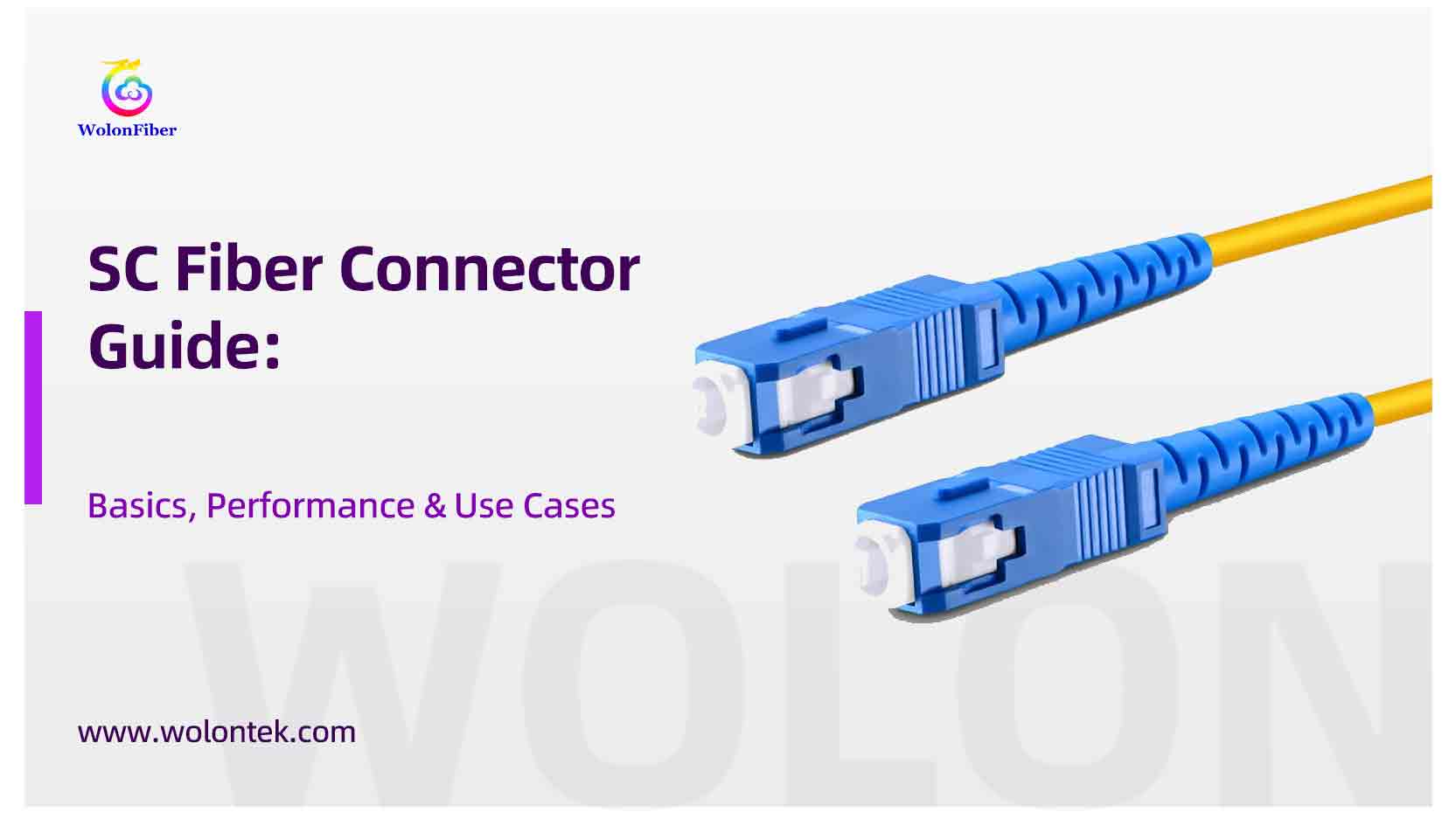
The SC fiber connector remains a top standard for reliability and ease of use in many environments. You’ll recognize it by the robust square body and the satisfying “click.” This push-pull connector prioritizes durability and speed over port density. Newer, smaller options exist. Yet, the classic SC connector still dominates telecom closets, campus backbones, and PON networks. It handles easier in the field. This is the pragmatic choice. You get a rugged connection that technicians can manage without fuss.
What is an SC Connector?
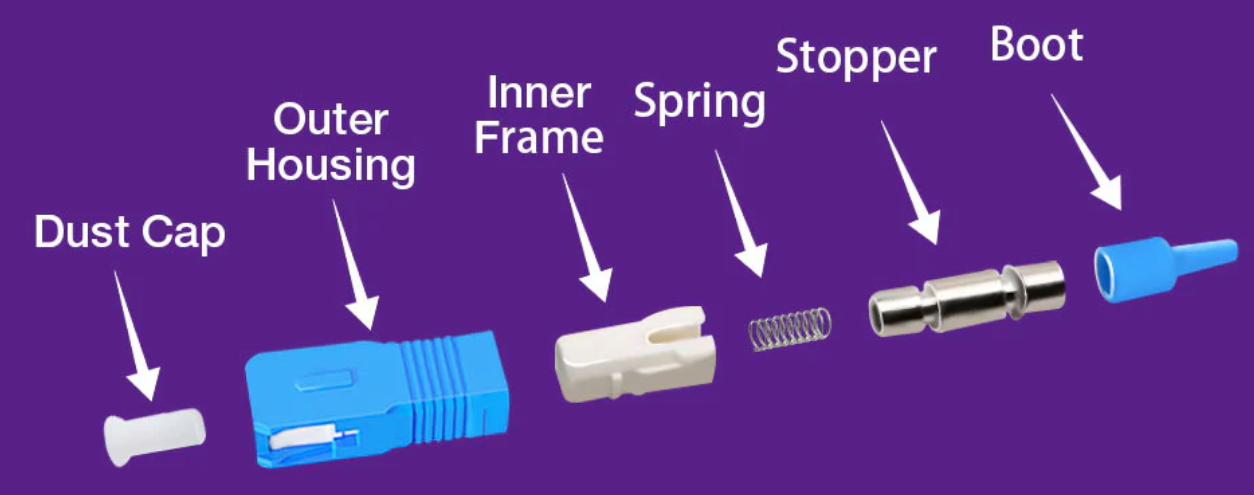
The SC is a square-bodied, push-pull optical interface. It uses a 2.5 mm ceramic ferrule. The design logic is simple. The “push-pull” latch secures the connector into an adapter. You don’t need to twist it (unlike the older ST style). The floating ferrule keeps optical alignment precise. Since the ferrule is 2.5 mm, the SC is larger than small-form-factor connectors like the LC (1.25 mm). This size difference is the main trade-off. SC gives you better handling ergonomics. LC gives you higher density.
Optical Performance: Real-World Expectations
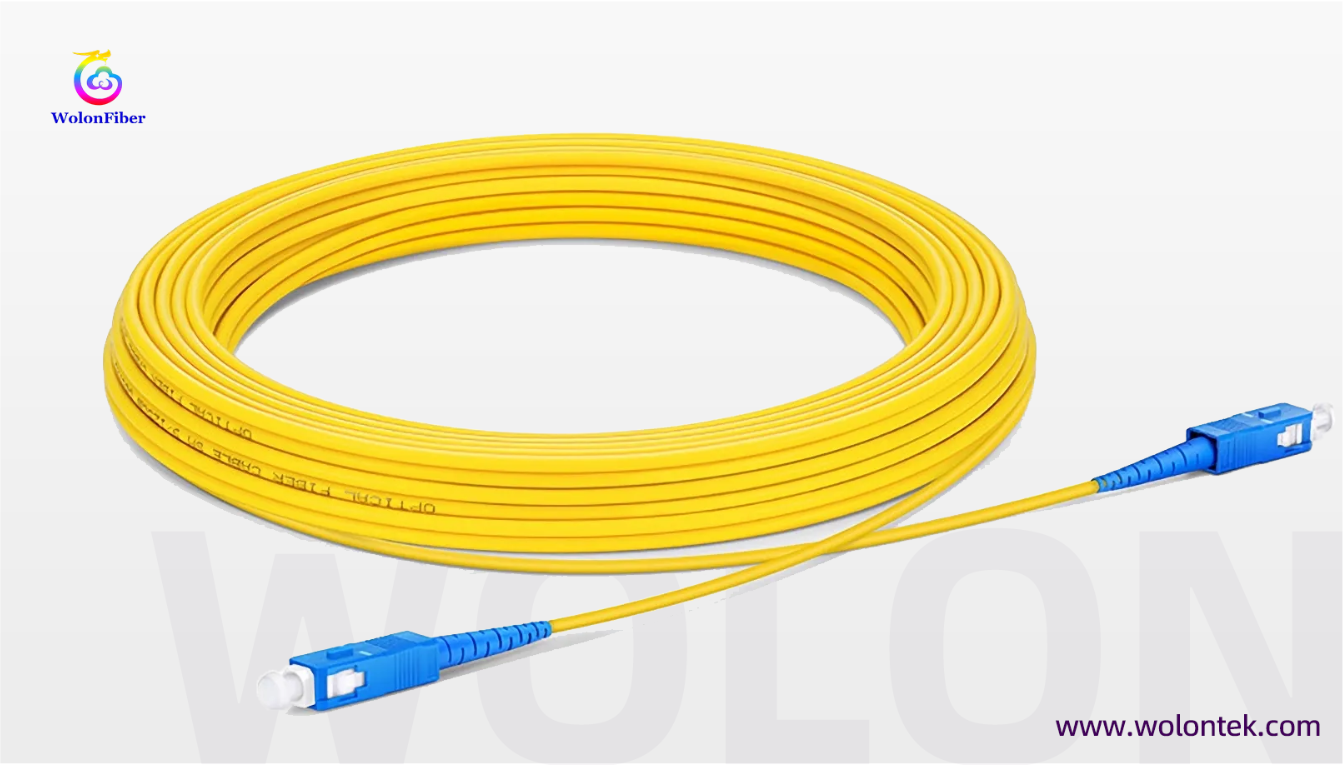
Expect low insertion loss (≈0.12–0.3 dB), but watch your polish type.
Link budgets require realistic field numbers. High-quality factory SC jumpers deliver an insertion loss around 0.12 dB. Manufacturers generally cap maximums at 0.3 dB. Use these figures for certification planning. Return loss depends on the polish. Standard UPC (blue) connectors reach ≈-50 dB. APC (green) connectors hit -60 dB or better. You need APC for video signals or high-power PON links to minimize back-reflections. Check specifications on your datasheet. But trust your field test results most.
Mechanical Durability and Handling
Built for the field: Rated for hundreds of cycles and rough handling.
Ruggedness is a strong selling point for the SC. Most standard SC products handle 500 to 1,000 mating cycles with stable performance. The solid plastic housing protects the ferrule. It forgives technicians wearing gloves or working in dark closets. Delicate connectors need finesse. The SC stands up to operational work. Just follow basic cleaning protocols.
Practical Applications: Where SC Still Shines
SC fits legacy systems and PON networks. It works where budget and access matter more than density.
Budget-Sensitive Projects: SC components cost less because of their huge global base. You don’t need high density? Choose SC connectors to lower your Bill of Materials (BOM) cost.
Field Termination & Maintenance: The 2.5 mm ferrule is easier to polish and terminate than smaller connectors. Technicians get faster repairs and less eye strain during installation.
GPON / FTTH Deployments: You’ll see Sc/Apc connectors on ONTs and passive splitters. It is the standard physical interface for fiber-to-the-home gear.
Legacy Campus Backbones: Many patch panels use SC standards. Replacing them costs money and isn’t necessary. Keep the SC form factor to avoid service disruption.
SC vs. LC Connectors: Making the Right Choice
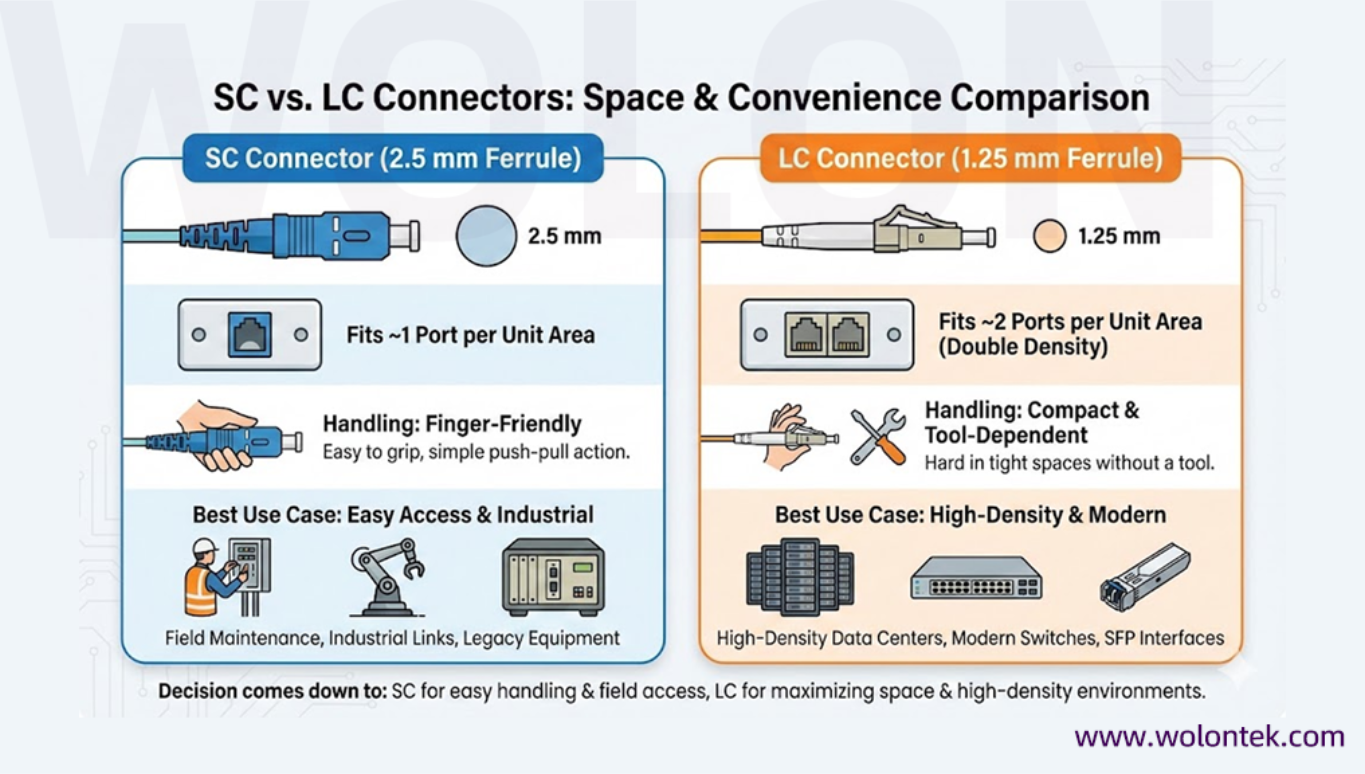
The decision comes down to space vs. convenience.
Ferrule Size: SC is 2.5 mm; LC is 1.25 mm. The LC fits about double the ports in the same faceplate area.
Handling:SC is “finger-friendly” and easy to grip. LC is compact. It gets hard to handle in tight spaces without a tool.
Best Use Case:Stick with SC for easy access, field maintenance, and industrial links. Switch to LC for high-density data centers, modern switches, and SFP transceiver interfaces.
Common Misconceptions
Don’t let myths guide your infrastructure decisions.
“SC is dead” — False. It isn’t for hyperscale data centers. But it remains a dominant standard in telecom and industrial fiber.
“APC is always an upgrade” — Not always. APC (Angled Physical Contact) improves return loss. However, it is incompatible with UPC transceivers. Match the keying and polish to your active equipment.
“Specs guarantee reality”— A datasheet is a promise. A field test is the proof. Dirt ruins any connector, no matter the factory rating.
Conclusion
The SC fiber connector is a mature, well-engineered optical interface. It balances performance with practicality. You trade the high density of modern connectors for superior handling and rugged mechanics. Maintain a legacy campus network or deploy a new PON system. The SC remains a reliable, cost-effective choice when serviceability is the priority.
If you’re managing SC-based links or planning a PON rollout, WOLON makes it easy to move from theory to reliable practice — we supply a full suite of SC products (SC connectors, SC/APC patch cables, SC–LC adapters and field-termination kits) engineered for low insertion loss, durable mating cycles, and straightforward field handling.

Whether you’re keeping a legacy campus running or building out new FTTH/PON endpoints, Wolon’s components are designed for the real-world conditions described above and come with datasheets and test support to help you validate performance on-site. Reach out to Wolon for samples, technical specs, or volume quotes — we’ll help you choose the right SC fiber solutions to keep your network robust and easy to maintain.