When choosing fiber optic cables or fiber connectors you will often see the terms PC, UPC and APC in product sheets. Those three labels are not brands or connector families — they describe how the ferrule endface is polished, and that polish directly affects return loss, insertion loss and which applications the connector is suited for. This article explains each polish type, compares them side-by-side, and gives practical selection advice so you can pick the right connector for your link.
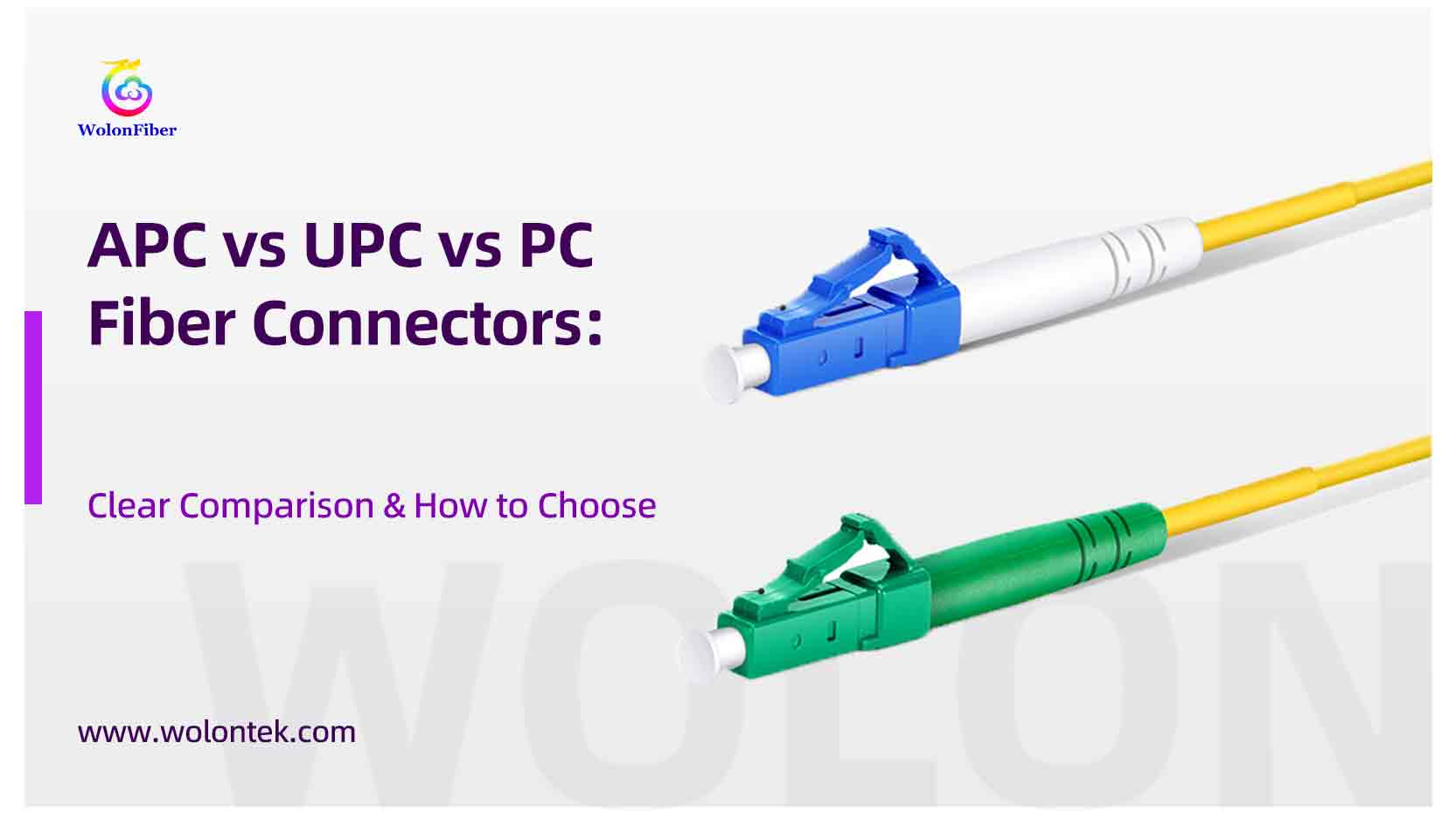
Introduction to Different Connector Types
In plain terms, PC, UPC and APC refer to endface geometry and surface finish of the connector ferrule where two fibers touch. The ferrule holds the glass and determines how light behaves at the mating interface. Early flat-polished connectors left a small air gap and produced large back reflections; modern polishing methods intentionally shape the endface so the fibers mate with minimal reflection and loss. Three common commercial polish styles you will see are PC (Physical Contact), UPC (Ultra Physical Contact) and APC (Angled Physical Contact). Each improves on the previous in different ways.
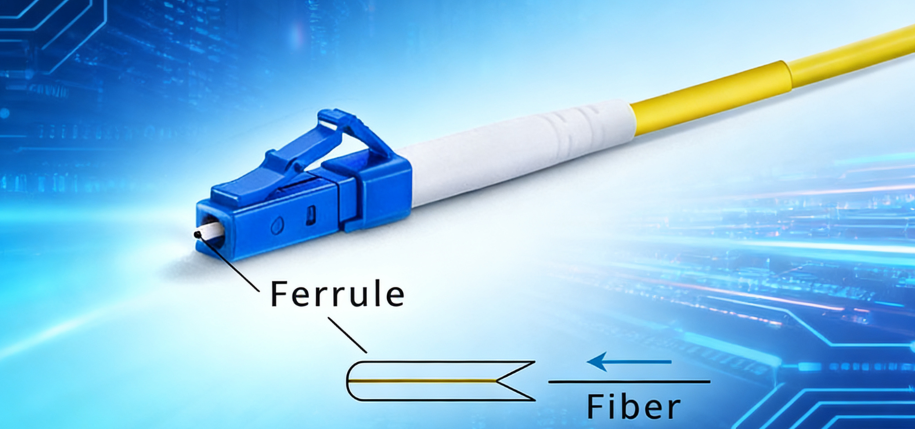
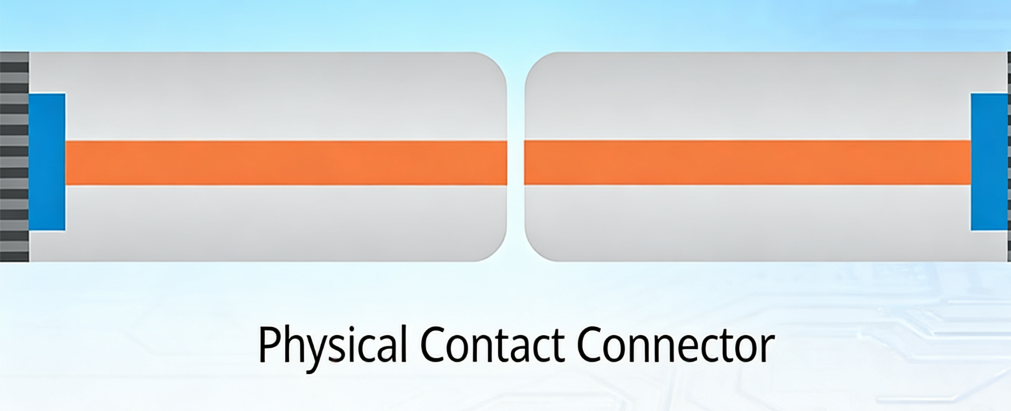
PC Fiber Connector
PC (Physical Contact) was the first practical improvement over a simple flat polish. The ferrule tip is slightly convex so the fiber cores touch directly when mated, reducing the air gap and therefore reflected light. Typical PC connectors were used widely in legacy single-mode and multimode systems where moderate return loss was acceptable. Typical return loss numbers historically quoted for PC connectors sit in the neighborhood of tens of decibels (commonly referenced near -40 dB under good manufacturing/control conditions). PC shaped the baseline for subsequent polish refinements.
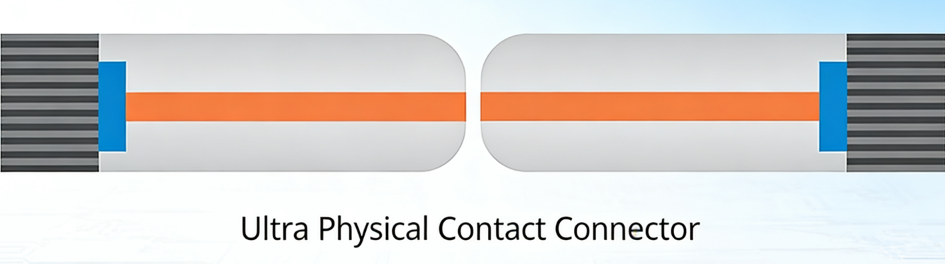
UPC Fiber Connector
UPC stands for Ultra Physical Contact. It uses a tighter, more consistently polished convex surface and finer polishing steps to improve surface finish and geometry control compared with PC. The result is lower back-reflection (higher return-loss) than a PC polish — many manufacturers and standards expect UPC single-mode connectors to routinely achieve better return-loss figures than PC, often approaching or exceeding -50 dB in good assemblies. UPC is a common choice for telecommunications, datacom and most single-mode patching where back-reflection is less of a show-stopper but low insertion loss and repeatability matter. Repeated mating cycles will still degrade the surface over time, so handling and cleaning are important.
APC Fiber Connector
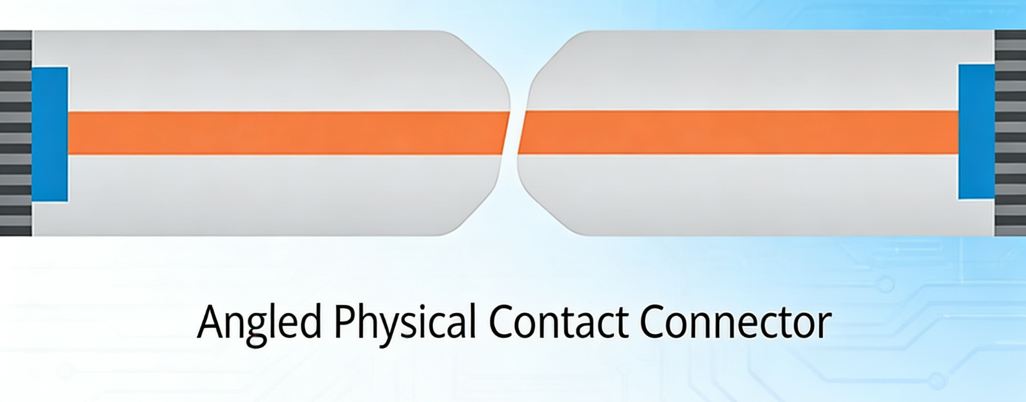
APC means Angled Physical Contact. The ferrule endface is polished at an angle (commonly 8°) rather than straight-on. That small angle directs any reflected light out into the cladding instead of back into the core, dramatically reducing the light that returns to the source. That design produces the lowest back reflections of the three polish types and is why APC is favored in systems sensitive to reflectance (for example, WDM, analog video, high-power lasers and many PON/FTTx deployments). Industry references commonly cite APC return-loss performance near or beyond -60 dB for well-made assemblies. Note: APC connectors must always be mated to another APC — mating APC to UPC/PC will create severe insertion loss and reflection problems because the angled endfaces do not align.
PC vs. UPC vs. APC: What Are Their Differences?
Appearance
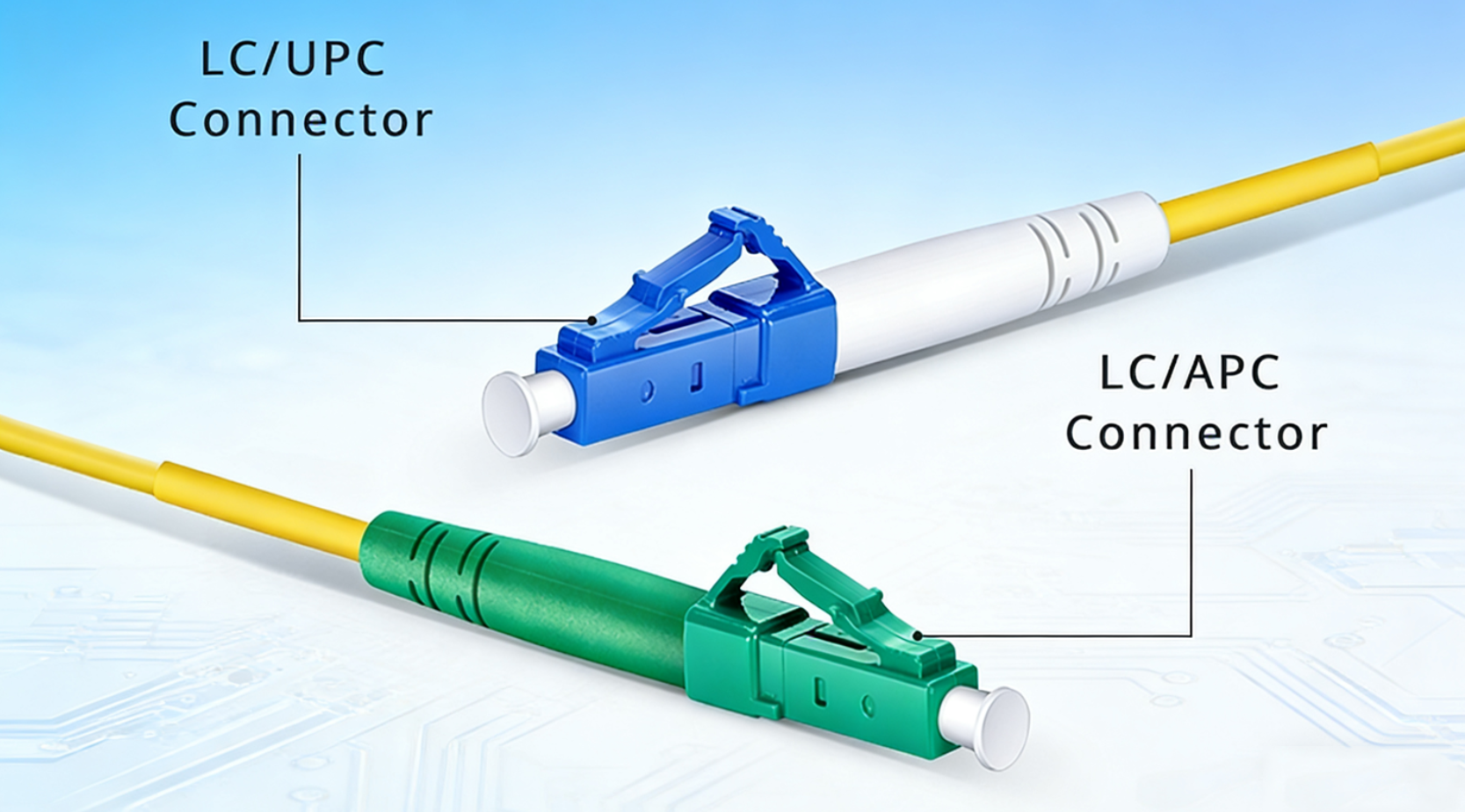
Visually, the endface geometry is the key difference: PC and UPC are “straight” polishes (UPC is more domed/smoother), while APC has a visible bevel/angle. Color coding is widely used: green bodies indicate APC polish, blue typically indicates UPC (single-mode) and multimode connectors or older PC styles are often beige or another vendor color. Color alone isn’t a guarantee — always verify marking/part numbers — but it’s a convenient quick check in the field.
Performance
Two performance numbers matter most: insertion loss (IL) and return loss (RL) (sometimes reported as reflectance). For modern, well-made jumpers the insertion loss of PC/UPC/APC connectors is typically low — commonly in the range of 0.1–0.5 dB per mated pair (many manufacturers publish typical IL ≤ 0.3 dB). The major differentiator is return loss: PC connectors historically delivered decent RL (tens of dB), UPC improves that (often ~-50 dB), and APC gives the best RL (commonly ~-60 dB or better). Higher (more negative) RL values mean less back-reflection and better performance in reflectance-sensitive systems.
Application
-
APC: Use where return loss is critical — analog RF/video links, high-wavelength dense WDM systems, PON/FTTx drop-plant, and laser test setups. APC is the standard for many passive optical networks and any link where reflections would disrupt modulation or cause noise.
-
UPC: The go-to for most telecom/datacom links, patch panels and transceiver patching where balanced low IL and decent RL are required but the absolute lowest RL is not necessary.
-
PC: Mostly legacy or cost-sensitive installations where moderate RL is acceptable; in practice, UPC has largely replaced PC in new single-mode deployments.
Practical Selection Checklist
-
Match polish types: Always mate APC↔APC and UPC/PC↔UPC/PC. Never mate APC to UPC.
-
Check color and part labels: Use color as a first check (green = APC, blue = UPC) but confirm product documentation.
-
Consider the optics: Many modern transceivers and dense wavelength systems specify APC for their ports — follow vendor guidance.
-
Plan for cleaning and mating cycles: UPC and PC surfaces can degrade; use proper cleaning tools and avoid excessive mating cycles on patchcords used for testing.
-
Balance cost vs. performance: APC assemblies are often slightly more expensive. If your link does not suffer from reflection-sensitive behaviours, UPC is a practical compromise.
Conclusion
There is no single “best” polish — the right choice depends on the sensitivity of the application to back reflection and how connectors will be used. UPC offers a reliable, low-loss option for most single-mode and datacom uses. APC delivers superior return-loss for WDM, PON and analog or laser-sensitive systems. PC is mainly of historical interest but remains in some legacy parts. The rule of thumb: for high-precision optical signaling and WDM/FTTx choose APC; for general telecom/datacom choose UPC/PC depending on legacy and cost constraints.

For projects that demand consistent polish quality and factory traceability, WOLON offers single-mode patchcords and pre-terminated assemblies manufactured to strict return-loss and insertion-loss tolerances. WOLON APC jumpers are precision-polished at 8° and factory-tested to deliver industry-grade return loss beyond typical UPC values, while WOLON UPC and PC assemblies provide cost-effective, low-loss options for patching and data center deployments. Each WOLON cable is labeled with polish type, measured IL/RL values and batch traceability for easier field verification and maintenance.