
If you work in IT infrastructure, you have likely heard the term “Twinax” thrown around when discussing server racks, switch upgrades, or high-speed network deployments.
But what exactly is it? If you search for basic definitions, you might find outdated references to old IBM mainframes from the 1980s. However, in modern networking, twinax cable is the absolute backbone of Top-of-Rack (ToR) data center connectivity.
If you are an architect trying to balance your CAPEX budget against port latency, you need to understand the physical mechanics of twinaxial cables, how they differ from standard coax, and why they are the secret weapon for deploying 10G, 25G, and 100G networks on a budget.
What is a Twinaxial (Twinax) Cable?
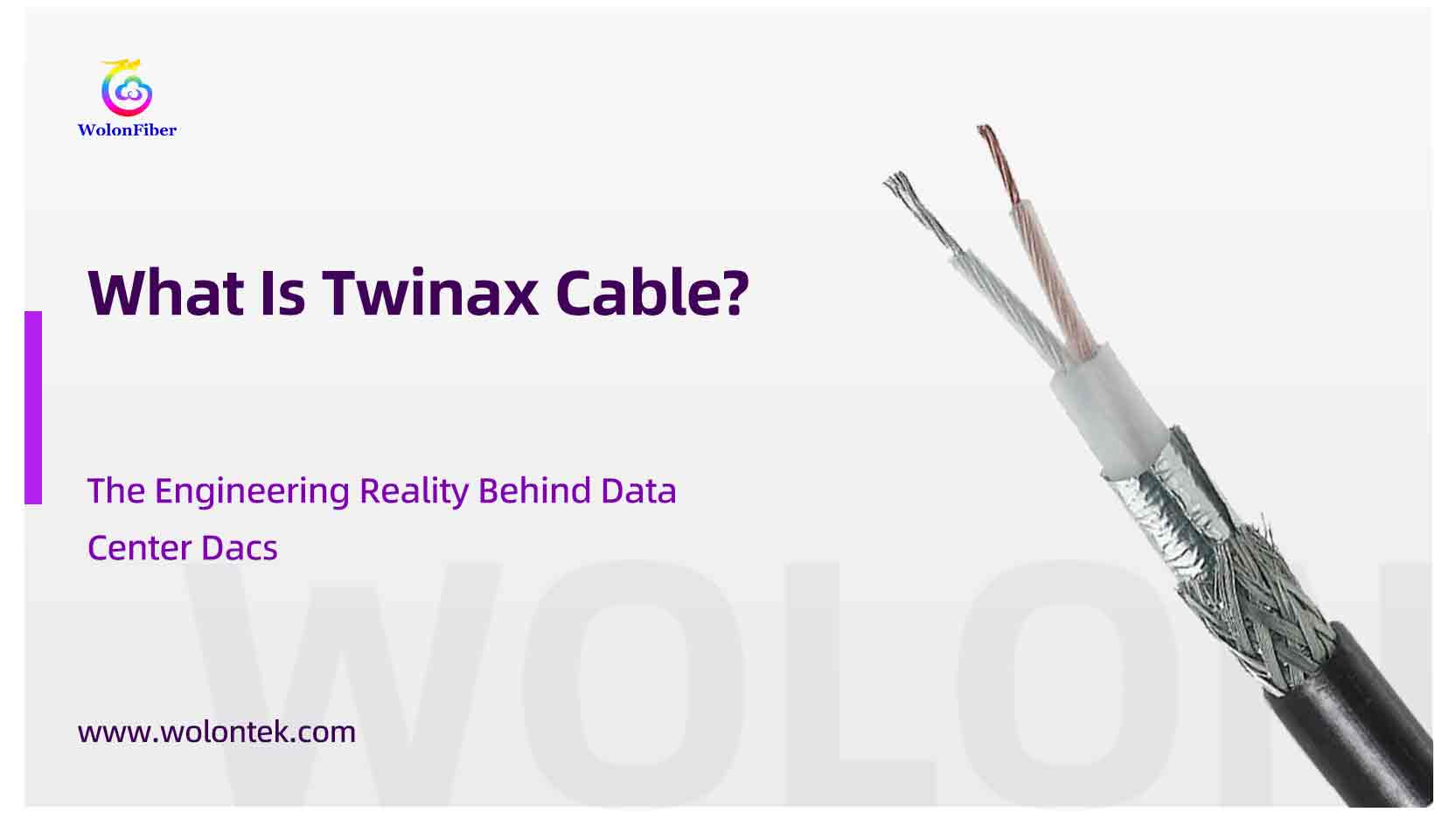
A twinaxial cable, commonly shortened to twinax, is a type of communication cable that features two inner conductors instead of one.
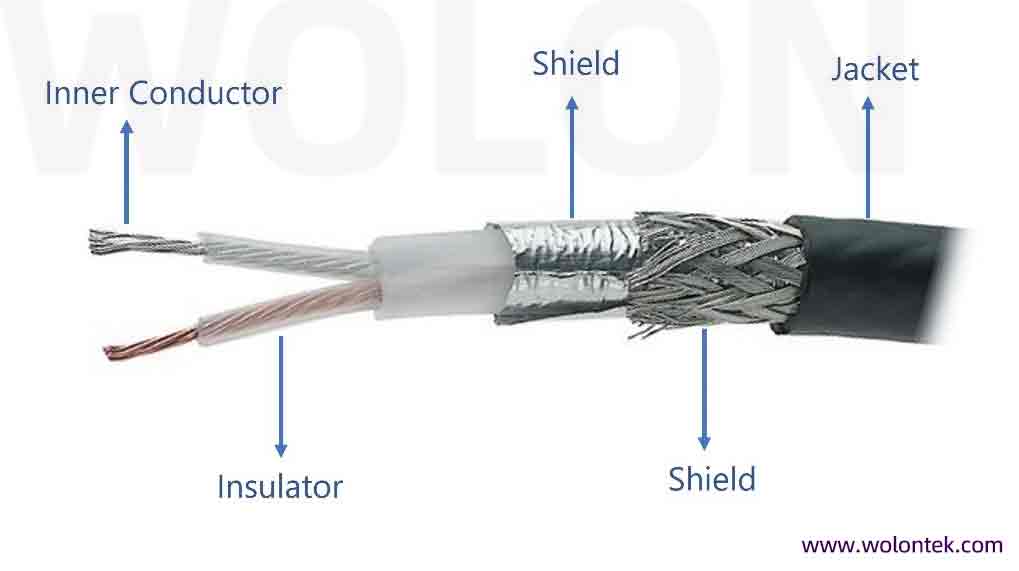
To understand its construction, you have to look inside the jacket. A standard twinax cable consists of:
-
Two copper cores (conductors): Usually twisted or laid parallel to each other.
-
Dielectric insulation: Encasing the two conductors.
-
A heavy metallic shield: A braided or foil shield that wraps around the insulated conductors to block electromagnetic interference (EMI).
-
An outer PVC or LSZH jacket: To protect the cable assembly.
Why two conductors? It all comes down to a physics concept called differential signaling. In a twinax cable, the same data signal is sent down both copper cores, but the signals are mathematically inverted (perfect opposites). When the receiving switch port processes the two signals, any electrical noise or interference that penetrated the cable is instantly recognized and canceled out.
This allows twinax to transmit extreme bandwidths (up to 400 Gbps in parallel setups) with near-zero data corruption over short distances.
Coax vs Twinax: What is the Difference?
A frequent question we see from junior engineers is: “How is twinax different from the coaxial cable plugged into my TV or old radio equipment?”
The difference dictates their entire use case:
-
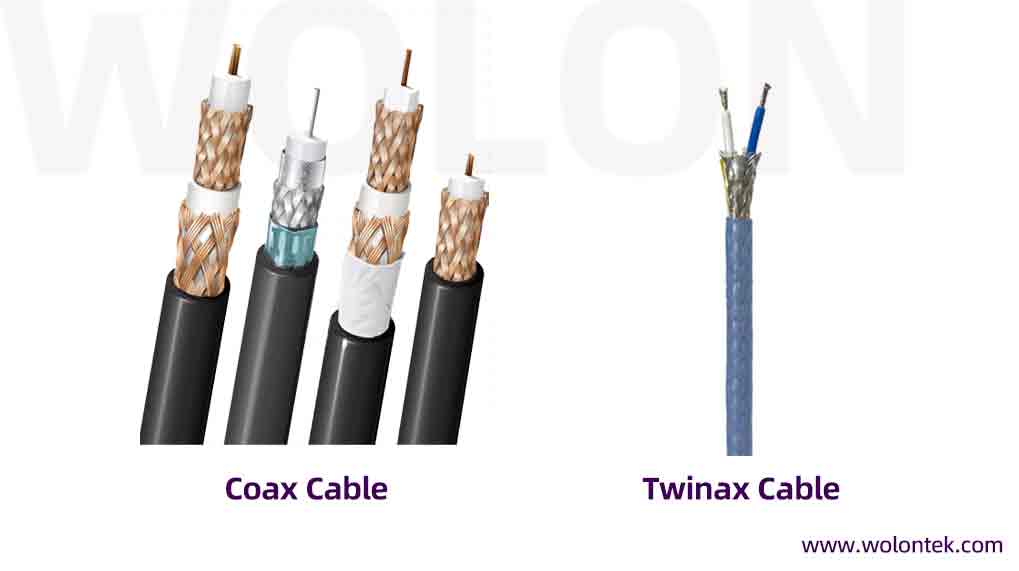
Coaxial Cable (Coax): Has exactly one solid inner copper conductor. It uses “unbalanced” signaling. It is fantastic for carrying high-frequency analog signals (like broadband internet or RF video) over very long distances. However, at extreme digital data rates (like 100 Gbps), a single core suffers from severe signal degradation and crosstalk.
-
Twinaxial Cable (Twinax): Has two inner conductors. It uses “balanced” (differential) signaling. It cannot carry signals over long distances, but for ultra-high-speed digital data over incredibly short runs (under 7 meters), it offers drastically superior signal integrity compared to coax.
The Data Center Reality: Twinax = DAC
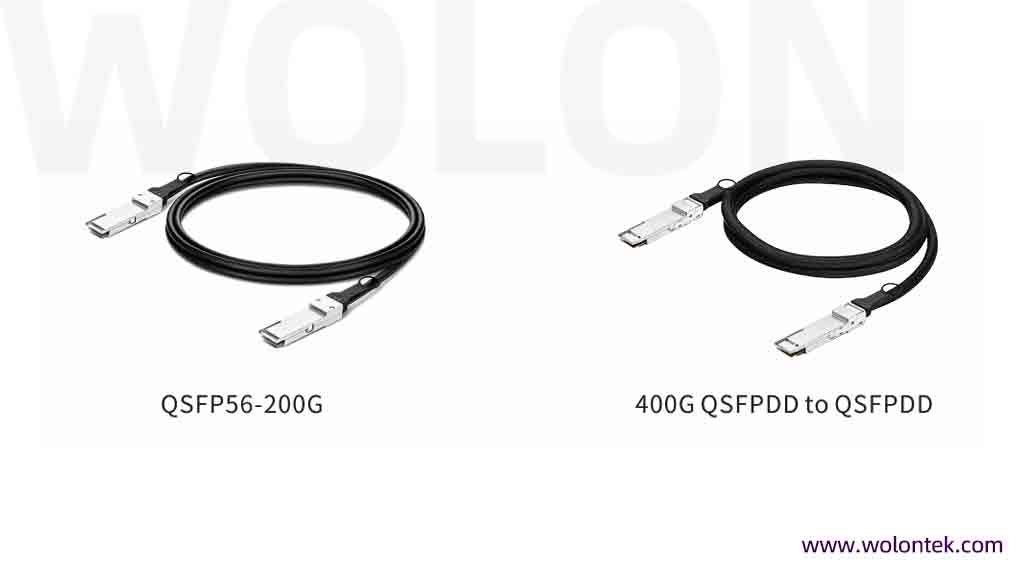
Here is the most important hardware connection you need to make: When you buy a Direct Attach Copper (DAC) cable for your SFP+ or QSFP28 switch ports, you are buying a twinax cable.
In modern enterprise networking, bare twinax wire is almost never sold on a spool. Instead, it is cut into short lengths (0.5m to 7m), and factory-terminated with transceiver form factors (like SFP+, SFP28, or QSFP-DD) directly attached to both ends.
Why do hyperscale data centers rely so heavily on Twinax DACs for their server-to-switch connections?
-
Zero Power Consumption: A passive twinax DAC has no optical lasers and no heavy Digital Signal Processing (DSP) chips. It draws practically 0 Watts, significantly lowering your rack cooling costs.
-
Ultra-Low Latency: Because the electrical signal does not need to be converted into light (and back again), twinax offers the lowest port-to-port latency possible—often under 0.1 microseconds.
-
Cost-Effectiveness: A copper twinax assembly costs a fraction of what you would pay for two Optical Transceivers and a fiber patch cord.
The Physical Limitation of Twinax
If twinax is so fast, cheap, and power-efficient, why don’t we use it everywhere?
Distance and Weight. Pushing high-frequency digital signals over copper creates heavy attenuation (signal loss). A passive 10G or 25G twinax cable will physically tap out at around 5 to 7 meters. If you try to push 100G over passive twinax, your absolute maximum reach drops to about 3 meters.
Furthermore, to handle these high speeds, the copper cores must be thick (typically 24 Awg to 30 AWG). This makes twinaxial cables heavy, rigid, and difficult to route through tight cable management arms. If you need to connect servers across different rows in a data center, twinax is useless—you must switch to Active Optical Cables (AOC) or standard fiber transceivers.
Stop Overpaying for Twinax DACs
The biggest mistake IT buyers make is purchasing “branded” twinax DACs. Paying a premium for an OEM logo printed on a copper cable is a massive waste of your IT budget. The physics of the copper wire inside a $150 OEM cable and a $15 factory-direct cable are exactly the same.
At Wolontek, we cut out the distributor markup. Operating directly out of our 400+ person manufacturing facility in Wuhan’s Optical Valley, we produce strict-tolerance Twinax DAC assemblies for global network deployments.

We meticulously test our twinax cables for insertion loss and crosstalk, and our engineers flash the EEPROM connectors to ensure 100% plug-and-play compatibility with your Cisco, Arista, Juniper, or Huawei switches. You get the ultra-low latency and power savings of twinax, without the vendor-lock-in tax.

 Deploying High-Density ToR Interconnects?
Cut cabling costs while maintaining ultra-low latency. Explore WolonFiber’s Factory-Direct Twinax DAC and Optical Solutions engineered for demanding data center environments.
Explore DAC & Optical Solutions
What is a twinax cable used for?
Today, twinax cables are primarily used in data centers to manufacture Direct Attach Copper (DAC) cables. They provide ultra-high-speed, low-latency, and low-power connections between servers, storage arrays, and Top-of-Rack (ToR) switches using SFP+ and QSFP+ interfaces.
What is the difference between coax and twinax?
A coaxial (coax) cable has a single inner copper conductor and is used for transmitting unbalanced, high-frequency analog signals over long distances. A twinaxial (twinax) cable has two inner conductors, utilizing differential signaling to transmit extremely fast digital data over very short distances without electromagnetic interference.
What is the maximum length of a twinax cable?
Because of electrical attenuation, passive twinax cables are strictly limited to short distances. For 10G and 25G speeds, the maximum reliable length is typically 5 to 7 meters. For higher 100G speeds, the passive twinax limit drops to about 3 meters.
Is a DAC cable the same as twinax?
Yes. In modern networking, a Direct Attach Copper (DAC) cable is simply a specific length of high-grade twinax cable that has been factory-terminated with transceiver modules (like SFP or QSFP) permanently attached to both ends.