Direct-Attach Copper (DAC) cables are a simple, cost-efficient way to link network equipment inside racks and across adjacent racks. Unlike separate transceiver + patch-cable setups, DAC assemblies come pre-terminated with compatible pluggable connectors on each end and a fixed copper twinax cable between them. This built-in design makes DACs especially popular for short, high-speed interconnects inside data centers and storage clusters.
What is a DAC cable?
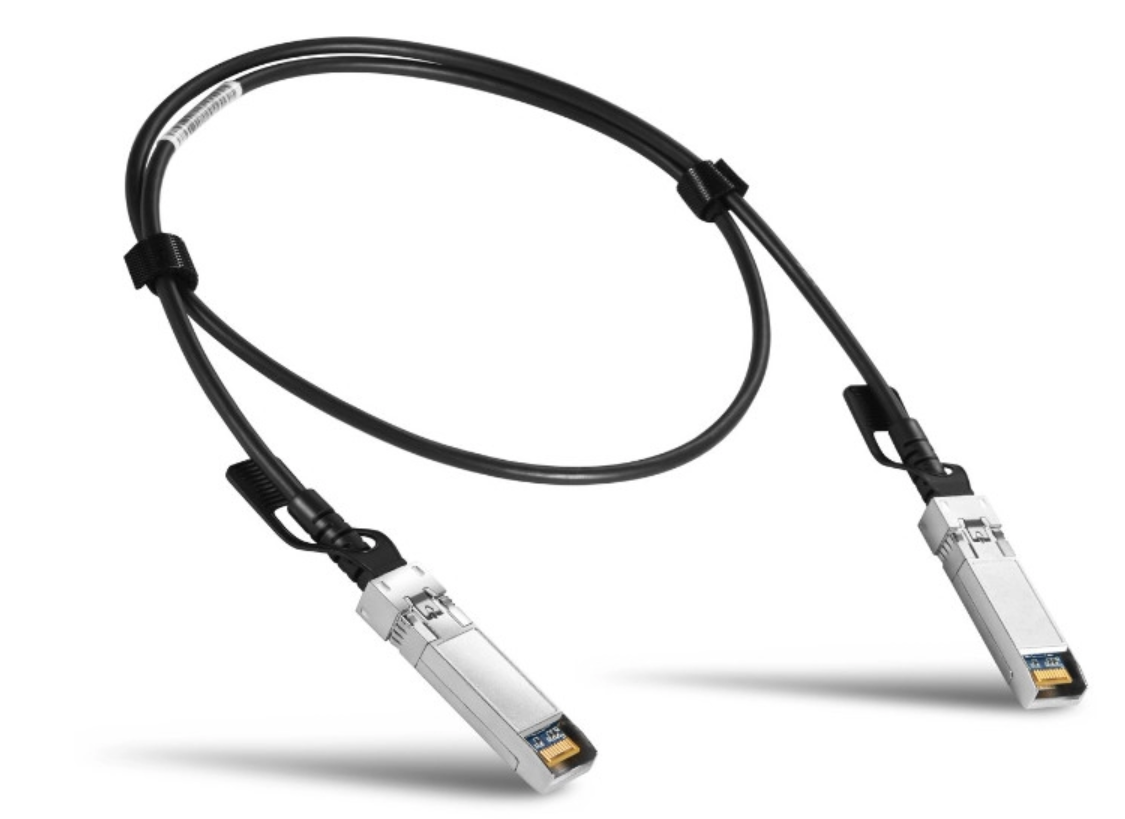
A DAC is a factory-built twinax copper assembly that pairs two pluggable connector modules (for example SFP+, QSFP+, QSFP28, QSFP-DD) with a short-length copper cable. Because the connectors and cable are integrated at manufacture, DACs deliver a low-latency, low-power, high-throughput link for distances typically under a few meters (commonly used up to ~7–10 m depending on speed and vendor). They are used to connect switches, NICs, routers and storage interfaces directly without separate transceivers and patch cords.
Variants and when to use each
There are two main flavours:
-
Passive DAC — purely passive twinax wiring and connectorization. Best for very short runs at lower line rates because they consume no extra power and are the cheapest option.
-
Active DAC (or A-DAC) — contains signal-conditioning electronics to extend reach or support higher bit rates. They’re slightly pricier but can reliably support longer short-reach distances and faster links.
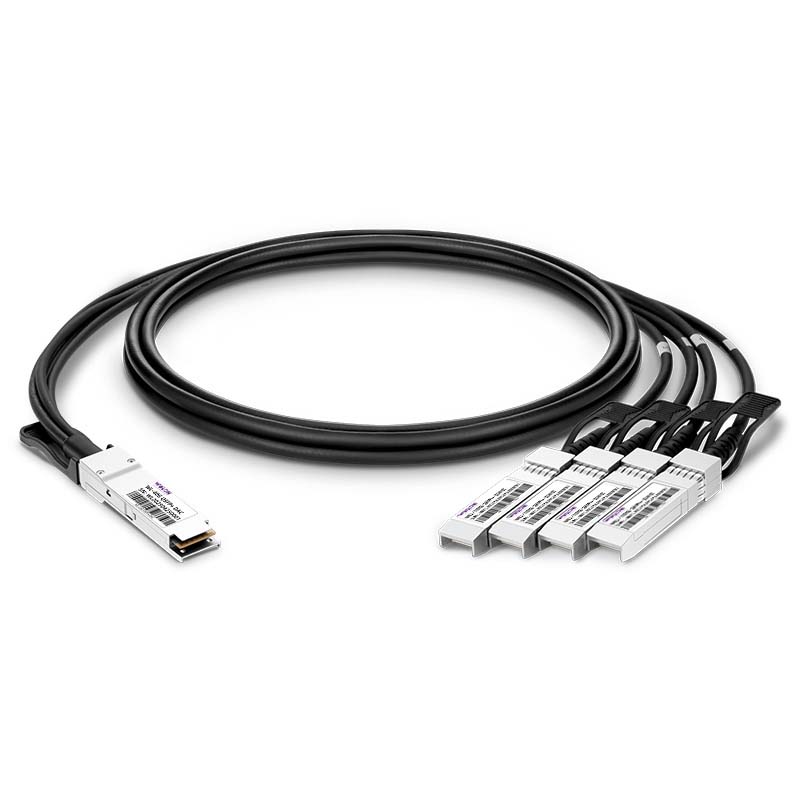
Another common configuration is the breakout (fanout) DAC, which converts a single high-speed port into multiple lower-speed ports (for example, a QSFP+ 40G end splitting into four SFP+ 10G ends). Breakout DACs are great when you want to aggregate or re-distribute bandwidth without extra breakout modules.
Classified by Data Rate and Form Factor
-
SFP DAC cable: SFP to SFP, offers 1G speed for gigabit ethernet SFP port connectivity
-
SFP+ Dac Cable: 10G SFP+ to 10G SFP+, suitable for SFP+ port connectivity. This type is the most popular copper cable with a relatively low price, widely used in data centers and enterprise networks.
-
SFP28 DAC Cable: 25G SFP28 to 25G SFP28, which typically supports 25G speed for the SFP28 port, is usually used in a 25GbE Ethernet application.
-
QSFP+ DAC Cable: 40G QSFP+ to 40G QSFP+, suitable for 40G QSFP+ port.
-
56G FDR DAC Cable: 56G QSFP+ to 56G QSFP+, providing 56G (4x14G) speed, suitable for InfiniBand in the enterprise data center.
-
QSFP28 DAC Cable: This 100G QSFP28 to 100G QSFP28 cable provides 100G (4x25G) speed, suitable for high-speed connectivity in data centers and cloud computing.
-
QSFP56 DAC Cable: 200G QSFP56 to QSFP56, support 200G (4x50G) speed.
-
400G QSFP-DD DAC Cable: 400G QSFP-DD to 400G QSFP-DD, supports 400G (8x50G) speed.
-
800G QSFP-DD DAC Cable: 800G QSFP-DD to 800G QSFP-DD, supports 800G (8x100G) speed.
-
800G OSFP DAC Cable: 800G OSFP to OSFP, supports 800G (8x100G) speed.
-
40G Breakout Cable: 40G QSFP+ to 4x 10G SFP+
-
100G Breakout Cable: 100G QSFP28 to 4x 25G SFP28
-
200G Breakout Cable: 200G QSFP-DD to 2x 100G QSFP28, 200G QSFP56 to 4x 50G SFP56
-
400G Breakout Cable: 400G QSFP-DD to 4x100G QSFP56, 400G QSFP-DD to 2x200G QSFP56
-
800G Breakout Cable: 800G OSFP to 2x400G OSFP
DAC vs. fiber — an honest comparison
Choosing between DAC and fiber depends on distance, budget, heat and future-proofing.
-
Distance: Fiber wins for anything beyond short rack-to-rack spans. DAC is optimized for within-rack and adjacent-rack links.
-
Cost: For short distances, DACs are commonly cheaper than a separate transceiver + fiber trunk. For longer runs, fiber total cost (cable + transceivers + management) becomes more attractive.
-
Power & Heat: DACs generally draw less active power than optical transceivers (especially passive DACs draw essentially none), meaning lower thermal load inside crowded racks.
-
Density & Flexibility: Fiber is lighter, thinner and can be arranged for high-density panels where cable management space is at a premium. DACs are thicker and less flexible, which can complicate dense deployments.
-
Monitoring: Fiber transceivers often support diagnostic features such as DOM (Digital Optical Monitoring). Many DACs lack the same level of remote monitoring, though higher-end active DACs can include telemetry.
In short: pick DAC for economical, low-latency, short-distance links when physical space and flexibility are not the primary constraints; pick fiber for longer reach, future scalability, and where cable routing/weight matters.
|
Comparison |
Fiber |
DAC |
|
Reach |
max 160km |
max 15m |
|
Data Rate |
1G, 2.5G, 3G, 8G, 10G, 25G, 40G, 56G, 100G, 200G, 400G, 800G |
1G, 10G, 25G, 40G, 56G, 100G, 200G, 400G, 800G, 1.6T |
|
DOM Support |
Yes |
No |
|
Power Consumption |
Higher |
Lower |
|
Weight |
Lighter |
Heaver |
|
Price (Optcore) |
Expensive Overall |
Cheaper for short length |
|
Size |
Slim cables allow easy cable management and higher flexibility |
Thicker cables, lower flexibility |
|
Pros |
Better EMI performance, much more choice, longer distance |
Overall low cost, Better heat dissipation, better for short distance interconnectivity |
|
Cons |
Friendly budget |
Limit distance, Bulky, difficult for cable management |
|
Application |
ToR, Middle of Row, End of Row, Zone to Zone |
Top Of Rack/Middle Of Rack switches connected to End Of Row/Middle of Row switches |
Practical selection checklist
When you’re about to buy DACs, use this checklist to avoid costly mistakes:
-
connector compatibility — ensure the DAC termination matches the host ports (SFP+, QSFP28, QSFP-DD, etc.).
-
Speed and lane configuration — confirm the DAC supports the aggregate throughput you need (10G, 25G, 40G, 100G, 200G, 400G, etc.).
-
Passive vs Active — pick passive for <5–7 m and lower bitrates to save cost and power; choose active for longer short-reach or higher speed links.
-
Breakout requirements — if splitting one high-speed port into multiple lower-speed ports, get a breakout DAC with the correct breakout mapping.
-
Vendor/MD code compatibility — some switches restrict third-party DACs; verify compatibility or choose vendor-approved models to avoid link issues.
-
Length tolerance — confirm tested maximum length at the target data rate; don’t assume longer lengths will work at higher bitrates.
-
Operating temperature & mechanical specs — ensure DAC durability meets your data-center environment.
Installation and cable management tips
-
Route DACs to avoid tight bends; twinax cables have a minimum bend radius.
-
Keep DAC runs short and direct to minimize crosstalk and ease airflow.
-
Label both ends and maintain a simple patching map — fixed-length DACs are not as forgiving as patch cords for rework.
-
Avoid daisy-chaining: always run DACs directly between intended ports to retain signal integrity.
Common use cases
-
Top-of-Rack (ToR) switch uplinks to aggregation switches in the next rack.
-
Server NIC to local switch connectivity inside a chassis or rack.
-
Short-distance storage interconnects between appliances in the same rack.
-
High-density switch panels where cost and latency matter more than ultimate reach.
Quick FAQ
Q: Can a DAC replace fiber transceivers completely?
A: Not really — DACs are excellent for short links but fiber remains the go-to for longer reach, more flexible routing, and higher-density cabling needs.
Q: Are breakout DACs reliable for aggregation?
A: Yes — when matched to correct port types and speeds, breakout DACs are a cost-effective way to split a high-speed port across multiple lower-speed endpoints.
Q: Do DACs cause more heat?
A: Passive DACs produce virtually no heat; active DACs produce modest heat comparable to small transceiver modules. For dense racks, total power profile should be checked.
Takeaway
Direct-Attach Copper remains a practical, cost-conscious option for short, high-performance interconnects in data centers. Pick the right type (passive vs active), match connectors and speeds, and plan cabling carefully — you’ll keep latency low and your bill of materials lean.
For teams that want factory-tested reliability, WOLON’s DAC cable portfolio offers SFP+/SFP28, QSFP+/QSFP28 and QSFP-DD twinax assemblies manufactured to MSA and SFF specifications. Each WOLON DAC cable is factory-verified for continuity, insertion cycle durability and minimum bend radius, supplied with dust caps and labeled for fast deployment in rack environments.