
In modern networking, subtle hardware differences can have outsized effects on performance, cost and migration paths. Choosing between an sfp module and an sfp+ module influences port density, power budgets, cabling choices and upgrade strategy. This concise, vendor-informed guide covers the practical distinctions, compatibility rules and deployment best practices you need to decide with confidence. The explanations below focus only on the title question—clear, testable, and actionable.
What are an sfp module and an sfp+ module?
An sfp module (Small Form-Factor Pluggable) is the widely used hot-pluggable transceiver for gigabit links and related Fibre Channel applications. Typical sfp module parts implement 1 Gbps (1.25 Gbit/s line rate) optics such as 1000BASE-SX and 1000BASE-LX and follow long-standing mechanical and diagnostic specs.
An sfp+ module (Enhanced Small Form-Factor Pluggable) keeps the same external size and cage but is specified for higher electrical speed: most commonly 10 Gbps Ethernet (10GBASE-SR/LR) and high-speed Fibre Channel. The SFP+ electrical and management behavior is defined in SFF documents (SFF-8431, SFF-8432), which describe the high-speed lane characteristics that distinguish an sfp+ module from older 1G optics.
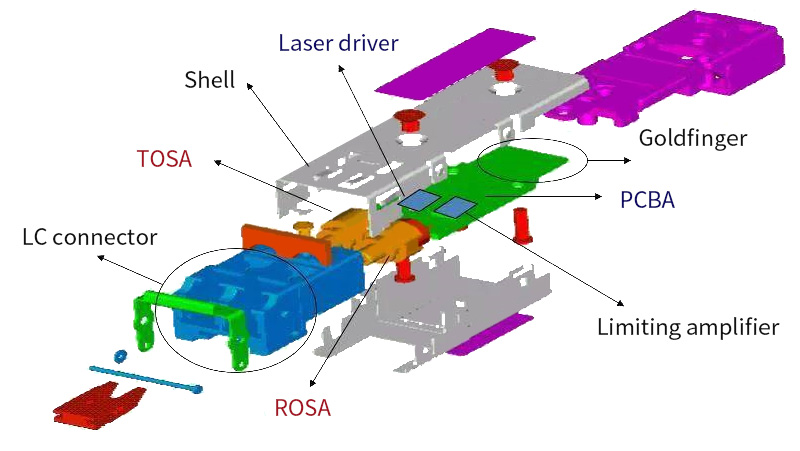
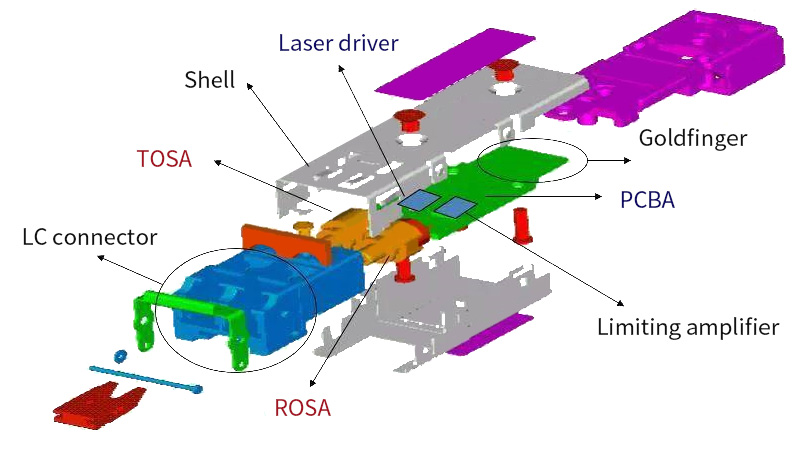
Speed and protocol differences
The defining technical difference is throughput and signaling. An sfp module is usually a 1G device supporting IEEE 802.3 gigabit standards; an sfp+ module is engineered for 10G and related protocols. That jump changes the optical engine, required signal integrity, and often whether the part uses NRZ or PAM4/DSP techniques in more advanced optics. For procurement and architecture, treat speed capability as the primary decision axis.
Form factor, mechanical specs and standards compatibility
Mechanically, sfp module and sfp+ module share the same small footprint and cage dimensions—SFP+ was intentionally specified to be physically compatible with SFP cages. The mechanical spec ensures physical fit, but mechanical fit alone does not guarantee functional operation: the electrical interface and host support determine whether an inserted transceiver will achieve a link.
Common misconceptions
• “They’re mechanically different” — false: they share the same physical footprint.
• “All SFP+ optics fall back to 1G” — false: many 10G-only sfp+ module parts will not autonegotiate to 1G; vendor checks and lab tests are mandatory.
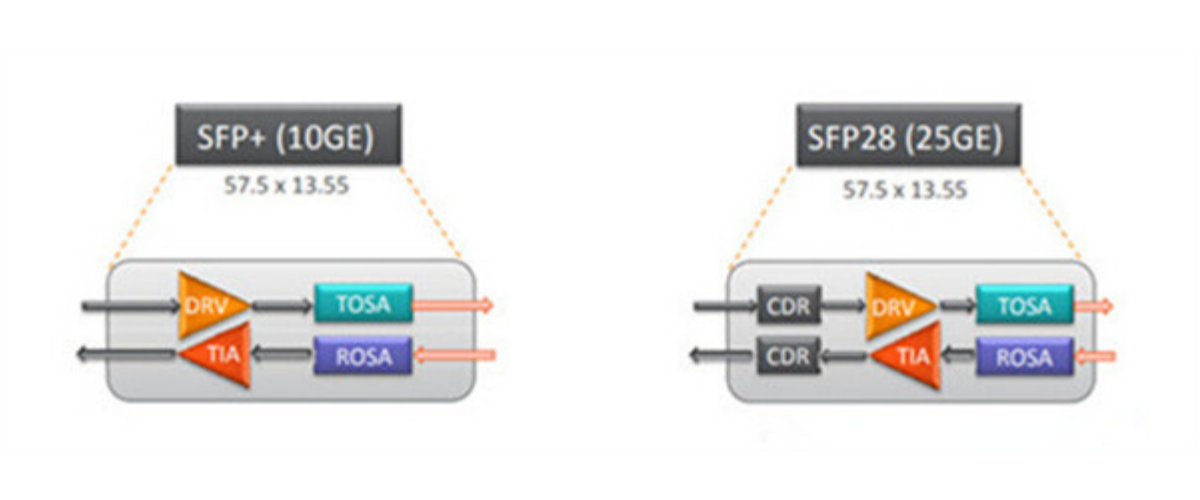
Is SFP and SFP+ compatible?
• SFP+ ports normally accept SFP modules. In most vendor platforms, an sfp module can be plugged into an SFP+ slot and run at 1G (autonegotiated or manually forced). This backwards compatibility is common and used regularly during staged upgrades.
• An SFP+ module will not operate in a legacy SFP-only port. The 10G signaling that an sfp+ module expects is not provided by a 1G-only host PHY, so the link will typically fail to come up. This is the single most important forward-compatibility limitation.
Why SFP+ ports accept SFP optics ?
Vendors commonly design SFP+ cages and host ASICs to support multiple rates so the same physical port can be used temporarily for 1G links while the network migrates. That flexibility reduces immediate re-cabling and allows you to populate ports with lower-cost sfp module parts during transitional phases. Still—because firmware/ASIC implementations differ—always confirm vendor compatibility matrices and test samples before a mass rollout.
Why you cannot simply stick an SFP+ module into an SFP port
An sfp+ module needs a 10G electrical lane with high-speed signaling; SFP-only host interfaces are designed for 1G electrical characteristics. Because the PHY and host ASIC do not present the required serial 10G lane, the sfp+ module will not negotiate a link in a 1G-only cage. This electrical mismatch, not the mechanical size, is the root cause.
Practical deployment scenarios and guidance
• If you are running 1G access switches today but are buying new aggregation chassis, prefer chassis that expose SFP+-capable uplinks. That lets you run inexpensive sfp module optics now and upgrade to sfp+ module 10G parts later without changing line cards.
• If your design needs immediate 10G at top-of-rack, choose sfp+ module optics (or DAC/AOC alternatives) and confirm per-port power and thermal budgets. SFP+ DACs are a cost-effective short-reach option; SFP+ LR/ER optics handle longer links.
Summary
• Treat the sfp module as the 1G building block and the sfp+ module as the 10G building block.
• Expect SFP+ ports to accept SFP modules in most platforms, but do not expect SFP ports to accept SFP+ modules.
• Always validate with vendor matrices and lab samples before large purchases.
If you’d like hands-on validation (power measurements, BER tests, and a compatibility matrix for the exact sfp module and sfp+ module part numbers you plan to buy), Wolontek offers lab evaluation and sample kits tailored to your chassis and fiber plant—visit wolontek.com to request a personalized test plan and sample kit.