
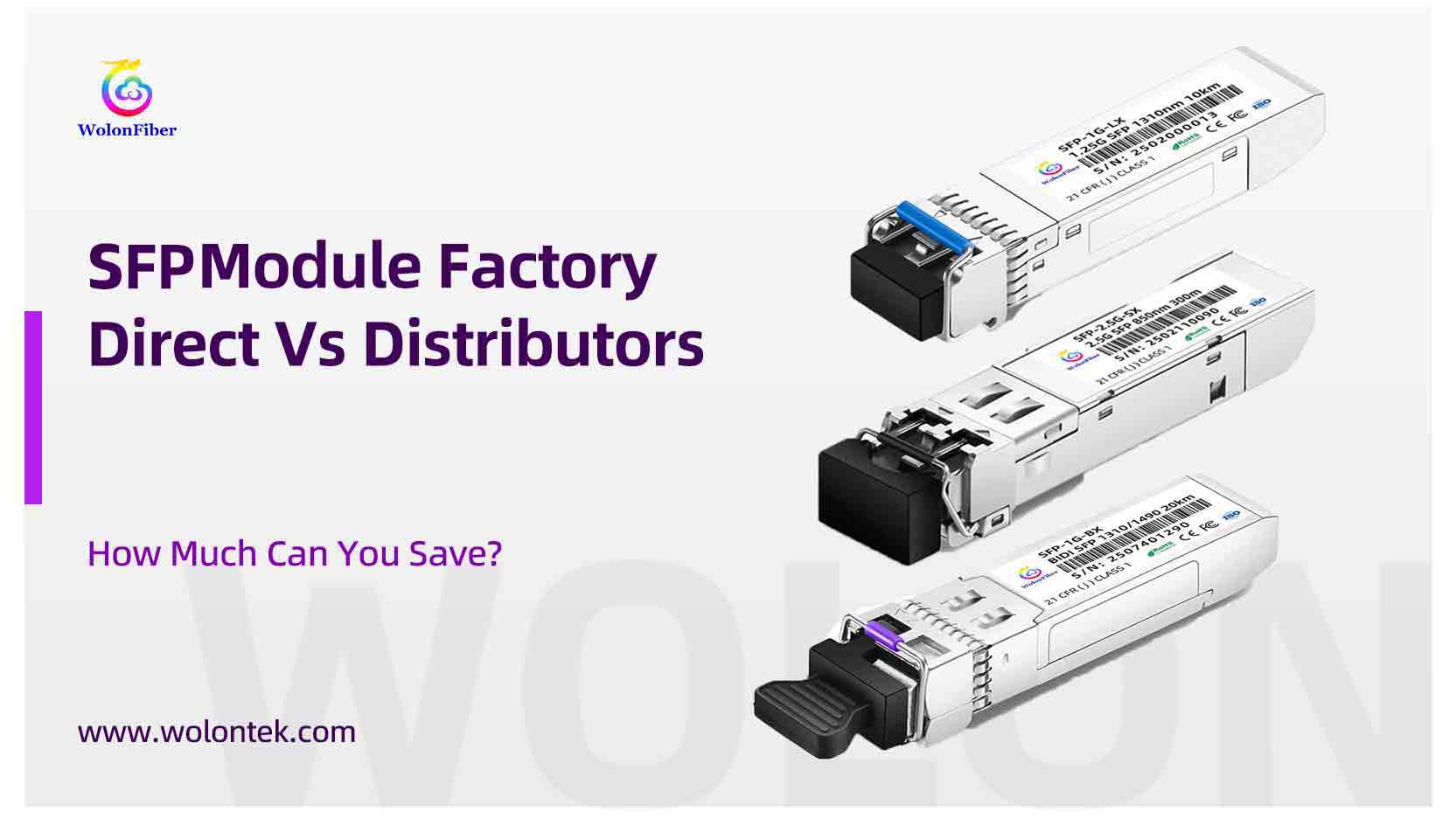
If you have ever quoted a project using original Cisco, HPE, or Juniper optical transceivers, you know the sticker shock. A single 10G SFP+ module from a big-name brand can list for over $300. Yet, you can find “compatible” SFp module factory direct online for $20.
This massive price gap often scares procurement managers. The immediate thought is: “Is the cheap one going to fail? Is it fake?”
Here is the industry secret that big brands don’t want you to know: They don’t make their own modules. Most OEM brands outsource production to the same contract manufacturers in China that we compete with.
As a direct manufacturer (Wolon), we are here to pull back the curtain on the optical Transceiver supply chain. In this guide, we will analyze the real cost difference between buying from a distributor versus buying factory-direct, and help you decide which path is right for your business.

The Supply Chain Markup: Where Does Your Money Go?
To understand the savings, you have to follow the money. When you buy an SFP Module from a local distributor or a branded reseller, you are paying for a long chain of middlemen.
1. The Brand Tax (The OEM Path)
|
Procurement Path |
Supply Chain Structure |
Cost |
The Reality (What you pay for) |
Potential Savings |
|
1. The Brand Tax (The OEM Path) |
Factory $\rightarrow$ Major Brand $\rightarrow$ Distributor $\rightarrow$ Reseller $\rightarrow$ You |
$$$$$ |
The Brand: You pay for the Logo, huge marketing budgets, and “peace of mind” warranty. |
None (Highest Price) |
|
2. The Distributor Path (The Middleman) |
Factory $\rightarrow$ Importer $\rightarrow$ Online Retailer (e.g., FS/Amazon) $\rightarrow$ You |
$$$ |
Convenience: You pay a 30%-50% margin to cover their local warehousing and advertising costs in the US/Europe. |
Moderate (vs. OEM) |
|
3. The Factory Direct Path (The Wolon Way) |
Wolon Factory (Hubei) $\rightarrow$ You |
$ |
The Product: You pay for the Bill of Materials (BOM) + a small manufacturing fee. No warehouse overhead. |
Save 50% – 70% (vs. Dist) Save up to 90% (vs. OEM) |
Pro Tip: If you are buying 5 or 10 units, a distributor is fine. But if you are a Distributor yourself, an ISP, or handling a data center rollout requiring 500+ units, buying direct is the only way to protect your margins.
The “Quality Myth”: Are Factory Direct Modules Inferior?
This is the most common objection we hear: “If it’s so cheap, the quality must be bad.”
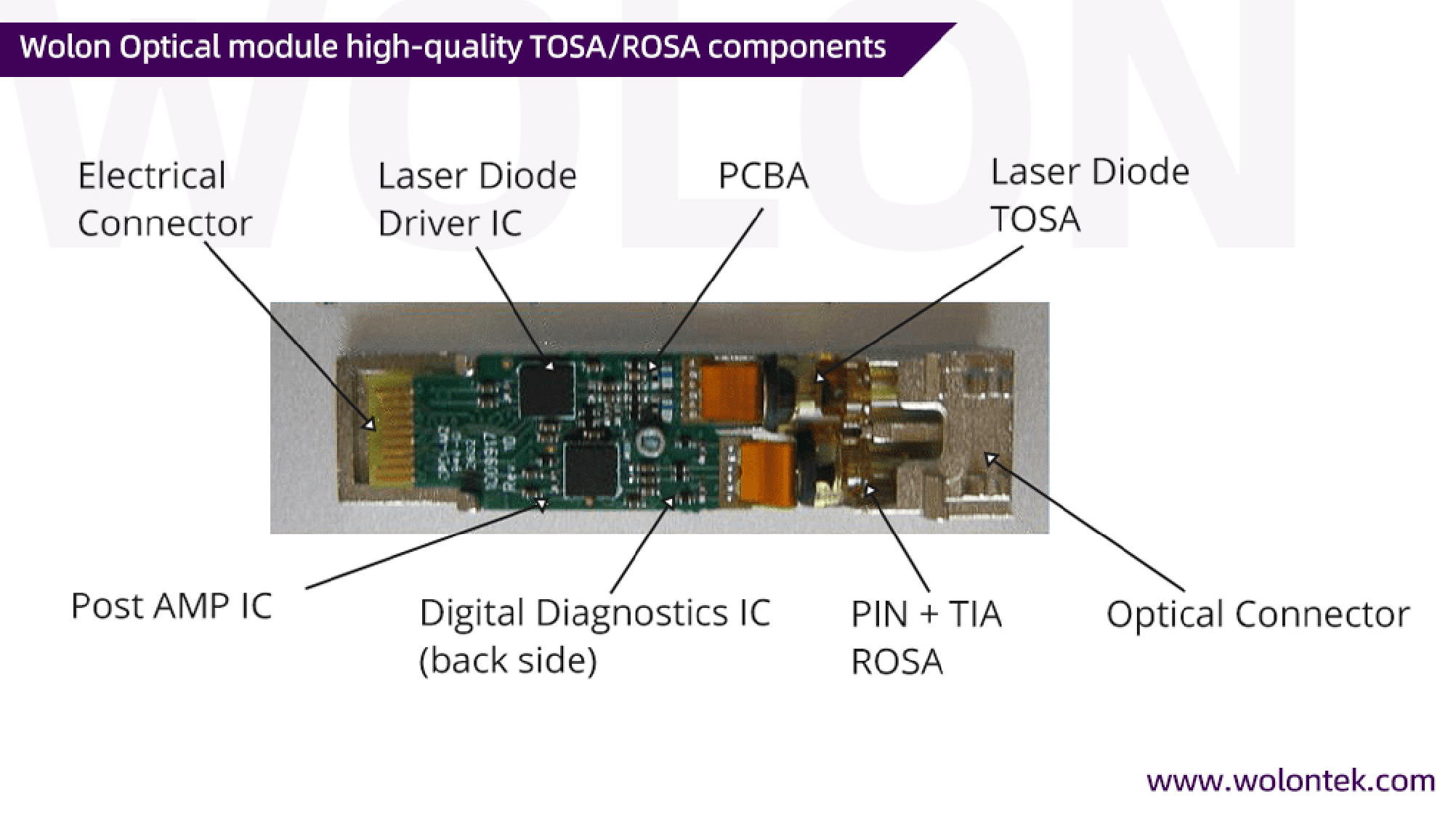
Let’s look at the hardware. An optical transceiver consists of three main parts:
1.TOSA/ROSA (The Laser): The light source.
2.The Chipset (IC): The brain that drives the laser.
3.The PCB & Housing.
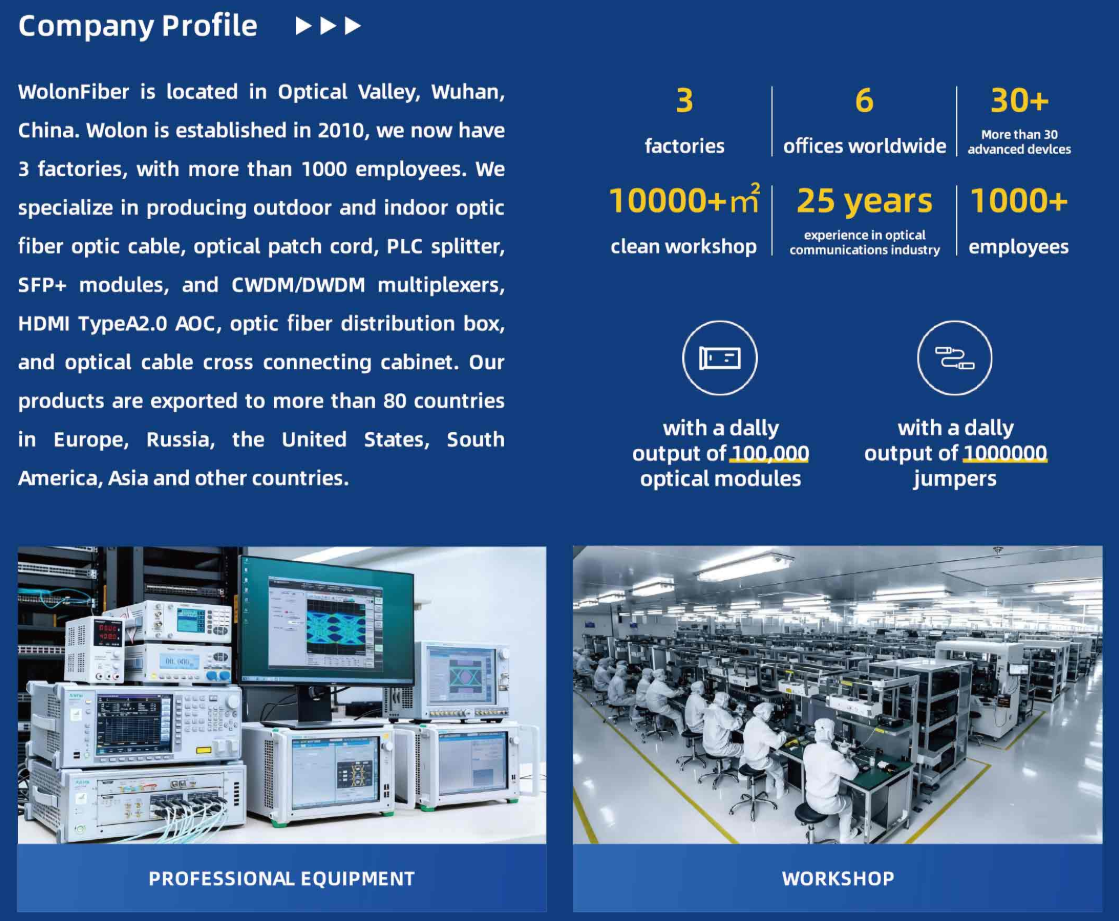
At Wolon, we use the same tier-1 laser components and reputable chipsets (like Maxim, Semtech, or Marvell) found in premium modules. Because we manufacture in Hubei—one of China’s optical communication hubs—we have access to the most mature supply chain in the world.
We guarantee:
-
Real DDM/DOM Function: You can monitor temperature, voltage, and optical power in real-time via your switch command line.
-
Gold Plating: We ensure standard gold thickness on the “gold fingers” (connector pins) to prevent connectivity issues after multiple insertions.
-
3-Year Warranty: We stand behind our manufacturing quality.
The Compatibility Challenge: Ensuring MSA Compliance & Cisco Coding
Why do some cheap modules fail to link up? It’s rarely a hardware failure. It’s a coding issue.
Switches from brands like Cisco, Arista, and Juniper have proprietary firmware that checks the “ID” of the inserted module. If the code in the SFP‘s EEPROM doesn’t match what the switch expects, the port shuts down.
How Wolon Solves This: We don’t just sell hardware; we provide Coding Service.
-
We maintain a massive database of compatibility codes for over 100+ brands (Cisco, Huawei, Mikrotik, Ubiquiti, Netgear, etc.).
-
Before we ship your order, our engineers flash the specific EEPROM code matching your equipment.
-
Universal Coding: For distributors, we can provide “neutral” coding or a programming box (Wolon Coding Box) so you can recode modules for your clients on demand.
When to Buy Direct? (A Quick Checklist)
Buying direct isn’t for everyone. Here is a quick checklist to see if you are ready to switch to Wolon:
Stick to a Distributor IF:
-
You need 2 units tomorrow morning.
-
You don’t know exactly what equipment you are using.
Switch to Wolon Factory Direct IF:
-
You are an ISP, System Integrator, or IT Reseller.
-
You regularly purchase 50+ units (bulk savings kick in).
-
You want to build your own brand (we offer OEM Service to put your logo on the label).
-
You are tired of “Out of Stock” notices for specific wavelengths (like BiDi or CWDM/DWDM).
Conclusion: Maximize Your ROI
In 2025, paying full price for branded optical transceivers is no longer a smart business decision. The technology is mature, and the difference lies in the supply chain, not the science.

By partnering directly with a manufacturer like Wolon, you gain access to wholesale pricing, custom coding, and OEM branding—giving you a massive competitive edge in your market.

Stop overpaying for the label. Let’s calculate how much you can save on your next batch of 10G, 40G, or 100G modules.
>> Download 2025 Compatible with Cisco/Huawei/Juniper SFP Price List <<
Frequently Asked Questions (FAQ)
Q: Will third-party SFP modules void my switch warranty?
A: No. Under the Magnuson-Moss Warranty Act (in the US) and similar competitions laws worldwide, network equipment manufacturers cannot void your hardware warranty simply because you used a compatible third-party transceiver, unless they can prove the transceiver caused the damage.
Q: Can Wolontek modules work with Cisco and HP Aruba at the same time?
A: A single module typically holds one code. However, you can order a mix. For example, tell us “50 pcs for Cisco C9300” and “50 pcs for HP Aruba 2930F”. We will label and code them individually before shipping.
Q: What is the lead time for 1,000 pcs of 10G SFP+?
A: For standard 10G SR/LR modules, we keep semi-finished stock. An order of 1,000 units usually takes 3-5 business days to assemble, code, test, and ship from our factory.
Q: Do you offer DDM/DOM functions?
A: Yes, Digital Optical Monitoring (DOM) is standard on almost all our optical transceivers, allowing you to monitor parameters like Tx power, Rx power, and temperature in real-time.