
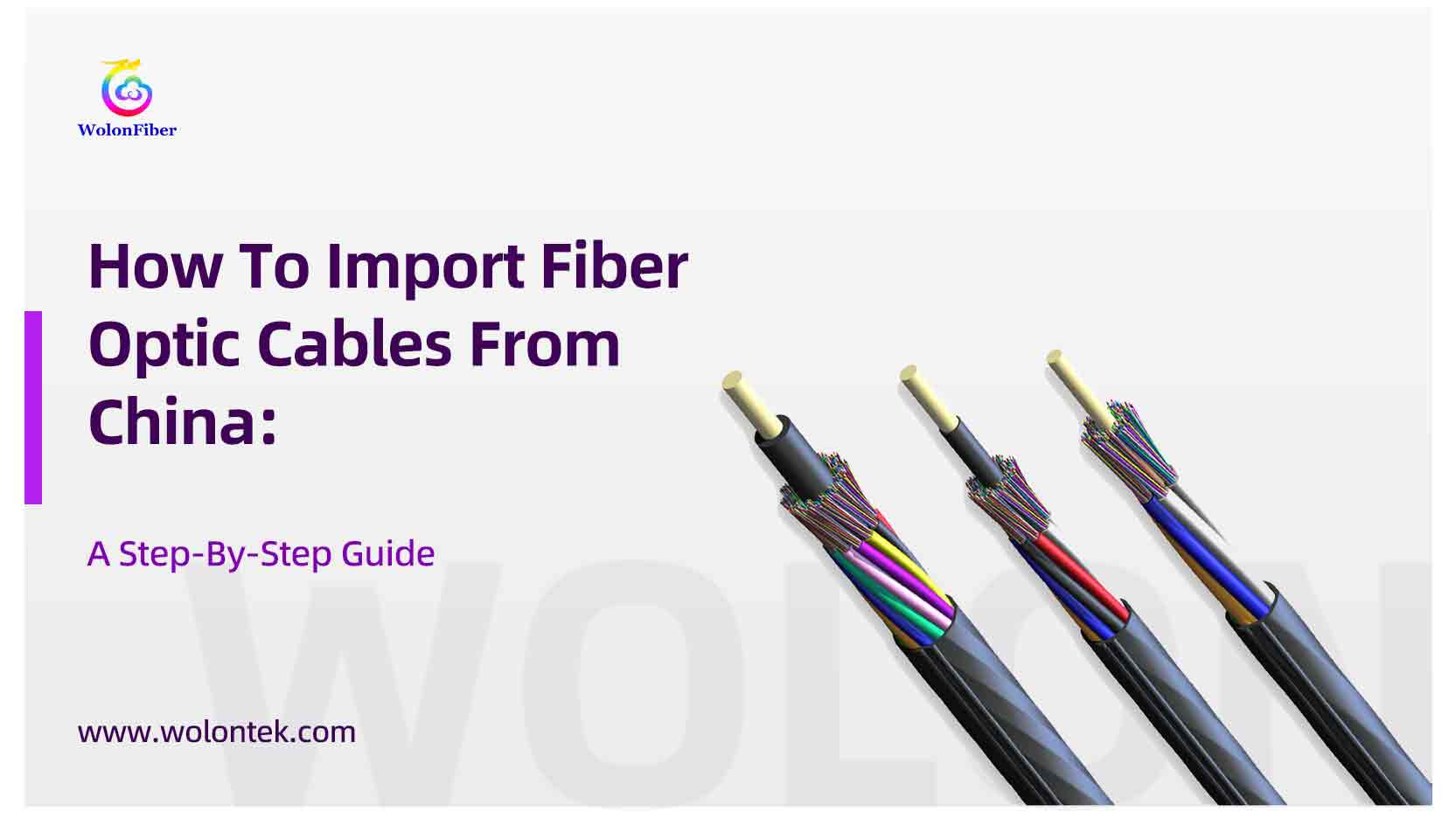
Let’s be honest: Are you looking to reduce your cabling project costs by 30% or more? Importing fiber optic cables from China is the most effective strategy for ISPs, distributors, and project contractors in 2025.
However, unlike buying small items like SFP modules, importing bulky fiber cables (such as Outdoor Armored Cables) involves complex logistics, strict quality standards, and customs clearance. First-time buyers often worry about:
- “Will the jacket crack after one winter?”
- “How do I handle the shipping for 5-ton cable drums?”
- “Is the supplier a real factory or just a middleman?”
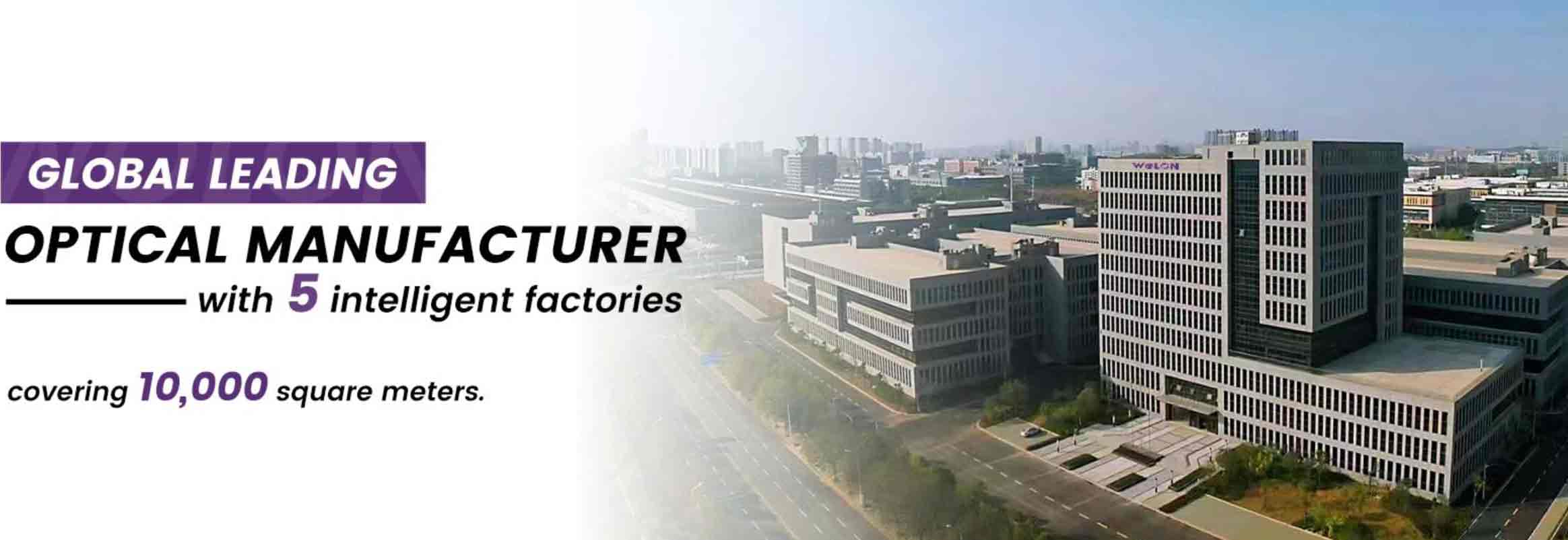
As a leading Fiber Optic Cable Manufacturer based in Hubei with over 10 years of export experience, Wolon has helped hundreds of clients navigate this process. In this guide, we walk you through the 4 critical steps to successfully import fiber optics from China without the headaches.

Step 1: Fiber Optic Cable Manufacturer vs. Trader – How to Identify the Real Source
The Chinese market is flooded with suppliers. On platforms like Alibaba or Global Sources, everyone claims to be a “leading manufacturer.” In reality, many are trading companies. While traders aren’t inherently bad, they add a markup (usually 10-15%) and, more dangerously, they often lack direct control over production schedules and quality control (QC).
Don’t just rely on photos. Use these 3 tests to verify your supplier.
Pro Tip: Don’t just look at photos. Ask your supplier for a live video tour of their workshop via WhatsApp. If they make excuses, they might be a trader. You can check Wolon’s Factory Tour here.


Step 2: Avoid Quality Traps (The “Virgin Material” Rule)
Fiber optic cables must withstand harsh environments for 20+ years. The biggest cost-cutting trap in the industry is the use of recycled materials for the cable jacket.
Before you place an order, you must confirm these 3 specs with your manufacturer:
1.Fiber Type: G.652D (Standard Single-mode) or G.657A (Bend-insensitive for FTTH)?
2.Jacket Material (Crucial):
- PE (Polyethylene): Essential for Outdoor Fiber Cables. It resists water and UV radiation.
- LSZH (Low Smoke Zero Halogen): Mandatory for Indoor Cables in EU projects for fire safety.
- The Trap: Always specify “100% Virgin Material”. Recycled jackets look fine initially but will crack and degrade within a year of outdoor exposure.
3.Fiber Brand: Are you paying for premium glass (like Corning/YOFC) or generic glass?
4.Cable Structure: Do you need Armored (anti-rodent), ADSS (self-supporting), or Direct Burial?
Step 3: Shipping & Logistics for Bulk Fiber Cables (FCL vs LCL)
This is where many buyers get stuck. Fiber optic cables are heavy. A single drum of 4km ADSS cable can weigh over 500kg. Air freight is suicide for your budget; Sea Freight is your only viable option.
How to optimize your shipping:
- FCL (Full Container Load) is King: Shipping a full 20ft container (holding approx. 20-30km of cable) is much cheaper per meter than LCL (Less than Container Load). It also protects your drums from getting damaged by other cargo.
- The “Fumigation” Issue: Since cables are packed on wooden drums, ensure your supplier uses IPPC Fumigated Drums. Customs in the USA, UK, and Australia will reject untreated wood. Wolon handles this compliance standard by default.
- Incoterms: We recommend trading on FOB (Free on Board) or CIF. We handle the trucking from our Hubei factory to the Shanghai/Shenzhen port.
Need a shipping estimate? Contact our logistics team for a free calculation based on your destination port.
Step 4: Customs Duty and Documentation
When the goods arrive in your country, you need to clear customs. Don’t panic; it’s just paperwork.
Common HS Code: 8544.70 (Optical fiber cables).
Essential Documents: Wolon provides the full packet to help you clear customs smoothly:
- Commercial Invoice (Declaring the value)
- Packing List (Details of weight and drums)
- Bill of Lading (B/L) (Your proof of ownership)
- Certificate of Origin (CO) – Important! This can help you reduce import taxes in countries with trade agreements.
Conclusion: Start Your Import Journey Today
Importing fiber optic cables doesn’t have to be risky. By choosing a reputable manufacturer who understands both production quality and export compliance, you ensure your project stays on budget and on time.
Whether you need ADSS cables for a government project or Drop cables for an FTTH rollout, Wolon has the production capacity to support you.
Unlock our Official 2025 Wholesale Price List and see exactly how much margin you’re losing to traders.


Frequently Asked Questions (FAQ) about Importing Fiber Cables
Q:What is the HS Code for optical fiber cables?
A:The international Harmonized System (HS) Code for optical fiber cables is generally 8544.70. However, specific sub-codes may vary slightly by country (e.g., 8544.70.0000 in the USA). We recommend checking with your local customs broker or contacting our sales team for the exact code applicable to your destination to calculate import duties accurately.
Q:Can I customize fiber counts and cable printing?
A:Yes, absolutely. As a direct manufacturer, Wolontek offers full OEM/ODM services. We can manufacture cables with fiber counts ranging from 2 cores to 288 cores (and up to 576 cores for high-density ribbons). We also offer free custom printing on the cable jacket, allowing you to display your brand name, meter markings, and specific project codes.
Q:What is your Minimum Order Quantity (MOQ)?
A:Our standard MOQ for fiber optic cables is 2 kilometers (typically one standard wooden drum). However, for the most cost-effective shipping rate, we strongly recommend ordering at least 10-20 kilometers to utilize LCL or FCL sea freight, as shipping a single drum can be relatively expensive per meter.
Q:How long is the production lead time?
A:For standard specifications (like G.652D Outdoor Cable or FTTH Drop Cable), our production lead time is typically 7-10 business days after deposit. For customized orders or large bulk quantities (e.g., 5+ containers), please allow 15-20 days. We operate 24/7 extrusion lines to ensure fast delivery for urgent projects.
Q:Do you provide free samples for testing?
A:Yes, we understand quality is paramount. We can provide free cable samples (usually 1-5 meter segments) for your inspection and testing. You only need to cover the international courier shipping cost (e.g., DHL/FedEx).