
People constantly ruin expensive network switches because they don’t know the difference between a phone plug and an Ethernet plug.
To a lot of end-users, every clear plastic connector looks the same. They grab a cable, shove it into the nearest port that fits, and hear a click. Then they wonder why the network is down or why the port is permanently physically damaged.
If you are running cables, terminating patch panels, or provisioning FTTH hardware, you cannot afford to mix these up. Here is the exact physical breakdown of the RJ (Registered Jack) connector family, the pinouts, and why plugging the wrong cable into a router will destroy the hardware.
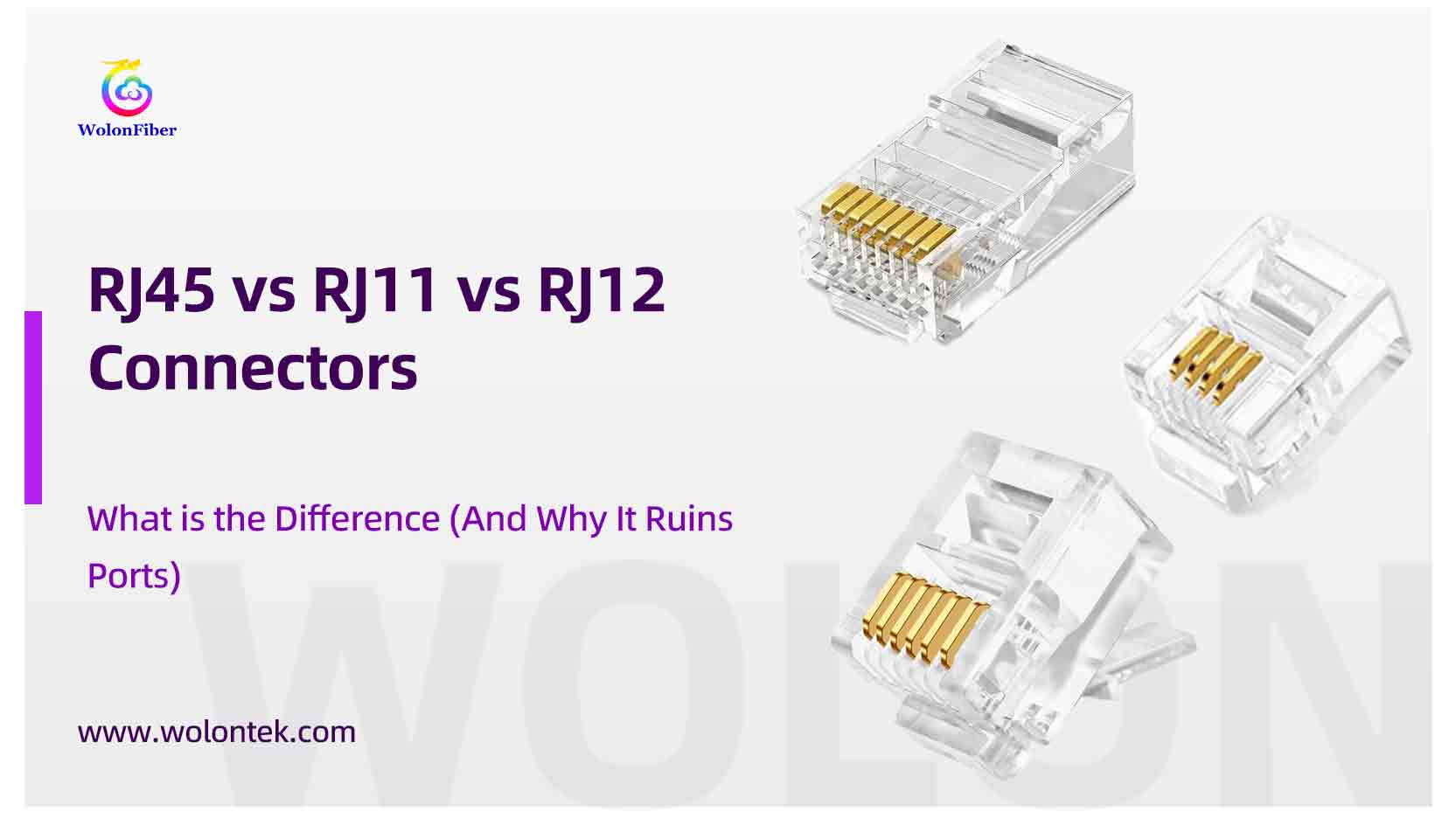
What is RJ45 Connector?
The Rj45 Connector is the absolute foundation of modern digital networking.
Physically, it is the widest connector of the three. In engineering specs, it is an 8P8C (8 Position, 8 Contact) plug. This means the plastic housing has eight slots for copper wire, and eight gold-plated metal pins to make electrical contact with the switch port.
You use the RJ45 exclusively for data. When you terminate Cat5e, Cat6, or Cat6a twisted-pair cables to connect computers, IP cameras, Wi-Fi routers, or enterprise switches, you must use an RJ45. It handles high-speed local area network (LAN) traffic ranging from 10 Mbps to 40 Gbps.
What is RJ11 Connector?
The RJ11 connector is the traditional telephone plug.
It is much narrower than an RJ45. The technical spec is 6P4C (6 Position, 4 Contact). This means the plastic shell has the physical space to hold six wires, but the manufacturer only puts four gold metal pins in the middle. It only carries a maximum of four wires.
You use RJ11 strictly for analog voice—connecting a standard desk phone to the wall, or plugging a fax machine into the POTS (Plain Old Telephone Service) port on a fiber ONT.
What is RJ12 Connector?
This is the one that confuses everyone. An RJ12 connector looks completely identical to an RJ11 from the outside. They use the exact same plastic housing.
The difference is inside. An RJ12 is a 6P6C (6 Position, 6 Contact) connector. It uses the same 6-slot plastic body as the RJ11, but it utilizes all six slots with six gold pins. It is wired for specialized multi-line phone systems (like PBX systems in old corporate offices) that require extra signaling wires.
RJ-Series Connector Resource Explorer
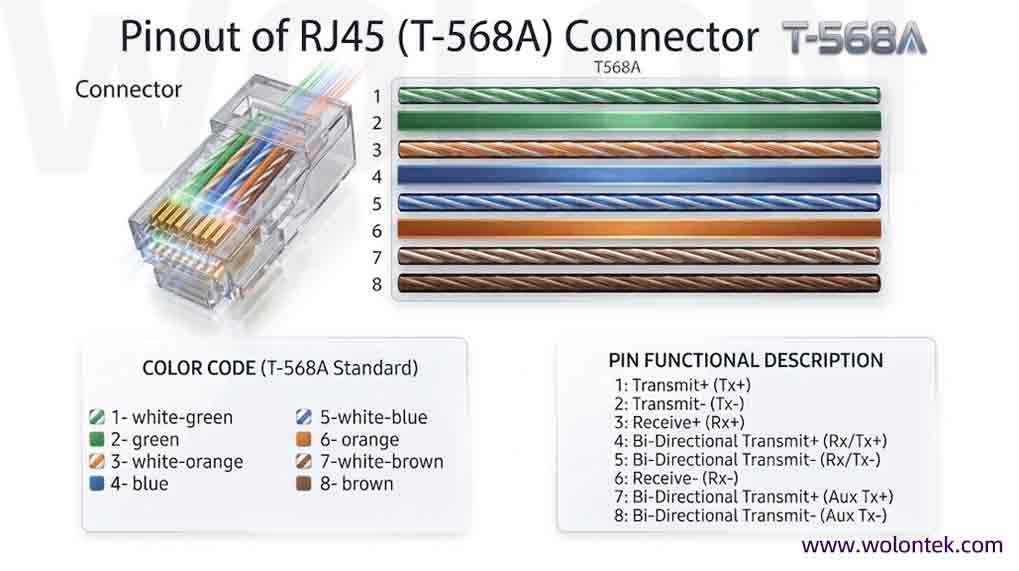
| Pin | Color Code | Functional Description |
|---|
RJ11 vs RJ12, What is the Difference?
Since you cannot rely on the size of the plastic shell, the RJ11 vs RJ12 comparison comes down to a visual pin check. Hold the clear connector up to the light and check the gold contacts against this comprehensive engineering breakdown:

Quick Reference: RJ11 vs. RJ12 Connector
RJ11 vs RJ12 Connector: How to Choose?
Your equipment dictates the choice. You don’t get to guess.
If you are wiring a standard residential phone line or setting up the voice port on a standard FTTH gateway, use RJ11. If you are terminating cables for a legacy centralized office PBX phone system, use RJ12.
Practical reality: Because they are the same physical size, you can plug an RJ12 into an RJ11 wall jack and it will usually work for a basic phone call. But an RJ11 plug will fail if you plug it into equipment that explicitly requires the 6-pin RJ12 connection.
RJ45 vs RJ11, What is the difference?
When comparing RJ45 vs RJ11, the differences are massive. RJ45 is an 8-pin data connector. RJ11 is a 4-pin analog voice connector. RJ45 is physically much wider.
Here is the engineering danger that costs IT departments thousands of dollars: An RJ11 plug will fit into an RJ45 port.
Because the plastic locking tab is perfectly centered on both connectors, you can easily click a narrow RJ11 phone cord into a wide RJ45 Ethernet switch port. Never do this. The hard plastic edges of the narrow RJ11 plug will press directly against Pin 1 and Pin 8 inside the switch port. It will bend and crush those pins flat. When you eventually try to plug a real RJ45 Ethernet cable into that port, it won’t work. The port is dead.

Quick Reference: RJ45 vs. RJ11 Connector
RJ45 vs RJ11 Connector: How to Choose?
There is no overlap here.
-
Networking computers, Wi-Fi routers, or IP cameras? Use RJ45.
-
Wiring a dial-tone phone or a DSL modem? Use RJ11.
Securing Your Physical Layer
A network is only as stable as its physical connections. Using cheap connectors with thin gold plating leads to rapid oxidation, ghost disconnects, and severe packet loss.
At WolonFiber, we do not cut corners on the physical layer. Operating directly out of our Wuhan Optical Valley facilities, our workforce of 400 to 500 optical and network specialists manufactures enterprise-grade broadband infrastructure. Whether you are provisioning FTTH Gateways that utilize both RJ45 (LAN) and RJ11 (POTS) ports, or sourcing the fiber drop cables that feed them, we supply telecom operators with hardware built to strict tolerances.

Stop settling for low-grade trading company hardware.
 Sourcing for Your Next FTTH Rollout?
Skip the distributor markups. Contact the WolonFiber engineering team for direct factory quotes on end-to-end FTTH hardware, indoor/outdoor cabling, and optical modules.
Request a Direct Project Quote
What is the difference between RJ11 and RJ45?
RJ45 is a wide, 8-pin connector (8P8C) used for high-speed Ethernet data. RJ11 is a narrower, 4-pin connector (6P4C) used for analog telephone lines. They serve completely different purposes on a network.
Can I plug an RJ11 cable into an RJ45 port?
No. While it will physically click into the port, the narrower plastic body of the RJ11 will crush and permanently damage the outer pins (Pin 1 and Pin 8) inside the RJ45 jack.
What is the difference between RJ11 and RJ12?
They use the exact same size plastic housing. The difference is the internal pins. RJ11 only has 4 metal contacts and is used for standard phones. RJ12 has 6 metal contacts and is used for complex, multi-line office phone systems.
How do I know if I have an RJ11 or RJ12 connector?
Hold the connector and look at the gold contacts. If the two outside slots in the plastic housing are empty, it is an RJ11. If all six slots contain gold pins, it is an RJ12.