Choosing the right fiber assemblies for a data center, campus, or enterprise closet matters more than most people realize. The difference between patch cords, trunk cables, and pigtails is not just terminology — each serves a distinct role in installation, testing, maintenance, and cost management. This article explains their construction, typical use-cases, performance implications, and practical guidance so you can specify the correct product for a clean, testable, and maintainable fiber plant. The title phrase Patch Cords vs Trunk Cables vs Pigtails appears where most helpful and will guide the comparisons below.
Clear definitions — what each product is
-
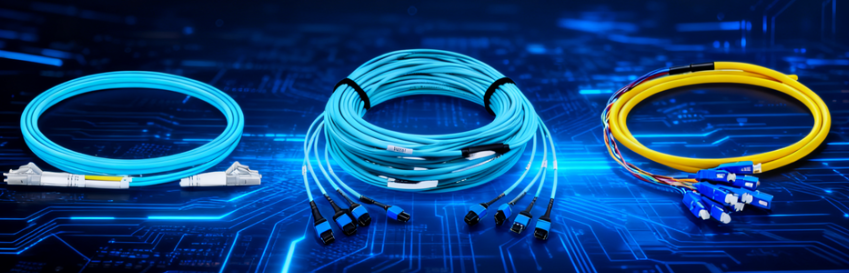
Patch cord (patch cable): A short, flexible, factory-terminated fiber cable with connectors on both ends (for example LC-LC, SC-SC). Patch cords are used to connect active equipment to fiber panels or to interconnect ports within a patch panel. They are consumer-grade in portability and designed for frequent mating cycles.
-
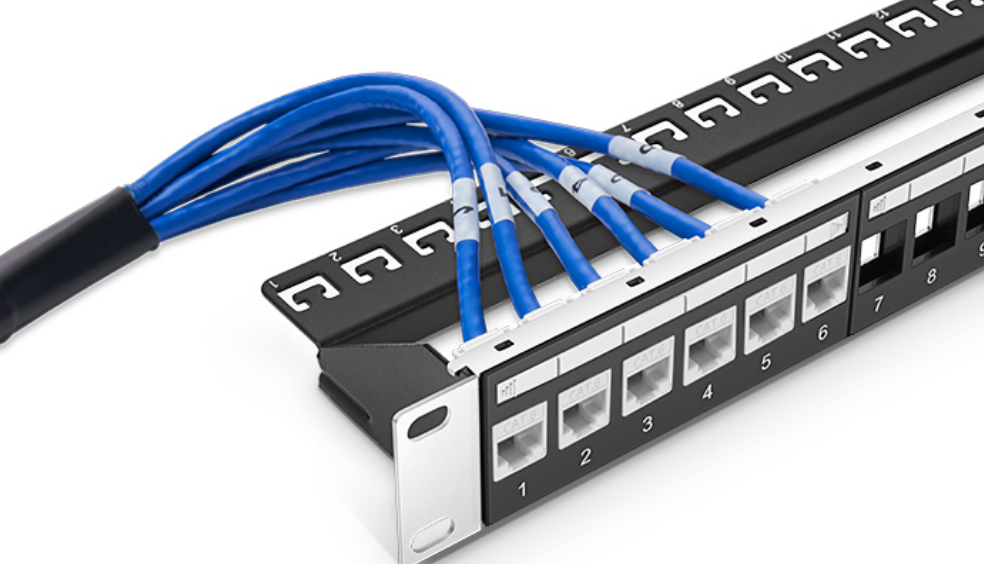
Trunk cable (pre-terminated trunk): A multi-fiber assembly that groups many fibers inside one jacket and is factory-terminated on one or both ends with fanouts or MTP/MPO connectors. Trunks are intended to be deployed as bulk backbone links between cabinets or within data center aisles, then routed and transitioned into patch panels via breakout/adapter plates.
-
Pigtail: A short length of fiber with a connector on one end and exposed bare fiber on the other. Pigtails are fusion-spliced to incoming fibers (usually from a field run). They’re primarily used for terminating field cables on panels where field termination of connectors is impractical.
|
Product Name |
Core Definition |
Main Application |
|---|---|---|
|
Patch Cord (Patch Cable) |
Short, flexible, factory-terminated fiber cable with connectors on both ends (e.g., LC-LC, SC-SC). Consumer-grade portability, designed for frequent mating cycles. |
Connect active equipment to fiber panels; interconnect ports within a patch panel. |
|
Trunk Cable (Pre-terminated Trunk) |
Multi-fiber assembly with multiple fibers in one jacket. Factory-terminated on one or both ends with fanouts or MTP/MPO connectors. |
Deploy as bulk backbone links between cabinets or in data center aisles; routed and transitioned into patch panels via breakout/adapter plates. |
|
Pigtail |
Short length of fiber with a connector on one end and exposed bare fiber on the other. |
Fusion-spliced to incoming field-run fibers; terminate field cables on panels where field connector termination is impractical. |
Construction and connector styles
Patch cords are typically single or duplex fibers in rugged jackets (PVC, LSZH, or plenum). Connectors are polished and factory-mated to tight tolerances.
Trunk cables house 12, 24, 48 or more fibers in a single sheath and often use MPO/MTP connectors for high-density connections; trunks may end in fanout assemblies (breakout cords) where each fiber splits into individual connectors.
Pigtails have a polished connector and a short length of loose fiber designed for fusion splicing; they are not intended to be plugged into live equipment at both ends.
When to use each — practical rules of thumb
Use patch cords where ports are being actively connected and reconnected — instrument ports, switch ports, transceivers, or patch panels. They offer the flexibility and serviceability needed for frequent reconfiguration.

Use trunk cables for high-density, long-run links that benefit from modular deployment. Trunks are ideal between racks, between MPO cages on switches, or in spine-leaf topologies where multiple fibers move together. Trunks reduce on-site termination labor and improve consistency of performance.
Use pigtails when you must terminate field-run cables permanently to a patch panel or splice shelf. Pigtails are the industry standard for terminating loose-tube or ribbon field cables to adapters where connectors cannot be reliably attached in the field.
Performance and testability differences
Patch cords: Because both ends are connectorized, patch cords can be quality-checked with a power meter or OTDR as part of end-to-end tests, and they are easy to replace when worn. They introduce two connector interfaces into the link, so choose high-quality, keyed connectors to minimize insertion loss and reflectance.
Trunk cables: Factory terminations and controlled factory polishing generally yield consistent insertion loss across all fibers and reduce installation variability. However, trunks often require MPO-to-LC fanouts or MPO trunks to be mated to MPO cassettes for use with transceivers — plan your testing strategy accordingly. Trunks simplify mass-panel moves but can make individual fiber troubleshooting more complex without proper labeling and documentation.
Pigtails: After fusion splicing, the splice loss becomes part of the permanent plant. A well-performed fusion splice demonstrates very low loss (typically 0.02–0.1 dB per splice), but acceptance testing should include splice loss verification. Pigtails make it straightforward to present connectorized ports on a panel while keeping the field cable permanently spliced behind the scenes.
Cost and labor considerations
Patch cords are relatively inexpensive per unit but can accumulate cost if used across many ports. They are inexpensive to swap and repair.
Trunk cables typically reduce labor expenses because factory terminations eliminate field polishing and connectorization. Upfront cost per meter may be higher, but time savings and consistency often justify trunks in large deployments.
Pigtails require splicing labor and fusion equipment expertise. The material cost of pigtails is low, but you must factor technician time, splice enclosures, and test time into total installation cost.
Installation and maintenance best practices
-
Label everything. For trunks, label each MPO and each fiber/fanout to avoid mistakes during commissioning and future moves. Clear labeling reduces mean time to repair.
-
Preserve bend radius. Whether patch, trunk, or pigtail, follow minimum bend radii for the fiber type; mechanical stress causes microbends that increase attenuation.
-
Test at the right points. Use an optical power meter and light source for simple insertion loss verification and OTDR traces for locating events on trunks or field runs. For pigtails and splices, document splice loss as part of acceptance.
-
Stock spares. Keep patches in various lengths and connector types on hand. For high-density trunks, store a few spare fanouts and MPO jumpers to minimize downtime.
Common mistakes to avoid
-
Using patch cords as long-haul trunks — patch cords are not jacketed or rated for the same mechanical protection and routing as trunks.
-
Failing to use a launch cable when OTDR testing trunks — without a launch/receive, the near-end events and first connector can be obscured by the dead zone.
-
Not planning fanout/adapter cassettes when deploying MPO trunks — mismatched expectations about how trunks will terminate can delay commissioning.
Quick selection checklist
-
Need frequent reconfiguration? Choose patch cords.
-
Need single-install, high-density backbone between racks? Choose trunk cables.
-
Terminating field runs to a patch panel? Use pigtails with fusion splicing.

For deployments that demand consistent performance and reduced installation time, WOLON supplies factory-terminated trunk cables, high-quality multimode and singlemode patch cords, and precision-polished pigtails tailored for fusion splicing. WOLON’s assemblies are manufactured to tight insertion loss tolerances, rigorously tested, and available with customizable jacket types and lengths — helping installers reduce field rework and accelerate commissioning. Contact Wolon for project quotes, pre-test reports, and multi-unit discounts to streamline your next rollout.