Choosing the right connector for an optical link is one of those small decisions that has outsized effects on installation density, reliability, and long-term maintenance. This comparison focuses squarely on the four most common field connectors — LC, SC, ST, and FC — so you can pick the right tool for a given port type, transceiver, or installation environment. I’ll cover form factor, ferrule/coupling style, typical optical performance, durability, and the practical scenarios where each connector shines.
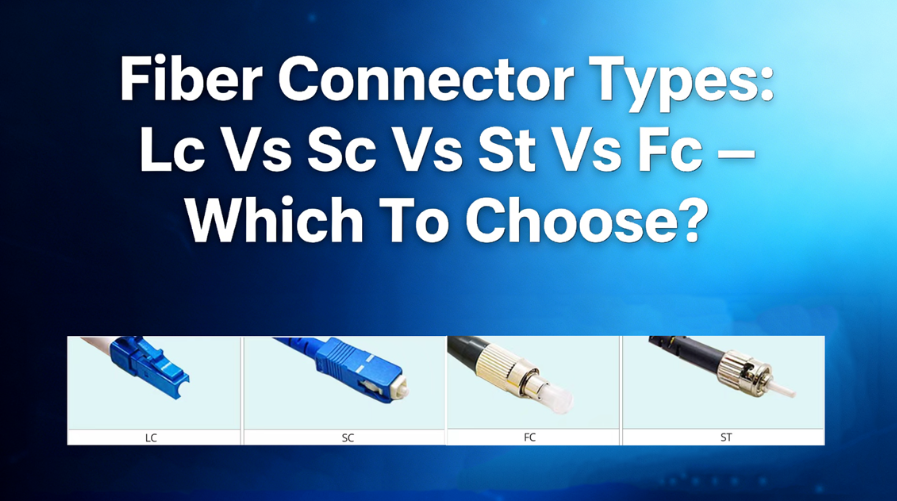
Quick snapshot of Fiber Connector Types
-
LC — small form factor, 1.25 mm ferrule, latch coupling. Favoured in high-density patch panels and SFP/SFP+ transceivers.
-
SC — push-pull, 2.5 mm ferrule, square body. Common in FTTH, patch panels, and older network gear.
-
ST — bayonet (twist) coupling, 2.5 mm ferrule. Longstanding presence in campus/industrial multimode networks.
-
FC — threaded coupling, 2.5 mm ferrule. Historically a telecom/single-mode standard where vibration resistance matters.
(Labels above summarize mechanical and use-case differences; later sections expand on optical performance and practical selection.)
What is an LC Connector?
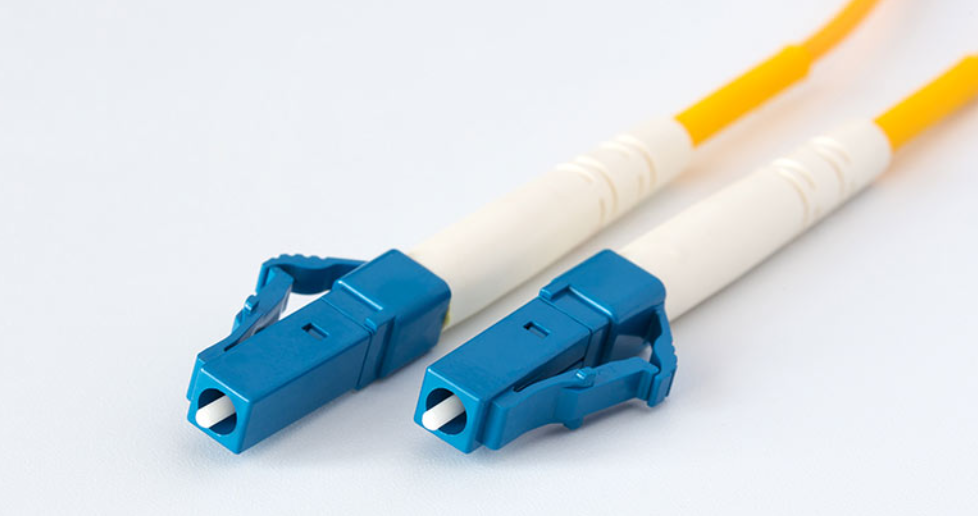
The LC connector (Lucent Connector) is a compact fiber-optic connector developed for modern telecom and data networks. Its defining characteristic is a 1.25 mm ceramic ferrule—half the diameter of legacy SC/ST/FC ferrules—so LC enables significantly higher port density and is widely used where space and density matter.
【Key points】
Ferrule size: 1.25 mm (ceramic or zirconia).
Typical insertion loss: 0.10–0.20 dB (when clean and properly mated).
Typical return loss: UPC ≥ −55 dB; APC ≥ −65 dB.
Formats: Simplex / Duplex (unibody duplex commonly used for round loose-tube duplex cable); Behind-The-Wall (BTW) modules available.
Coupling / latch: RJ-45 style modular clip / anti-snag tab (secure push-pull).
Color coding: Single-mode UPC = blue, APC = green; multimode uses OM standard colors (beige, aqua, violet, etc.).
Standards: IEC 61754-20, FOCIS-10, TIA/EIA-604-10.
Typical applications: Data centers, high-density patch panels, SFP/SFP+/SFP28 and QSFP transceiver interfaces.
Advantages: Higher port density (≈2× SC in the same rack space), very low loss, native compatibility with modern optical modules.
Limitations: Smaller form factor increases demands on cleanliness and termination quality.
What is an SC connector?
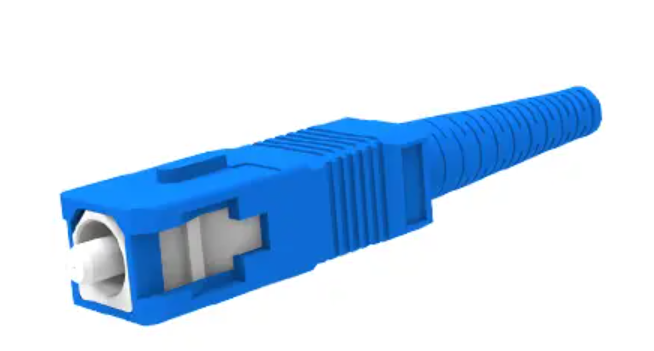
The SC connector (Subscriber Connector) emerged in the 1980s and became popular because of its simple, robust square housing and reliable push-pull operation. It uses a 2.5 mm ceramic ferrule and remains a workhorse in many telecom and outside-plant applications.
【Key points】
Ferrule size: 2.5 mm.
Typical insertion loss: < 0.5 dB (average ≈ 0.25 dB).
Return loss: APC polish greatly improves return loss—suitable for reflection-sensitive links.
Coupling / latch: Push-pull latch for quick, repeatable mating/demating.
Durability: Many products rated ≥1,000 mating cycles (vendor dependent).
Standards: IEC 61754-4, TIA-604-3.
Typical applications: FTTH / PON, CATV, outdoor distribution boxes, telecom cabinets.
Advantages: Intuitive operation, mechanically stable, good for field maintenance and outdoor use.
Limitations: Lower port density compared to LC; larger footprint.
What is an ST connector?
The ST (Straight Tip) connector is recognized by its cylindrical body and bayonet-style “stab-and-twist” locking mechanism. Introduced in the 1980s, ST uses the same 2.5 mm ceramic ferrule dimension as SC and FC. Typical insertion loss for ST connectors ranges from approximately 0.25–0.50 dB, depending on manufacturing quality and alignment accuracy.
【Key points】
Ferrule size: 2.5 mm (same nominal ferrule dimension as SC/FC).
Typical insertion loss: 0.25–0.50 dB (varies with manufacturing and alignment).
Locking method: Half-turn bayonet (“stab-and-twist”) for quick connect/disconnect.
Durability: Suited to frequent mating cycles (hundreds to >1,000 depending on product).
Typical applications: Campus networks, industrial sites, test benches, legacy LANs.
Advantages: Fast field operation, high repeatability for test and maintenance.
Limitations: Bulkier than LC; not ideal for high-density rack environments.

What is an FC connector?
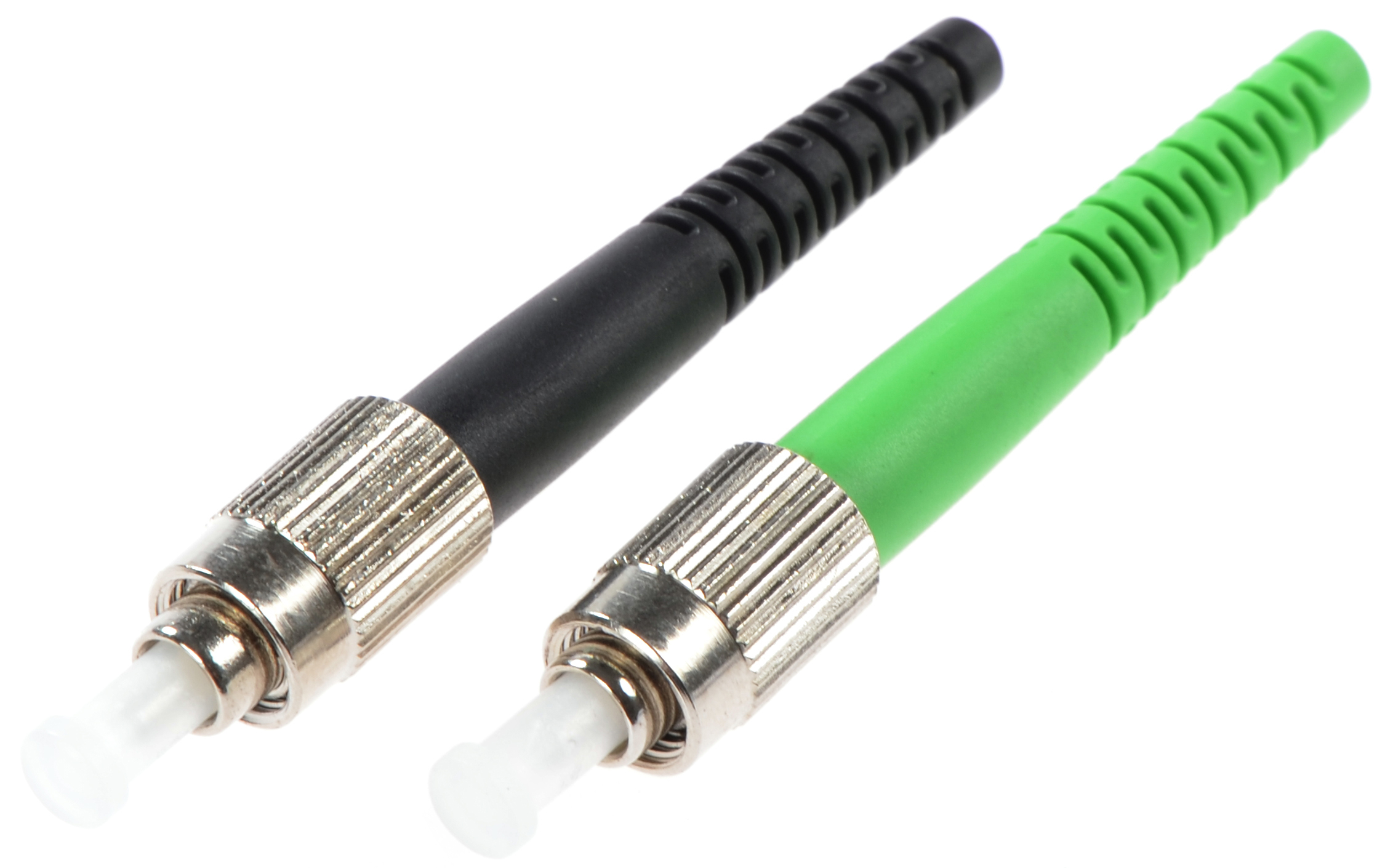
The FC (Ferrule Connector) emphasizes mechanical stability and precision alignment, featuring a threaded screw-on coupling and often a metal housing. This design provides excellent vibration resistance and highly repeatable mating, which is why FC is commonly used in laboratory instruments, OTDRs, precision test benches and telecom core equipment that require repeated, accurate optical alignment.
【Key points】
Ferrule size: 2.5 mm.
Typical insertion loss: ≤ 0.3 dB.
Typical return loss: Single-mode UPC ≥ 50 dB; APC ≥ 60 dB; multimode ≈ ≥30 dB.
Coupling / mechanical: Screw-on (threaded) coupling, keyed to prevent rotation; spring-loaded ferrule.
Durability: Typical ~500 mating cycles.
Operating temperature: Approximately −40°C to +85°C (typical range).
Standards: IEC 61754-13, TIA-604-4.
Typical applications: OTDRs, lab instruments, precision test benches, core telecom nodes (especially where vibration resistance and repeatability are required).
Advantages: Excellent vibration resistance, very repeatable alignment, low return loss (APC).
Limitations: Slower to mate/unmate, lower density—less suited for rapid, large-scale data-center deployments.
Detailed Comparison Table: LC, SC, ST, and FC Connectors
Quick Comparison by Application
Color Coding Guide (TIA 568 Standard)
-
LC: Blue (single-mode), beige (multi-mode)
-
SC: Blue (single-mode), beige (multi-mode)
-
ST: Black (multi-mode), blue (single-mode)
-
FC: Blue (single-mode), beige (multi-mode)
Common Questions
Q:What is the difference between LC and SC?
A:Size & density: LC uses a 1.25 mm ferrule (high-density); SC uses 2.5 mm (larger). LC gives ~2× the port density of SC and is preferred in data centers.
Locking: LC = latch/tab; SC = push-pull click.
Cable diameters: LC cords commonly 0.9–1.6 mm; SC 2.5–3.0 mm.
Cost: LC can be pricier but saves rack space.
Q:Can you mix and match LC, SC, ST, and FC?
A:Not directly interchangeable (different ferrules/couplings). Use hybrid adapters or SC-LC patch cords to bridge connector types.
Q:Which applications use each connector?
A:LC: Data centers, SFP/QSFP transceivers, high-density panels.
SC: FTTH/PON, CATV, outdoor distribution, telecom cabinets.
ST: Campus/industrial/legacy multimode backbones and test benches.
FC: Labs, OTDRs, precision test gear, high-vibration telecom cores.
Q:Typical insertion loss for LC/SC/ST/FC?
A:With proper termination/cleaning, all four typically achieve < 0.5 dB per mated pair.
Q:How to connect different types?
A:Use hybrid patch cords (e.g., SC→LC) or adapter assemblies for equipment compatibility and upgrades.
Mechanical differences:
LC: Compact latch, best for tight spaces.
SC: Push-pull click, easy field use.
ST: Bayonet “stab-and-twist,” quick in the field.
FC: Screw-on threaded coupling, strongest anti-vibration hold.
Q:Do they all support single-mode and multimode?
A:Yes. Each connector type is available in single-mode (9 µm) and multimode (50/62.5 µm) variants.
Q:Which connector is most adopted now?
A:LC is dominant in new high-density data-center and cloud deployments.
Main pros & cons:
LC: +Highest density; −Higher unit cost.
SC: +Rugged and easy; −Lower density.
ST: +Fast field use; −Bulky, legacy-focused.
FC: +Very stable/low reflection; −Slower to mate, niche use.
Summary Table: Key Metrics at a Glance
Final recommendation
There’s no single “best” connector — only the right one for a given hardware ecosystem and operational profile. For modern enterprise and data-center greenfield builds, LC is the default because of density and compatibility with modern transceivers. For many field, telecom, and legacy deployments, SC, ST or FC continue to be valid, often dictated by installed equipment or optical characteristics (e.g., need for APC).
???? Still Undecided? Don’t Guess. Test.
Quality isn’t just a spec sheet. It’s how it clicks into your rack.
We are so confident in our ferrules that we’ll send you a Mixed Connector Sample Kit (LC / SC / FC / ST) for free.