Introduction Optical transceivers are compact, high-performance modules that pair lasers or LEDs with delicate photonics and precision optics. While most pluggable transceivers are designed and certified as safe in normal operation, real hazards arise during handling, cleaning, or when a fiber or connector is left unterminated. This guide compares the main safety risks—laser exposure, electrostatic discharge (ESD), and connector contamination/damage—and gives practical, standards-aligned precautions you can apply in the lab or the field.
Laser hazard vs. electrical/ESD hazard vs. contamination
-
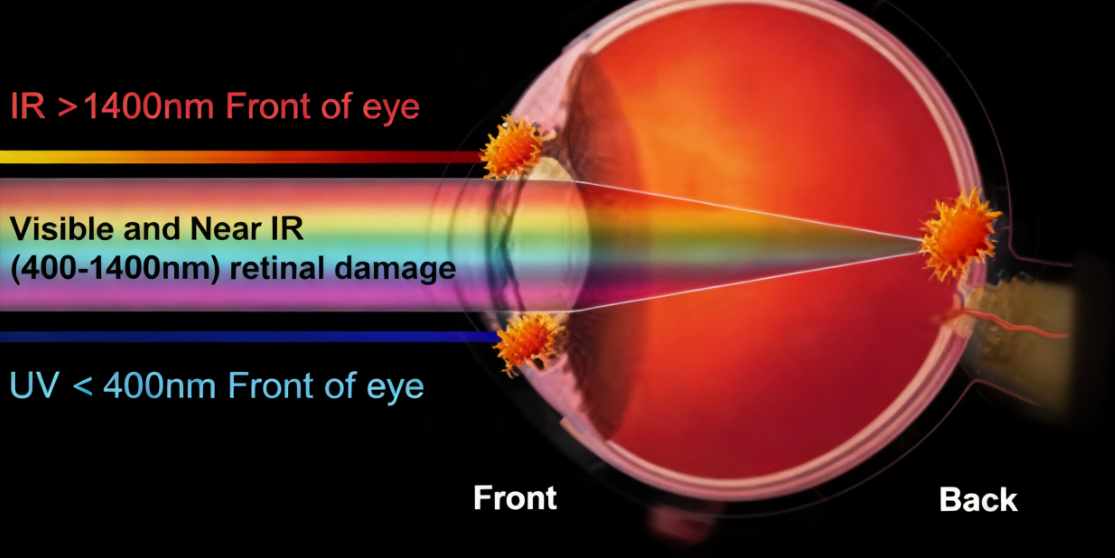
What it is: Many transceivers use infrared lasers (typical telecom wavelengths are 850 nm for VCSEL multimode modules and 1,310 / 1,550 nm for single-mode DFB lasers). These wavelengths are commonly invisible and can damage the retina without a blink reflex.
-
Risk level: A fully enclosed module is often classified to meet Class 1 product requirements, meaning it’s safe when used as intended. However, when a fiber or connector is disconnected, exposed radiation can reach hazard classes (up to Class 3B depending on power/wavelength). Standards addressing laser classification and product safety include IEC 60825-1 and IEC 60825-2 for fiber systems.
-
Precautions (summary): Never look into an optical connector or mating adapter; keep dust caps on unused ports; verify transmitters are disabled before servicing; use an optical power meter rather than visual inspection.
ESD hazard (electrical)
-
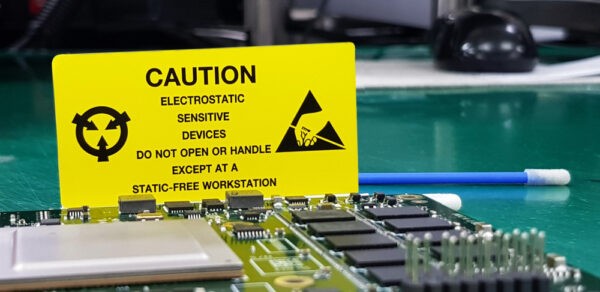
What it is: Transceivers contain sensitive semiconductor lasers, receivers and electronics that can be permanently damaged by static discharges. ESD events may not be visible but can degrade or kill devices.
-
Risk level: Moderate–high for handling and swap operations unless standard ESD controls are implemented.
-
Precautions (summary): Work in an ESD protected area (EPA), use wrist straps, anti-static mats and ESD bags for storage; follow IEC/EN 61340-5-1 and vendor handling notes.
Contamination / connector damage
-
What it is: Dirt, oil or scratches on an end-face cause insertion loss, back-reflection and can even be burned by a laser, permanently damaging the ferrule or fiber core. Single-mode cores (≈9 µm) are especially sensitive.
-
Risk level: High for link performance and long-term reliability.
-
Precautions (summary): Inspect and clean every end-face per IEC 61300-3-35 before mating; use lens tissue, approved solvents and one-use cleaning tools; never mate dirty connectors.
Practical handling and step-by-step precautions
A. Installing or removing a transceiver
Laser: Put the port into administrative down or disable transmitter (if supported) before removal to prevent live emission into open fiber. Keep dust caps on both the transceiver and the cable until ready to mate.
ESD: Attach a grounded wrist strap and work on an ESD mat. Handle modules by edges — do not touch optical interfaces or electrical contacts.
Cleaning: Inspect end-faces with a fiber scope and clean if necessary (wet + dry or approved dry cleaners) following IEC 61300-3-35. Only mate when both sides pass inspection.
B. Field testing and troubleshooting
Laser: Never use binoculars or scopes to “look” down the fiber. Use calibrated optical power meters and identifiers; suspect invisible IR even if you see nothing.
ESD: Power down only if required and follow hot-swap guidance from the vendor (many modules are hot-pluggable but require software/port down steps).
Contamination: Replace or re-terminate cables that repeatedly fail inspection; repeated mating of contaminated connectors can wear ferrules and glue.
C. Storage and transport
Keep transceivers in their ESD bags and original trays; store with dust caps installed; control humidity and temperature per vendor guidance to prevent connector oxidation and to keep adhesives stable.
Tools, PPE and workspace
Optical power meter and visual fault locator (VFL): measure power and detect breaks without looking into the fiber. Use meters rated for your wavelengths.
Fiber inspection scope (digital): verifies cleanliness per IEC 61300-3-35 automated grading.
Laser safety eyewear: required only when there’s a realistic chance of direct beam exposure (e.g., working with high-power open-beam test setups). Choose goggles certified for the specific telecom wavelengths (850/1310/1550 nm) and optical density needed.
ESD controls: wrist strap, bonded work surfaces, anti-static bags, ionizers in low-humidity environments; follow IEC 61340-5-1 program practices.
raining, labeling and standards compliance
Standards to reference: IEC 60825 series for lasers, IEC TR 60825-2 for optical fiber communication systems, IEC 61300-3-35 for connector inspection/cleaning, and IEC 61340-5-1 for ESD programs. Integrate those requirements into SOPs and acceptance tests.
Signage and SOPs: clearly mark equipment with laser statements and keep connector dust caps labeled; require documented training for any technician who will unplug/mate fibers. Vendor caution statements (e.g., from major networking vendors) explicitly warn against viewing open fibers and instruct keeping ports covered.
Conclusion & practical note on procurement
Good optical transceiver safety practice reduces technician risk, lowers field failure rates, and protects network uptime. Adopting the combination of laser-safety rules, ESD controls, and strict connector hygiene—each supported by international standards and vendor guidance—delivers reliable, long-lasting links and protects personnel.
For deployments that demand both reliability and value, WOLON’s line of optical transceivers provides cost-effective, factory-tested modules built to industrial quality standards. WOLON transceivers ship in ESD-safe packaging, include protective dust caps, and are supported with documentation to help your team meet laser-safety and handling SOPs. Choose WOLON when you want premium performance without premium pricing — quality optics designed for real-world networks.