Choosing the right fiber cable is rarely just about fiber type or connector — the jacket material, fire/installation rating and outdoor-proofing determine whether a link survives a year or a decade. This article compares indoor and outdoor fiber cables by jacket material, common ratings, and real-world use cases so you can pick the safest, most reliable option for each run.
Quick summary
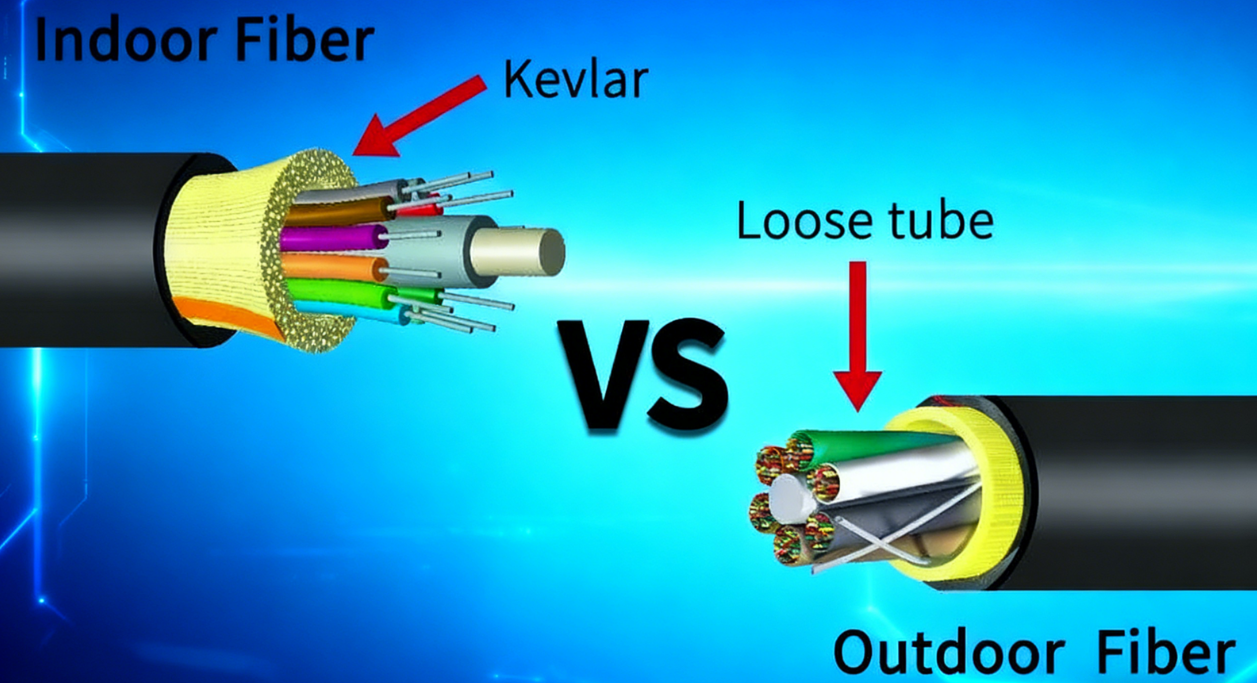
1.Indoor cables prioritize fire performance and low smoke/toxicity (plenum/riser/LSZH jackets).
2.outdoor cables prioritize weather, UV, moisture and mechanical protection (PE, armored, gel or dry water-blocking).
3.Indoor/Outdoor (dual-rated) cables exist to avoid transition splices when a run goes from outside into building spaces — they combine OSP durability with indoor flame ratings.
1.Indoor Fiber Cables Vs Outdoor Fiber Cables:Jacket Materials
Indoor Fiber Cables
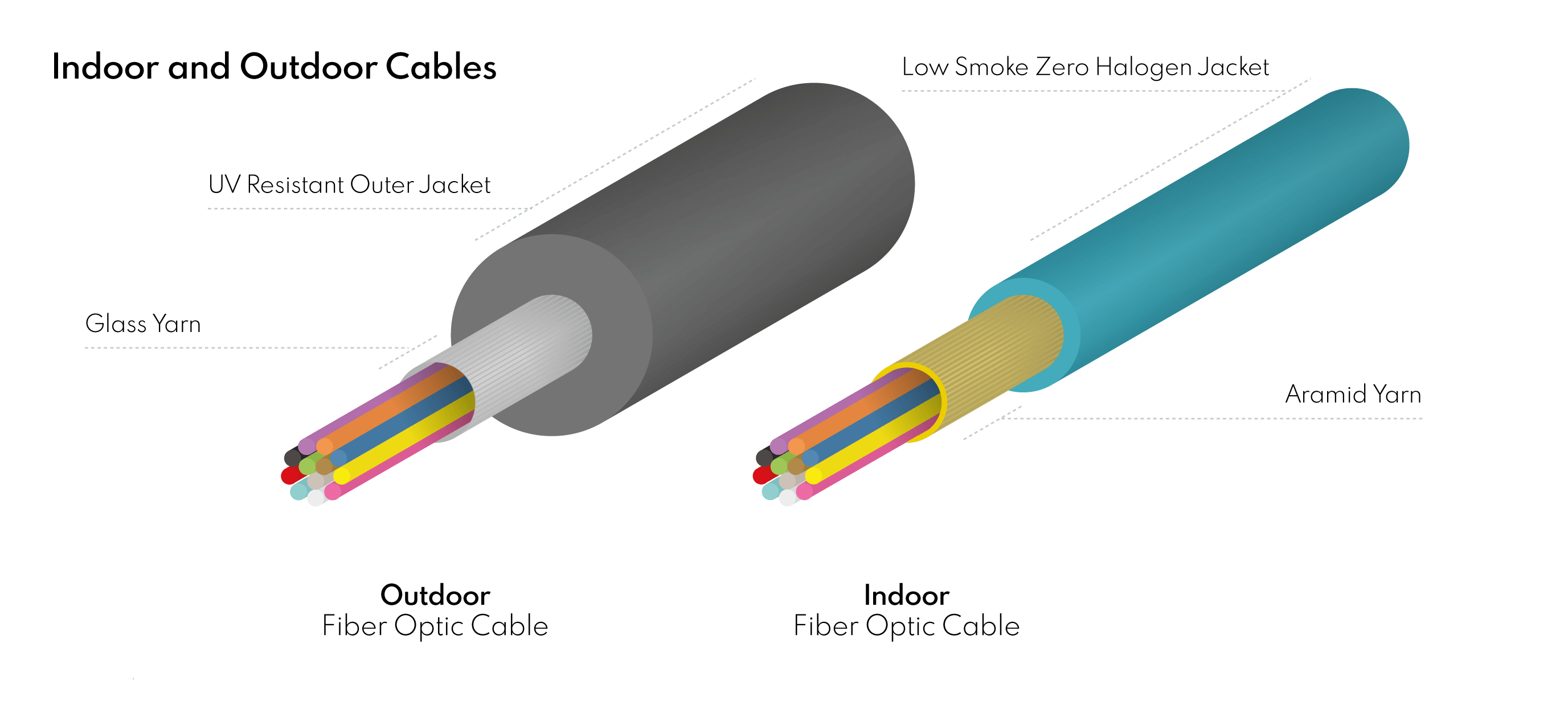
Common materials: PVC (Polyvinyl Chloride) and LSZH/LSOH (Low Smoke Zero Halogen).
PVC: More flexible, lower cost, and widely used in offices, data centers, and wiring closets.
LSZH: Halogen-free, produces extremely low smoke and toxic gases during fire; ideal for hospitals, airports, subways, and sensitive electronic environments.
Cost difference: LSZH is typically 10–20% more expensive than PVC.
Outdoor Fiber Cables
Outdoor cables mainly use PE (Polyethylene)—typically MDPE or HDPE.
PE advantages: Excellent UV resistance, moisture resistance, chemical stability, and overall durability.
Usually black, with carbon black additives for maximum sunlight protection.
May include special TPU-based jackets for harsh industrial settings.
2.Indoor Fiber Cables Vs Outdoor Fiber Cables:Fire Ratings & Safety
Indoor Fiber Cables
Indoor cable selection is strongly tied to fire codes:
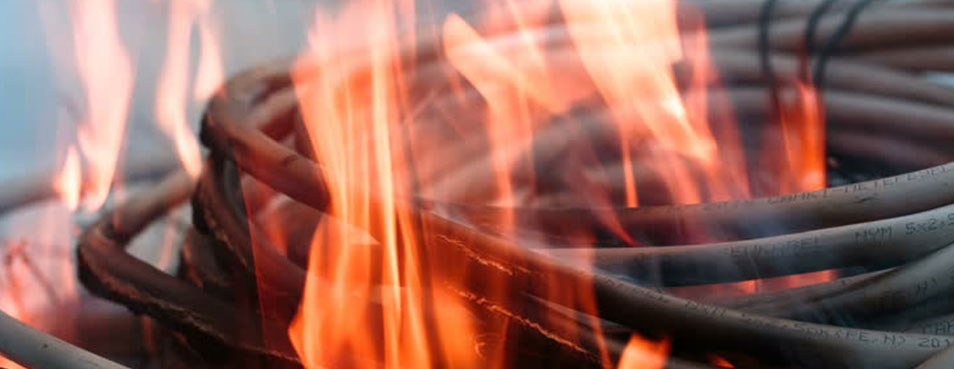
OFNP (Plenum): Highest fire-safety rating; required in air-handling spaces such as ducts and ceiling plenums. Produces low smoke/toxicity and self-extinguishes.
OFNR (Riser): For vertical shafts between floors; cannot replace plenum-rated cables.
Standards: UL 1651 / NEC.
Example marking: (UL) TYPE PVC OFNR
Outdoor Fiber Cables
Outdoor cables are not defined by indoor fire ratings.
Priority is environmental resistance (UV, moisture, temperature, crushing).
If the cable must transition from outdoors into a building, you must either:
-
use a dual-rated Indoor/Outdoor cable, or
-
make a compliant transition at the building entrance.
3.Indoor Fiber Cables Vs Outdoor Fiber Cables:Water & Moisture Protection
Indoor Fiber Cables
Indoor cables usually do not require heavy water-blocking.
Some special environments (basements, damp technical rooms) may use dry-water-blocked components.
Outdoor Fiber Cables
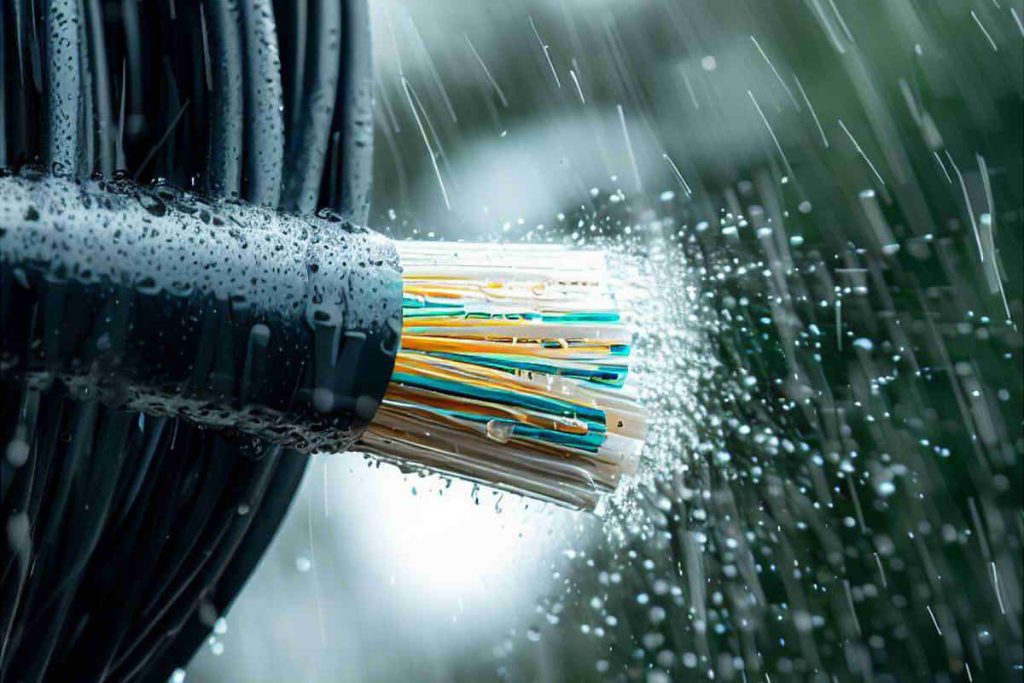
Outdoor cables must prevent water migration:
Gel-filled designs: Excellent sealing, but harder to terminate.
Dry water-blocking (swellable tape, yarn, or powder): Modern standard; cleaner and easier for field termination.
For long-term wet or buried installations, combine water-blocking with robust PE jackets or armor.
4.Indoor Fiber Cables Vs Outdoor Fiber Cables:Mechanical & Rodent Protection
Indoor Fiber Cables
Mechanical protection needs are mild:
-
Aramid yarns (Kevlar) provide tensile strength.
-
No armor is used in most indoor cables.
Designed for flexibility and small bend radius.
Outdoor Fiber Cables
Outdoor cables often include:
-
Steel tape or corrugated steel armor
-
FRP strength members
-
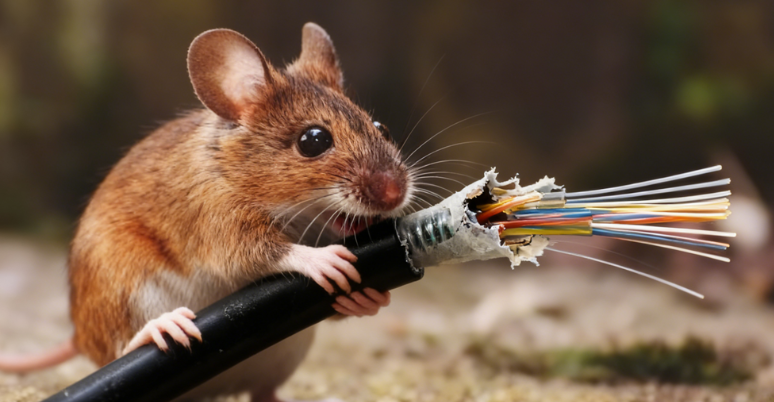
Rodent-resistant layers
Typical strength values:
-
Tensile rating 200–600 lbs (≈ 890–2700 N)
-
Crush resistance 1800 N/cm to 5000 N/100 mm
5.Indoor Fiber Cables Vs Outdoor Fiber Cables:Operating Temperature Range
Indoor Fiber Cables
PVC examples: −15°C to +70°C
LSZH examples: −40°C to +90°C
Outdoor Fiber Cables
PE outer jackets: −40°C to +70°C; some special versions rated up to +85°C.
6.Indoor Fiber Cables Vs Outdoor Fiber Cables:Color Coding & Markings
Indoor Fiber Cables
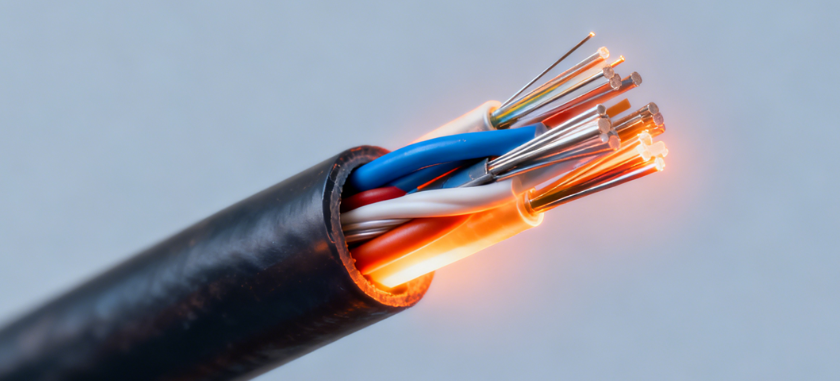
Single-mode: commonly yellow
Multimode:
OM1/OM2 → orange
OM3 → aqua
OM4 → violet
Fire rating designations may also appear depending on region.
Outdoor Fiber Cables
Predominantly black, formulated for outdoor UV exposure.
Jacket markings generally include: manufacturer, fiber count, cable type, compliance markings, and distance indicators.
7.Indoor Fiber Cables Vs Outdoor Fiber Cables:Bend Radius & Installation
Indoor Fiber Cables
Smaller diameter and better flexibility; ideal for rack management, patching, and trays.
Must still follow minimum bend radius defined by the fiber type.
Outdoor Fiber Cables
Installation guideline: minimum bend radius = 20 × cable diameter during installation.
Example: A 7 mm cable requires at least 140 mm radius.
Tension, pulling, and conduit rules must be followed carefully to avoid long-term damage or water ingress.
8.Indoor Fiber Cables Vs Outdoor Fiber Cables:Typical Use Cases
Indoor Fiber Cables
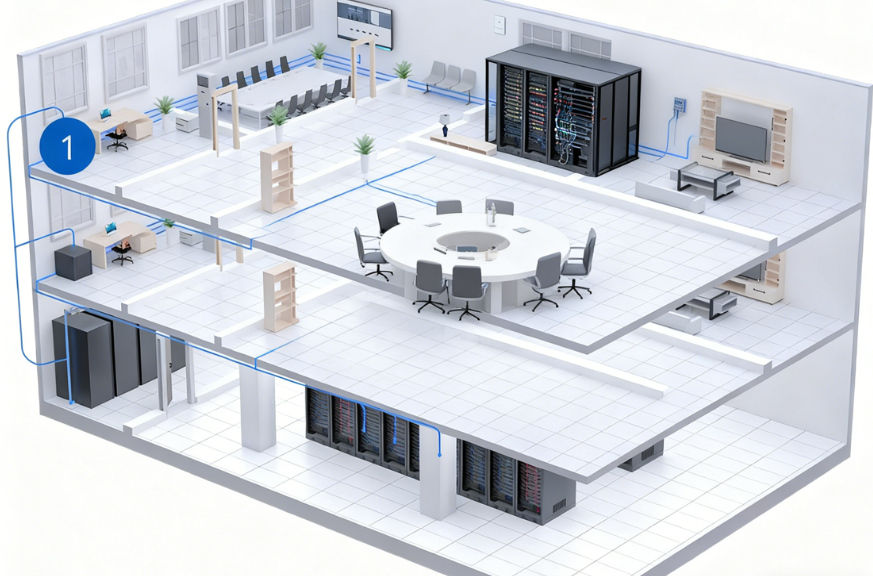
Office and commercial building cabling
Data center backbone and horizontal cabling
FTTD, enterprise networks, Wi-Fi/DAS systems
High-safety environments requiring LSZH/OFNP (hospitals, transport hubs)
Outdoor Fiber Cables
Long-haul telecom backbone
Campus networks and metropolitan rings
Direct burial, aerial (ADSS, figure-8), conduit installations
Industrial plants, substations, FTTx, defense/mission-critical networks
9.Indoor Fiber Cables Vs Outdoor Fiber Cables:Lifespan & Failure Modes
Indoor Fiber Cables
Long lifespan in controlled environments.
Failures usually due to excessive bending, poor termination, or accidental damage during renovations.
Outdoor Fiber Cables
Well-installed outdoor fiber can last 20–30+ years.
Common failure causes:
-
Construction damage
-
Rodents
-
Excessive tension/bend
-
Temperature or chemical exposure
-
Water ingress leading to attenuation increases
Quick Comparison Table
|
Category |
Indoor Cable (PVC / LSZH) |
Outdoor Cable (PE / Armored / TPU) |
|---|---|---|
|
Jacket Material |
PVC or LSZH (LSZH 10–20% pricier) |
PE (black), TPU for harsh sites |
|
Temperature |
PVC −15~+70°C; LSZH −40~+90°C |
−40~+70°C (some +85°C) |
|
Water Protection |
Usually none |
Gel or dry-water-blocking (required) |
|
Mechanical Strength |
Light (aramid yarn) |
Steel armor, FRP, rodent protection |
|
Bend Radius |
Small, flexible |
20× diameter recommended |
|
UV Resistance |
No |
Yes |
|
Typical Uses |
Offices, data centers |
Direct burial, aerial, FTTx |
|
Expected Lifespan |
Many years |
20–30+ years |
|
Tensile/Crush Strength |
Low |
High (200–600 lbs tensile; up to 5000 N crush) |
Conclusion
Selecting the right jacket and rating is as important as picking the fiber itself. Use PE/armored, water-blocked constructions for outdoor durability, and LSZH/OFNP/OFNR jackets for human-occupied indoor spaces. For runs that cross the building boundary, well-specified indoor/outdoor (dual-rated) cables save time and improve reliability.