
If you are planning an underground installation, the first question on your mind is likely: how deep is fiber optic cable buried to ensure safety and compliance?
How Deep Should Fiber Optic Cable Be Buried? (2025 Nec Standards & Guide)
The short answer, based on general industry standards and the National Electrical Code (NEC), is that fiber optic cable is typically buried between 24 inches (60 cm) and 30 inches (76 cm) deep. However, simply hitting this depth isn’t enough to guarantee your network survives. Factors like the frost line, soil type, and—most importantly—the type of cable you choose, play a critical role.
At Wolon, we have seen perfectly dug trenches fail because the cable wasn’t tough enough for the dirt. In this guide, we break down the exact depth requirements and the direct burial fiber optic cable solutions you need.
Standard Depths: How Deep Is Fiber Optic Cable Buried by Law?
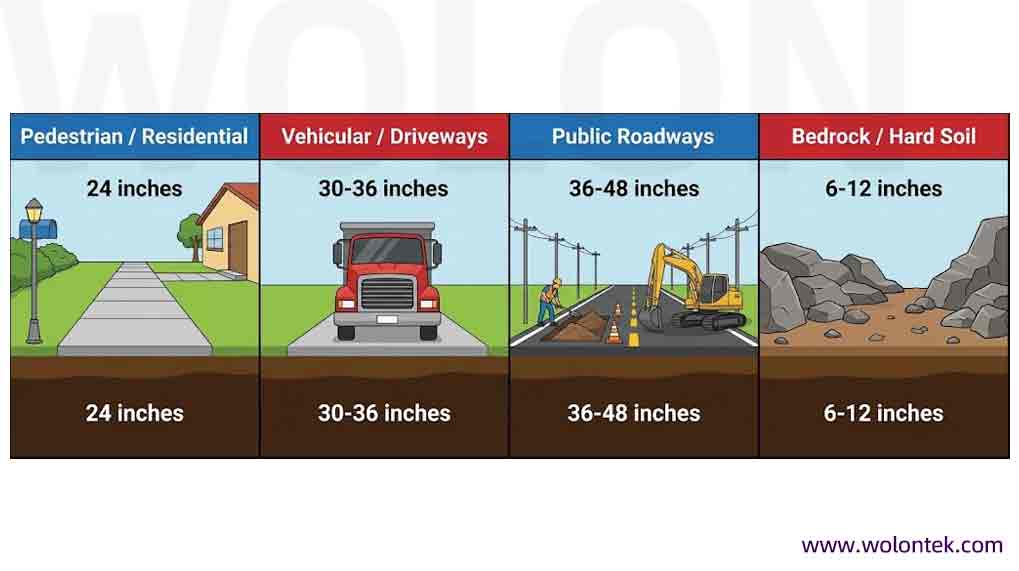
When determining how deep is fiber optic cable buried, you aren’t just guessing; you are following specific codes to prevent accidental cuts. While local regulations (always check 811) take precedence, here are the general NEC depth requirements for 2025:
| Installation Scenario | Recommended Depth (NEC) | Why This Depth? |
|---|---|---|
| Pedestrian / Residential | 24 inches (60 cm) | Protects against landscaping and aeration tools. |
| Vehicular / Driveways | 30 – 36 inches (76-90 cm) | Avoids soil compression damage from heavy vehicles. |
| Public Roadways | 36 – 48 inches (90-120 cm) | Required by DOTs to safely clear utility maintenance. |
| Bedrock / Hard Soil | 6 – 12 inches (15-30 cm) | Must be encased in rigid metal conduit or concrete. |
Direct Burial vs. Conduit: Which Method Changes the Depth?
The question of how deep is fiber optic cable buried also depends on how you are burying it.
1. Direct Burial Installation
This involves laying the cable directly into the trench. Because the cable has no external pipe to protect it, it requires maximum depth (typically 24 inches+) and a specific type of ruggedized cable (see below).
2. Installation in Conduit
If you run the fiber inside a PVC or HDPE pipe (Conduit), you sometimes have more flexibility. In some residential builds, conduit can be buried as shallow as 18 inches, as the pipe provides the primary physical protection.
Why Depth Alone Isn’t Enough: You Need Armored Cable
Knowing how deep is fiber optic cable buried is only half the battle. The biggest mistake we see contractors make is burying standard “indoor/outdoor” cable underground.
Even at 30 inches deep, your cable faces three enemies:
-
Rodents: Gophers and rats will chew through standard jackets in days.
-
Rocks: Backfill pressure can cause micro-bends in the fiber.
-
Water: Moisture intrusion leads to signal loss.
The Solution: Wolon Armored Fiber (GYTA53)
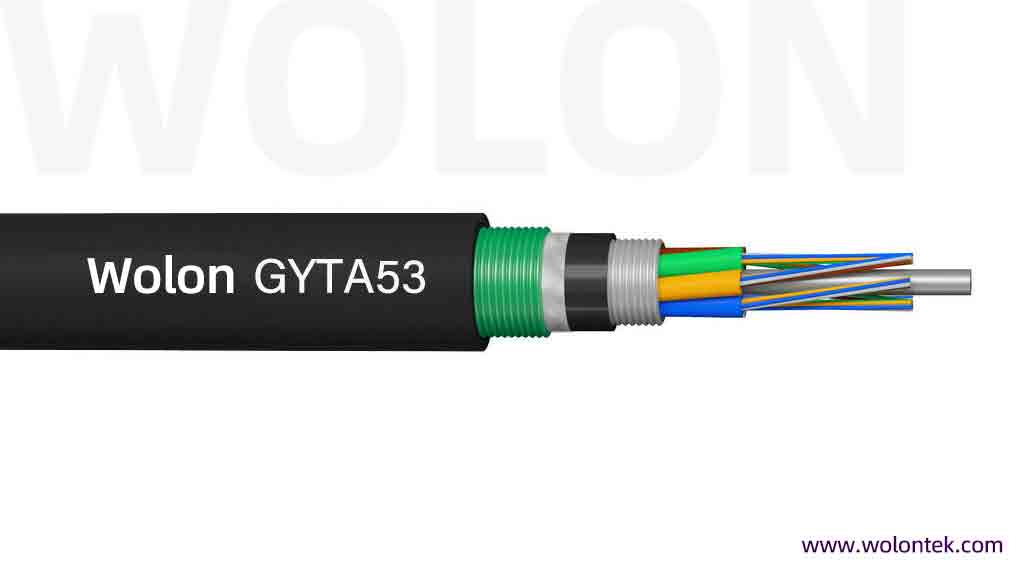
For any underground fiber installation, we strictly recommend using armored fiber optic cable (specifically models like GYTA53 or GYTS).
-
Steel Tape Armor: We wrap the core in Corrugated Steel Tape (CST). This makes the cable “rodent-proof” and crush-resistant.
-
Double Jacket: A dual-layer of polyethylene provides extra moisture defense.
If you use non-armored cable, it doesn’t matter how deep the fiber optic cable is buried—it will eventually fail.
How Deep Should Fiber Optic Cable Be Buried? (2025 Nec Standards & Guide)
Installation Best Practices for 2025
To ensure your direct burial fiber optic cable lasts for 20+ years, follow these field-tested steps:
-
Use a Sand Bed: Lay 2 inches of sand below and above the cable. This prevents sharp rocks from puncturing the jacket during backfilling.
-
Install Warning Tape: Place a detectable warning tape (“Caution: Buried Fiber Optic Line”) about 12 inches above the cable. This warns future excavators before they hit your line.
-
Leave Service Loops: Always coil an extra 20-30 feet of cable at each end or in handholes for future repairs.
Watch: Proper trenching and sand bedding technique for long-lasting fiber links.
Conclusion
So, how deep is fiber optic cable buried? Target a depth of 24 to 30 inches for most projects, but never ignore the soil conditions.
Digging the trench is the hard part; choosing the right cable should be easy. Don’t risk your project with flimsy cables. Use Wolon’s Armored Fiber to ensure your hard work stays connected.

Frequently Asked Questions (FAQ)
Q1: What is the minimum depth for burying fiber optic cable?
A: According to general NEC standards and industry best practices, the minimum recommended depth for direct burial fiber optic cable is 24 inches (60 cm). For areas with heavy vehicle traffic or under public roadways, the depth should be increased to 30–48 inches (76–120 cm) to prevent crushing and accidental excavation damage.
Q2: Can I bury standard indoor/outdoor fiber cable directly in the ground?
A: No. You should never direct bury standard fiber cable. Standard jackets (PVC/PE) are not designed to withstand underground moisture, rock pressure, or rodents. Direct burial requires Armored Cable (like GYTA53), which features a steel tape layer and water-blocking gel to protect the glass core.
Q3: Do I need conduit if I am using Armored Fiber Cable?
A: Not necessarily. Armored Direct Burial Cable is designed to be placed directly into the dirt without a conduit (pipe). This saves significant material and labor costs. However, installing a conduit allows you to easily pull new cables in the future without digging the trench again.
Q4: Can fiber optic cable be buried in the same trench as electrical power lines?
A: Yes, because fiber optic cable is non-conductive (dielectric), it is immune to electromagnetic interference (EMI). However, most codes require a physical separation (often 12 inches) or a physical barrier between power and communication lines to prevent accidental energization during maintenance. Always check local codes.
Q5: How do I protect buried fiber optic cable from rodents?
A: The only effective protection against gophers, rats, and moles is Steel Tape Armor (CST). Chemical repellents in plastic jackets eventually fade, but a physical steel barrier prevents rodents from chewing through to the fiber.