
How to terminate fiber optic cable?Fiber optic termination is the process of preparing and connecting the end of a fiber optic cable so it can transmit data. Termination involves attaching either a removable connector or a permanent splice to the fiber’s end so it can mate with other fibers or equipment. Proper fiber termination protects the delicate glass strand, prevents signal loss, and ensures reliable network performance. In fact, a correctly terminated fiber connection will minimize light loss and reflection, whereas a poor termination can make the network unreliable.In modern networks, technicians typically terminate fiber using two methods – connectorization or splicing – each suited to different applications. Both methods share the same goal of creating a low-loss, mechanically robust joint.
How to terminate fiber optic cable?Two main termination methods:
1. Connector Termination
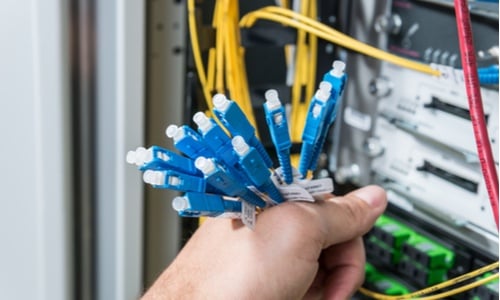
Fiber optic connectors (SC, LC, ST, FC, etc.) provide a pluggable interface for optical fibers, similar to the RJ45 plug on copper cables. The connector termination process typically involves stripping the cable jacket, cleaving the fiber, inserting it into a connector with a ceramic sleeve, and securing it with epoxy or mechanical means. This type of termination is ideal for applications requiring flexible plugging and unplugging, such as patch panels and equipment interfaces.
2. Fusion Splice Termination
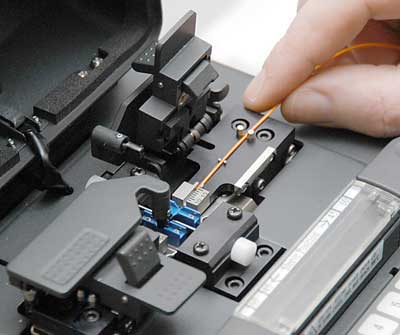
Fusion splicing uses an electric arc to permanently weld the glass cores of two optical fibers together, creating a virtually seamless optical channel. After the splice is complete, heat shrink tubing is used to protect the joint. Fusion splice termination is commonly used for long-distance links, outdoor trunks, and applications requiring ultra-low loss.
how to terminate fiber optic cable
5 Steps for Fiber Termination
Whether it is connector termination or fusion termination, single mode or multimode, the following 5 steps are the universal standard process.
- Ensure a clean, dust-free workbench.
- Essential Tools: Wire strippers, Kevlar cutters, fiber stripper, high-precision cleaver.
- Consumables: Dust-free tissues, absolute alcohol.
- Safety: Wear protective glasses & gloves; prepare a debris collection box for fiber shards.
- Strip 30–60 cm of the outer jacket as needed.
- Trim the aramid fiber (Kevlar) to expose the coating.
- Carefully strip 10–15 mm of the coating to expose the bare fiber (250 µm).
- Clean the bare fiber with anhydrous alcohol until no residue remains.
- Use a high-precision cleaver to cut the fiber.
- Critical: Ensure a flat 90° end face and never touch the fiber end after cleaning.
- Method A (Connectors): Gluing, insertion, curing, polishing, and microscope inspection.
- Method B (Fusion Splicing): Load into fusion splicer, arc welding (auto-align), and apply heat shrink protection sleeve.
- Inspect: Check end faces/splices with a 400x microscope.
- Test Loss: Use OTDR or Optical Power Meter (Target: <0.75dB for connectors, <0.3dB for splices).
- Verify: Use a VFL (Visual Fault Locator) to check continuity.
- Finalize: Apply strain relief and attach cable labels.
Summary
Cleanliness and precision are the core of fiber termination. Whether it’s connectorizing or fusion splicing, maintaining a dust-free endface, a straight cleave, and precise alignment are key to low loss. Common mistakes include: uncleaning the endface, misaligned cleave angles, excessive polishing pressure, and mixing APC/UPC connectors. After termination, always measure and record loss.
In both single-mode and multimode networks, following these five steps and using high-quality tools and components (such as WolonFiber factory-terminated patch cords and low-loss connectors) can significantly improve network performance and ensure long-term stable operation.
Frequently Asked Questions (FAQ)
Q: What is the difference between UPC and APC connectors?
A: The main difference is the fiber endface polish. UPC (Ultra Physical Contact) connectors are blue and have a slightly domed surface. APC (Angled Physical Contact) connectors are green and are polished at an 8-degree angle. This angle directs reflected light back into the cladding rather than the source, reducing back-reflection (ORL).
Warning: Never mate a blue UPC connector with a green APC connector—it will damage the fiber endfaces and cause high signal loss.
Q: What is an acceptable insertion loss for a fiber termination?
A: According to TIA/EIA-568 standards:
Connectors: The max acceptable loss is 0.75dB per mated pair, though high-quality field terminations often achieve 0.3dB to 0.5dB.
Fusion Splices: Ideally less than 0.1dB, with modern splicers often achieving 0.02dB.
If your testing shows loss higher than these values, clean the connector and test again. If it persists, re-terminate.
Q: Can I use wire strippers to strip fiber optic cable?
A: You can use standard wire strippers for the outer jacket (PVC/LSZH), but never for the glass fiber coating. You must use a precision Fiber Optic Stripper (often with three holes) to remove the 250µm or 900µm buffer coating without nicking the delicate 125µm glass cladding beneath. A scratched fiber will eventually crack.
Q: What is a “Mechanical Splice” and when should I use it?
A: A mechanical splice aligns two fibers inside a small plastic housing filled with index-matching gel, without using heat (fusion).
Pros: Cheap tools, fast, good for emergency repairs.
Cons: Higher loss (0.2–0.5dB) and less reliable long-term than fusion splicing. It is typically used for temporary restoration or when a fusion splicer is unavailable.
Q: Why is cleanliness so critical in fiber termination?
A: The core of a single-mode fiber is only 9 microns wide (smaller than a dust particle). Even a microscopic speck of dust, oil from a finger, or lint can block the light signal completely or scratch the glass during connection. Always use lint-free wipes and 99% isopropyl alcohol (or specialized click-cleaners) before mating any connector.
Q: Is fiber termination dangerous?
A: Yes, if mishandled. The cleaved glass shards are extremely sharp and nearly invisible. They can easily penetrate skin or eyes.
Safety Tip: Always wear safety glasses. Use a dedicated debris bin (or a piece of tape) to collect fiber scraps immediately. Never eat or drink in the termination area.