
Fiber optic cable is an important component of the global high-speed communication network. It combines advanced materials with precision manufacturing processes. Its core components include: fiber core, dopant, coating and protective sleeve.Understanding the composition of optical cables enables network architects and procurement teams to match cable types according to performance requirements and budgets. This article will take you on a deep dive into the specific composition of optical cables.
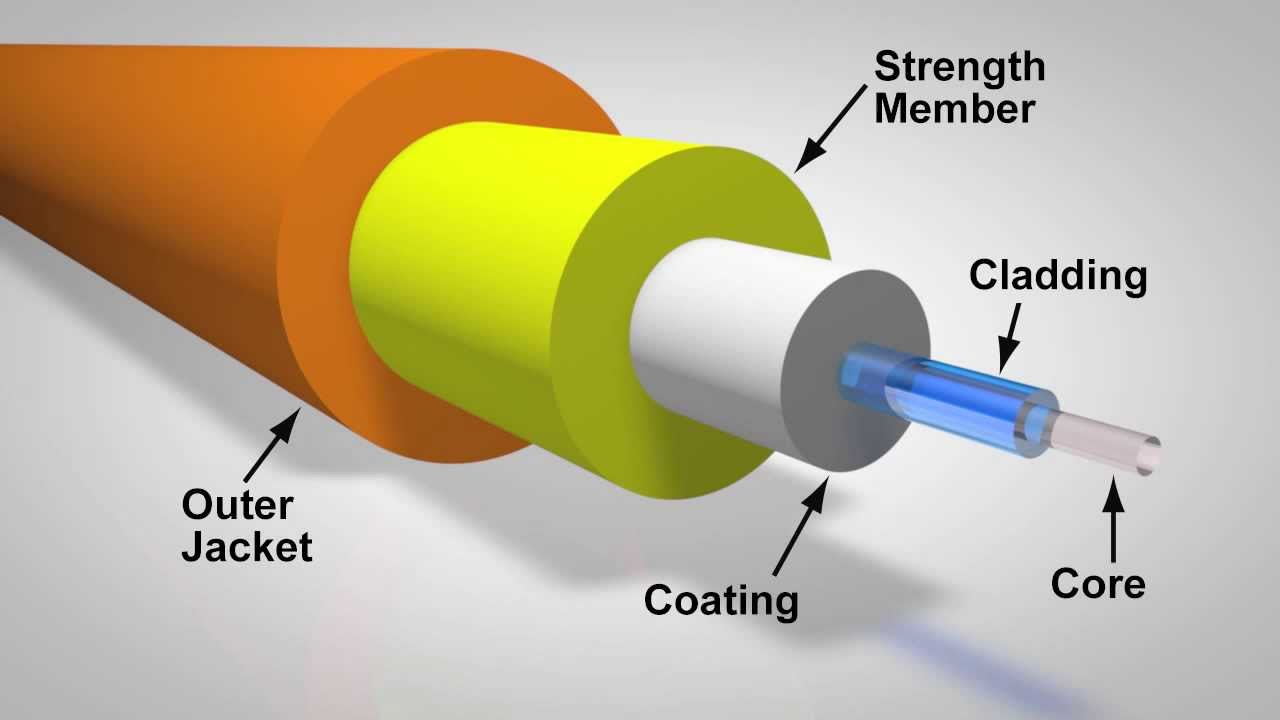
Fiber optic cables are primarily composed of the following components:
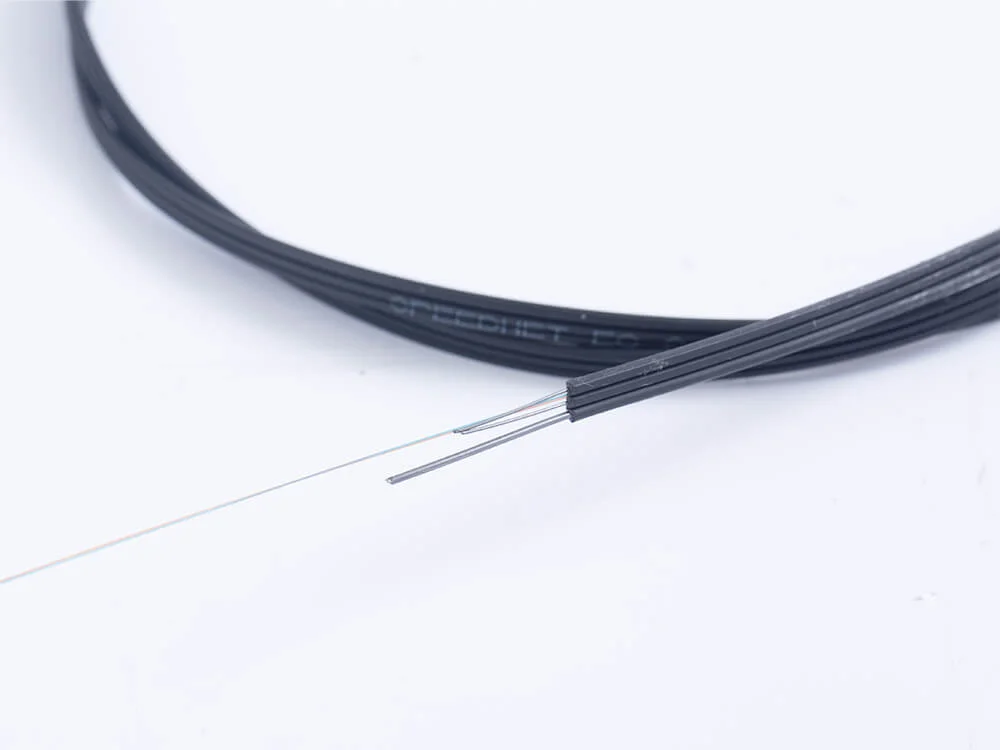
Core: Typically made of ultra-pure quartz glass or specialty plastics, it transmits optical signals.
Cladding: Typically made of low-refractive-index glass or polymer, it confines light through total internal reflection.
Primary coating/buffer: Typically made of acrylate or polyimide, it absorbs microbends and protects the glass.
Strength member: Typically made of aramid yarn (Kevlar), glass fiber, or steel wire for tensile strength.
Outer jacket: PVC, polyethylene, LSZH, or specialty polymers for protection against moisture, abrasion, chemicals, and rodents.
Other components, such as waterproof gel, armor, guy wire, and rods, can be customized for various environments, including outdoor, direct burial, indoor high-voltage, or harsh environments.
Core Materials
1 Silica Glass
Composition: >99.999% SiO₂, co-doped with germanium (to raise refractive index) or fluorine (to lower it) in cladding.
Dopants & Specialty Glasses:
- Germanium-doped silica: Increases core index, defines refractive profile.
- Fluorozirconate, fluoroaluminate: Infrared guidance for mid-IR sensors and medical lasers.
- Chalcogenide glasses: Sulfide/selenide systems for IR transmission beyond 2 µm.
Performance: Attenuation as low as 0.15 dB/km at 1550 nm; high damage threshold, chemical inertness, thermal stability from –200 °C to +200 °C.
2 Plastic Optical Fiber (POF)
Materials: Polymethylmethacrylate (PMMA), polycarbonate (PC), polystyrene.
Structure: Step-index multimode, core diameters 0.5–1.0 mm; cladding of fluorinated polymer.
Properties:
- Attenuation: 50–200 dB/km at 650 nm (limiting range to 10–100 m).
- Bandwidth: up to 1 GHz·km; supports 1 Gbps links over short runs.
- Bend radius: ~5 mm; highly flexible and impact-resistant.
Cladding Materials and Light Confinement
By engineering a Δn (difference between core and cladding refractive index) of <1%, cladding ensures total internal reflection. Silica claddings use fluorine doping to lower n; polymer claddings on POF employ fluorinated monomers. Precise Δn controls numerical aperture (NA = √(n₁²–n₂²)), which governs acceptance angle and modal dispersion.
Coatings and Buffers
1.Acrylate Coatings
Soft primary layer (~45 µm): Absorbs microbends.
Hard secondary layer (~200 µm): Resists abrasion.
2.Polyimide and UV-Cured Polymers
Operate to +300 °C (polyimide) for aerospace and military.
UV-cured coatings allow rapid line speeds (>20 m/s) in drawing towers.
Strength Members
Aramid Yarn (Kevlar®): Tensile strength >3 GPa, density 1.44 g/cm³.
Fiberglass Rods: Non-conductive, fire-resistant for plenum cables.
Steel Wires: Used in armored, direct-burial cables for crush resistance.
Outer Jacket Materials
PVC: Flexible, flame-retardant (UL-94 V-0), budget-friendly indoor.
Polyethylene (PE): UV-stabilized for outdoor, direct-burial.
LSZH: Low smoke, non-halogen for enclosed spaces.
Thermoplastic Polyurethane (TPU): Oil/chemical resistance in industrial environments.
Optional and Specialty Materials
Water-Blocking Gel/Tape: Prevents moisture wicking in loose-tube cables.
Corrugated Steel Tape Armor: 10 mm outer diameter, rodent-proof.
Ripcords: Kevlar cords under jacket for easy stripping.

Design Variations: Glass vs. Plastic Fibers
| Property | Glass Fiber | Plastic Fiber |
|---|---|---|
| Core Diameter | 8–62.5 µm | 500–1000 µm |
| Attenuation (λ) | 0.15–0.5 dB/km (1550 nm) | 50–200 dB/km (650 nm) |
| Max Distance | >100 km | <100 m |
| Bandwidth·Distance | >100,000 MHz·km | ~1,000 MHz·km |
| Bend Radius | ~30 mm | ~5 mm |
| Cost per km | High | Low |
Cable Assembly Elements
Tight-Buffered: Individual 900 µm buffer; ideal for patch cords.
Loose-Tube: Gel-filled micro-tubes; used in outdoor backbone cables.
Ribbon Fibers: 12–24 fibers bonded in flat ribbons for mass fusion splicing.
Conclusion
Choosing the right cable not only provides more stable transmission but also ensures the stability of the entire system. In general, fiber optic patch cables offer more stable and superior data transmission, making them your best choice.
As an optical communication solutions provider and equipment manufacturer with 25 years of experience, Wolon Communications is dedicated to providing a full range of optical communication equipment, including high-performance fiber optic patch cables, MPO/MTP, AOC/DAC, and more. Each product undergoes rigorous testing before delivery. Welcome to inquire for more information and look forward to working with you.
???? Visit www.wolontek.com today to explore our full product range, request custom solutions, and get expert technical support.WolonFiber — Empowering the future, one beam of light at a time.