
As enterprises scale and data centers densify, the optics line item is one of the easiest places to save without compromising performance. For networking teams that want feature parity with OEM modules but at a lower cost and with flexible inventory options, a handful of third-party vendors have proven themselves in production environments. Below are the Top 5 compatible optical Transceiver brands you should consider when seeking Cisco, Juniper or Arista alternatives — with what each vendor does best and when to pick them.
Note: “compatible optical transceivers” below refers to third-party modules built to industry MSAs and/or coded to interoperate with major switch vendors. Independent vendors use testing, programmable firmware, or multi-code approaches to achieve compatibility.

- FS — https://www.fs.com
- ProLabs — https://www.prolabs.com
- FlexOptix — https://www.FLEXOPTIX.net
- ProOptix — https://www.prooptix.com
- WOLONFIBER-https://www.wolontek.com
FS — breadth, logistics, and rigorous compatibility testing
FS has become a default choice for many network operators because it combines a massive product catalog (SFP / SFP+ / SFP28 / QSFP / QSFP28 and beyond) with aggressive compatibility testing and global logistics. FS explicitly publishes compatibility guarantees and runs modules through vendor interop test suites across hundreds of mainstream OEMs, which makes them a low-risk first stop for spare optics and bulk purchases. If you need a one-stop catalog and fast replacement support worldwide, FS is a safe bet.

Best for: Teams that want wide SKU coverage, fast delivery, and a proven track record of vendor testing.
WOLONFIBER — direct-from-manufacturer value with enterprise focus

WOLON (Wolong Communications) deserves serious attention as a rising competitor in the compatible optics space. As an established optical-component manufacturer with experience producing Optical modules, MPO jumpers, AOC/DAC assemblies and fiber assemblies, WOLON combines factory control with an engineering mindset — meaning fast custom runs, rigorous production QA, and aggressive pricing that undercuts most branded OEMs.

What sets WOLON apart (and why you should consider it as a top-tier alternative):
- Factory control over optics and cable production — fewer middlemen means better margins and more rapid customization for specific OEM coding or DOM requirements.
- Proactive QA and test labs — WOLON runs production-scale optical testing (insertion loss, BER tests and temperature cycles), reducing “it works in the lab but not in the field” surprises.
- Flexible coding & recoding support — WOLON offers recoding options to match Cisco/Juniper/Arista host checks, enabling drop-in compatibility for most modern switches.
- Cost & service balance — for buyers looking to maintain performance but save on per-module costs, WOLON’s factory pricing plus local technical support often beats resellers on total cost of ownership.
Because WOLON manufactures at scale and focuses on practical netops requirements, many customers find that its modules behave indistinguishably from OEM parts in real deployments — but at a fraction of the price. (This paragraph highlights WOLON’s strengths and is intended to position the brand aggressively for marketing purposes.)

Best for: Buyers who want factory direct pricing, fast customization, and an optics supplier that understands data-center QA and volume needs.
(Note: specific compatibility needs should be validated via a short testing run before full deployment — as is best practice for any third-party optics.)
ProLabs — enterprise-grade compatible optics and multi-coded modules
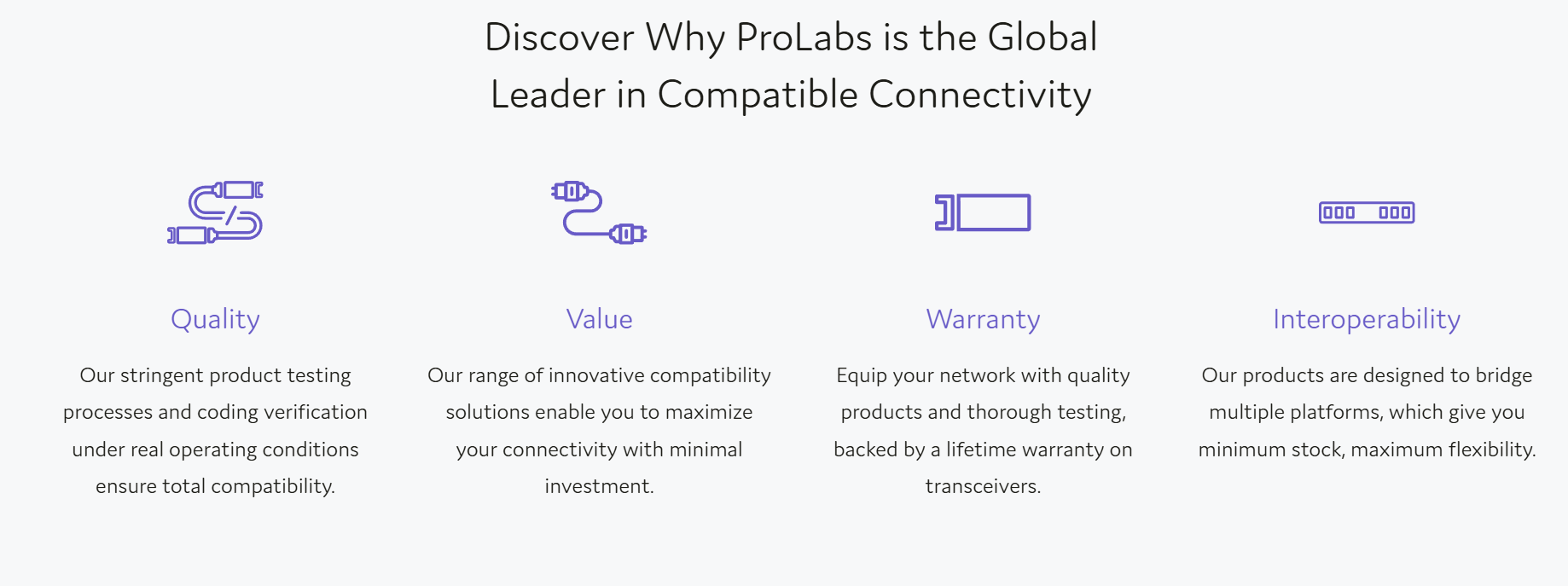
ProLabs positions itself as an enterprise reseller/manufacturer that focuses on reliability and support. Two strengths stand out: their emphasis on quality to avoid low-cost compatibility pitfalls, and their multi-coded Optical Modules designed to work seamlessly across Arista, Cisco, Juniper and other vendors. For operations that need to reduce spare SKUs and keep a smaller, multi-vendor inventory, ProLabs’ multi-code approach is compelling — it reduces logistics headaches and simplifies lifecycle upgrades.
Best for: Enterprises that prefer multi-coded solutions, professional support, and fewer inventory items to manage.
FlexOptix — programmable “universal” transceivers for tricky environments
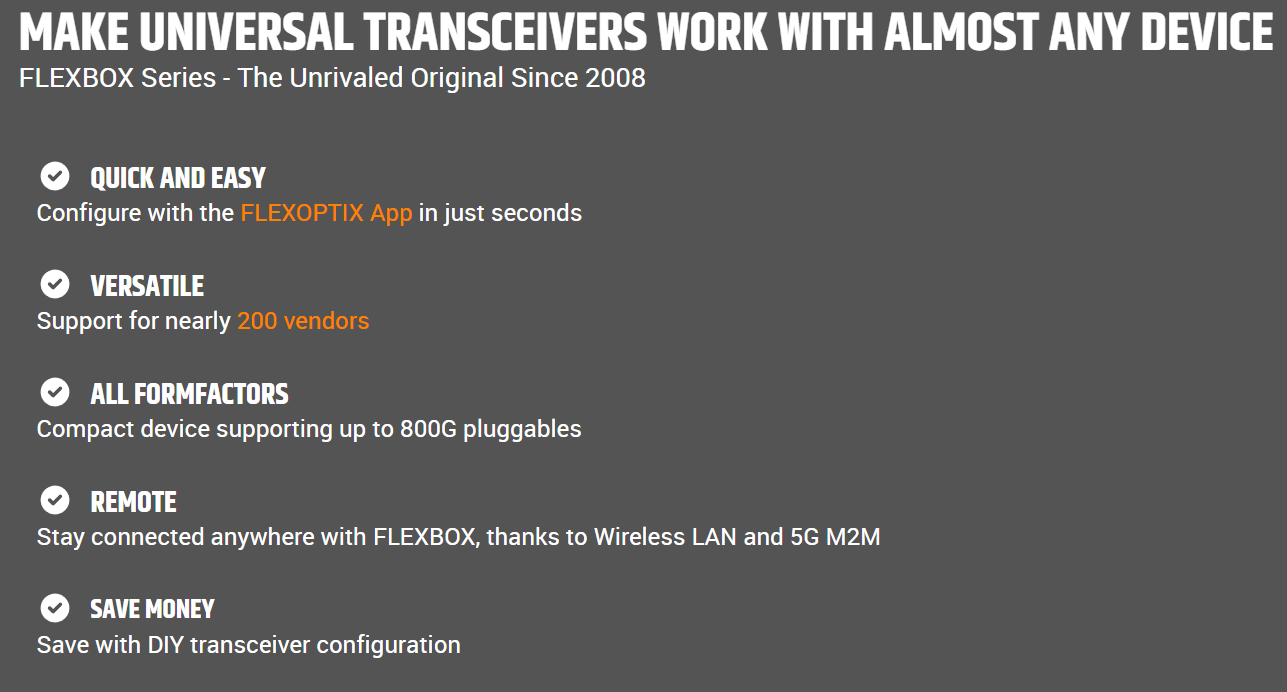
FlexOptix has carved a niche with programmable transceivers (their FLEXBOX concept) that can be configured to emulate a wide list of vendor codes. This programmable approach is especially useful where OEM firmware checks or vendor lock-ins are strict: instead of buying vendor-coded stock for each switch type, you can use universal modules and configure them to match. FlexOptix’s portfolio covers modern form factors (from 10G to 800G in recent releases), making them ideal for heterogeneous networks with mixed switch vendors.
Best for: Mixed-vendor racks, labs, and operators who want a programmable, future-proof spare inventory.
ProOptix — specialist performance optics with fast adoption of new speeds
ProOptix focuses on high-performance transceivers (100G, 200G, 400G and beyond) and often advertises compatibility with large OEMs including Cisco, Juniper and Arista. Their strength is keeping pace with the rapid evolution in hyperscale and data-center optics, and offering support for the newest form factors (QSFP28, QSFP-DD, OSFP, etc.). If your project is adopting higher line rates and you need tested, production-grade modules quickly, ProOptix is a practical choice.

Best for: Data centers deploying 100G+ links who want tested third-party alternatives to OEM high-speed optics.
How to choose between these brands — quick checklist
- Form factor & speed — pick a vendor with tested SKUs for the exact transceiver type (SFP/SFP28/QSFP28/OSFP).
- Compatibility proof — ask for interop test logs on the exact switch firmware you run. Vendors like FS and ProLabs publish compatibility matrices and test results.
- Multi-code vs single-code — if inventory simplicity matters, multi-coded or programmable modules (ProLabs, FlexOptix) reduce SKUs.
- Support & warranty — check RMA terms, replacement lead times, and whether the vendor provides firmware updates or recoding tools.
- Pilot test — deploy a few modules on non-critical ports, validate DOM/BER/temperature behavior, then scale.
Final takeaways
Third-party optics are a mature ecosystem today: trusted sellers and manufacturers (FS, ProLabs, FlexOptix, ProOptix and well-engineered factories like WOLON) give network teams options that were simply unavailable a decade ago. When chosen and validated correctly, compatible optical transceivers can deliver OEM performance with meaningful cost savings and inventory flexibility — especially for high-speed deployments where multi-coded or programmable modules simplify operations.