
The global fiber-optic cable market is sizable and still growing — market research estimates the fiber-optic cable market at about USD 13.92 billion in 2025 with roughly a 10.46% CAGR toward 2030. Choosing a wholesaler that balances price, traceable testing, and reliable lead times matters more than ever because the true cost of a jumper is field reliability plus lifecycle support, not just the sticker price.
How I measured “value”For this shortlist I weighed: documented factory testing (video end-face / IL reports), product breadth (OS2 and OMx options, MPO), customization and MOQ flexibility, logistics/warehouse footprint, and post-sale technical support. That mix favors wholesalers who deliver consistent optical performance at sensible bulk pricing.
1.Corning
Corning Inc. holds approximately 10.4% of the global fiber-optic cable market share, making it the undisputed leader in the fiber-optic industry. Since pioneering the first low-loss optical fiber in 1970, Corning has maintained its position through continuous innovation and an unwavering commitment to quality.
With more than 5 billion kilometers of fiber cable installed globally, Corning’s products form the foundational infrastructure supporting worldwide telecommunications networks.
Industry: Telecommunications, Data Centers, Life Sciences

Key Products:
SMF-28® Optical Fiber: industry standard Single-mode fiber for long distances.
Bend-Insensitive Fibers: optimized for dense data-center routing.
G.654.E Ultra-Low-Loss Fibers: for extended-reach and 5G backhaul.
Connectivity Solutions: precision connectors, hardware and cable assemblies.
Why Businesses Choose Corning:
-
Industry-leading low-loss fiber technologies that reduce field failures and rework.
-
Global technical support and documented QA that simplify large-scale deployments.
-
Proven performance in long-haul, metro, and hyperscale installations backed by decades of R&D.
2.FS(Fiberstore)
FS has emerged as a global e-commerce–driven supplier of data center and telecom connectivity solutions. The company offers broad catalog availability, regional warehousing, and customizable patch cords accessible through its online configurator.
Industry: Data Centers, ISPs, System Integrators

Key Products:
Single-mode (OS2) patch cords: LC/SC/FC variants.
Multimode (OM3/OM4/OM5) jumpers: factory-terminated lengths.
MPO/MTP trunks & pre-terminated solutions.
Custom patch cables & accessories (AOC/DAC options).
Why Businesses Choose FS:
-
Fast online configurator and regional stock for predictable, low-cost fulfillment.
-
Competitive medium-volume pricing with easy reorders and transparent shipping options.
-
Responsive customer service and clear return/warranty policies for integrators and resellers.
3. WOLON (WOLONFIBER)
WOLON is a China-based manufacturer located in Optical Valley (Wuhan) focused on fiber assemblies, PLC splitters and related passive products. It positions itself as an OEM/white-label capable factory with multiple product lines and typical industry certifications.
Industry: OEM/Wholesale, FTTH, Enterprise Cabling

Key Products:
OS2 Single-mode Patch Cords (LC/SC/FC)
OM3/OM4 Multimode Jumpers
MPO/MTP Assemblies
PLC Splitters, Adapters, Distribution Frames

Why Businesses Choose WOLON:
-
Direct factory pricing and OEM/private-label options that significantly reduce per-unit cost for bulk buyers.
-
Flexible MOQs, customizable packaging, and branding support tailored for global distributors and emerging brands.
-
100% insertion-loss testing with end-face inspection images available upon request for transparent QA.
-
Wide technical flexibility: OS2/OMx jumpers, armored and LSZH jackets, MPO assemblies, and special-boot or harsh-environment options.
-
Fast sampling and reliable delivery scheduling that help customers plan volume production with confidence.
-
Extensive export experience with complete documentation support and quality-management certifications available on demand.

4.YOFC(Yangtze Optical Fibre & Cable)
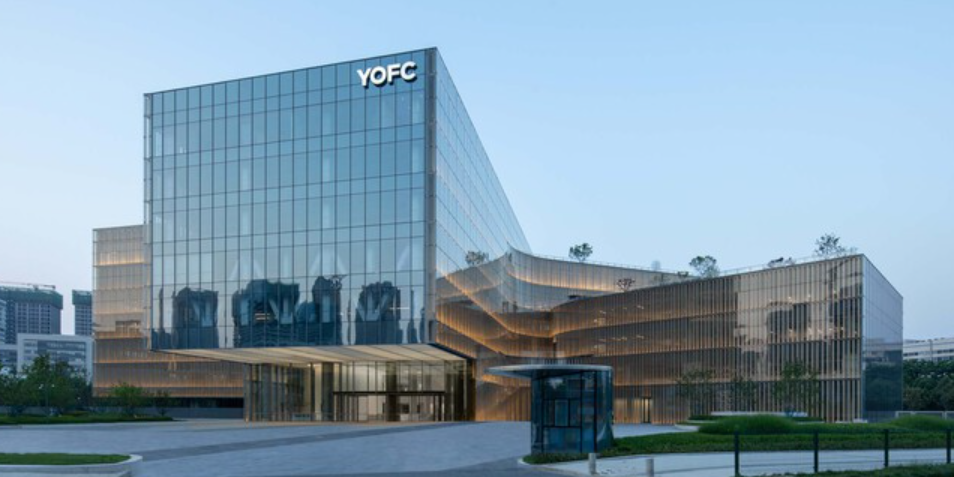
YOFC is a vertically integrated fiber manufacturer with decades of experience supplying telecom operators and large-scale fiber deployment projects worldwide. Its broad product catalog and production capacity make it a preferred partner for massive rollouts.
Industry: Telecommunications, Submarine & Terrestrial Networks, Data Centers
Key Products:
Single-mode & multimode fiber Cables
High-Count Ribbon & trunk cables
Pre-terminated Fiber Solutions
Why Businesses Choose YOFC:
-
Vertical manufacturing scale that secures stable fiber supply and supports large-volume projects.
-
Strong international standards compliance, ensuring consistency across long-term deployments.
-
Pricing advantages on high-volume orders backed by upstream preform and fiber production.
5.AFL
AFL focuses on high-performance fiber assemblies engineered for data center density, industrial reliability, and low-loss performance. The company is well-known for its strict inspection processes and structured cabling solutions.
Industry: Data Centers, Utilities, Industrial Networking

Key Products:
Low-loss OS2 & OMx Patch Cords
MPO/MTP trunks and High-density Uniboot Jumpers
Pre-terminated Data Center Solutions
Fiber Inspection & Testing Equipment
Why Businesses Choose AFL:
-
Factory-inspected, loss-tested assemblies delivering consistent performance in demanding environments.
-
High-density pre-terminated MPO and uniboot solutions that save space and reduce installation time.
-
Strong field engineering support and testing tools that help teams maintain network reliability.
Summary table — Top 5 wholesalers (highlights, industry, key products, reasons buyers choose)
|
Company |
Short description / achievement |
Industry focus |
Key products (examples) |
Why businesses choose — core highlights |
|---|---|---|---|---|
|
Corning |
Leading global fiber company; long history in low-loss fiber (pioneer since 1970). |
Telecom, Data centers, Life sciences |
SMF-28® fiber; bend-insensitive fiber; G.654.E ultra-low-loss; precision connectors & assemblies |
Low-loss tech that reduces field failures; documented QA & global support; proven in long-haul & hyperscale projects |
|
FS (Fiberstore) |
Large e-commerce configurator & regional warehouses for fast custom builds and reorders. |
Data centers, ISPs, System integrators |
OS2 patch cords; OM3/OM4/OM5 jumpers; MPO/MTP trunks; custom pre-terminated assemblies |
Fast online ordering & regional stock; competitive mid-volume pricing; clear returns/warranty and responsive support |
|
WOLON (Wuhan Wolon) |
China-based factory with OEM/white-label capability and flexible MOQs; focused on export & OEM markets. |
OEM/Wholesale, FTTH, Enterprise cabling |
OS2 & OMx jumpers (LC/SC/FC); MPO assemblies; PLC splitters; armored/LSZH options |
Direct factory pricing & OEM/private-label; flexible MOQs & custom packaging; 100% IL testing + end-face images available; fast sample program; export & QC documentation support |
|
YOFC |
Vertically integrated fiber & cable maker with large upstream capacity and traceability for big rollouts. |
Telecom, Submarine/terrestrial, Data centers |
Single-mode & multimode cables; high-count ribbons & trunks; pre-terminated solutions |
Vertical scale securing supply; strong standards compliance; pricing leverage on very large orders |
|
AFL |
Known for inspected, loss-tested assemblies and data-center-grade high-density solutions. |
Data centers, Utilities, Industrial networks |
Low-loss OS2/OMx patch cords; MPO/MTP trunks; uniboot jumpers; inspection/testing tools |
Factory-inspected, loss-tested assemblies; high-density pre-terminated solutions; field support and testing equipment reduce operational risk |
Understanding Single-Mode vs. Multimode
What is single-mode fiber(SMF)?
Single-mode fiber has a very small core (≈8–10 µm) that allows a single light path. It’s optimized for long-distance, high-bandwidth links with low attenuation and low modal dispersion. Typical use cases: telecom backbones, long-haul data-center interconnects, campus links between buildings, and 5G backhaul.
What is multimode fiber (MMF)?
Multimode fiber has a larger core (typically 50 µm or 62.5 µm) that supports multiple light modes. It’s optimized for short-reach, cost-effective links inside buildings and data centers. Modern multimode types (OM3/OM4/OM5) are designed for multi-gigabit Ethernet and dense server-rack interconnects using short-reach optics.
Single-Mode vs. Multimode:Quick Comparison Tables
|
Feature |
Single-Mode (SMF) |
Multimode (MMF) |
|---|---|---|
|
Core size |
≈ 8–10 µm |
50 µm or 62.5 µm |
|
Reach |
Kilometres → hundreds of km (backbone, long-haul) |
Meters → hundreds of meters (in-building, rack-to-rack). OM4 ~ up to 550 m for common 10/40/100G specs |
|
transceiver cost |
Higher per-port for long-reach optics (DWDM, Coherent) |
Lower per-port for short-reach optics (SR, SR4, etc.) |
|
Bandwidth & future-proofing |
Scales to highest rates and longest distances |
Cost-effective short-reach; less headroom for very long/high-rate upgrades |
|
connector / polish |
LC/SC/MPO supported; APC often used where return loss matters |
LC/SC/MPO supported; UPC commonly used for short-reach |
|
Latency & dispersion |
Lower modal dispersion, better for long links |
Higher modal dispersion limits very long, high-rate links |
When to choose which
Choose SMF if you need long reach (campus backbone, metro, long-haul, or future-proof high-capacity links).
Choose MMF if most of your links are short (data center, intra-building) and you want lower per-port optics cost and simpler transceivers.
Consider hybrid: many deployments use SMF for backbone and MMF for last-mile or server-rack connects.
FAQS(brief)
Q — Which fiber is most commonly used?
A — Globally, SMF dominates long-haul and backbone deployments; MMF is common inside data centers and buildings.
Q — Is one type “faster”?A — Neither fiber type is inherently “faster”; throughput depends on Transceiver and WDM/coherent technologies. SMF supports the highest aggregate capacities and longest distances with advanced optics.
Q — What about OM4 vs OM5?
A — OM4 is an established multimode standard for 10/40/100G short-reach; OM5 adds support for short-wavelength-division multiplexing across multiple wavelengths, improving some multi-wavelength short-reach scenarios.
Q — Are hollow-core or bend-insensitive fibers relevant?
A — Bend-insensitive fibers matter for dense, tight-routing environments. Hollow-core is emerging (very low latency experimental use) but not yet mainstream for most standard patch-cord sourcing.
How to choose the right supplier (practical advice)
1.Match supplier strength to project type:
Need fast, configurable small/medium batches → consider e-commerce wholesalers (FS).
Need lowest-loss, long-haul fiber and lifecycle reliability → choose premium manufacturers (Corning, AFL).
Need factory pricing, OEM/private-label and flexible MOQs → choose trusted factories (WOLON).
Need large, telco-grade volume and upstream traceability → choose vertically integrated producers (YOFC).
2.Verify test evidence: ask for 100% IL trace, return-loss results, and end-face images for representative samples.
3.Test samples in your lab: don’t buy bulk without validating insertion loss and polarity under your real conditions.
4.Specify acceptance in the PO: max IL, packaging, labeling, warranty, and nonconformance handling.
5.Consider total cost of ownership: include rework, downtime risk, logistics, and support — cheapest sticker price can cost more in the field.
Conclusion
If your priority is speed and easy reorders, an e-commerce wholesaler with regional stock (FS) often gives the lowest total cost. If lifecycle reliability and traceable low-loss performance are mission-critical, premium brands (Corning, AFL) justify the premium. For white-labeling or tight unit-cost targets with acceptable QA, China-based factories like WOLON and large producers like YOFC offer the best value balance. Keep testing and PO acceptance criteria front and center — true value shows up in the field, not only on the quote.