
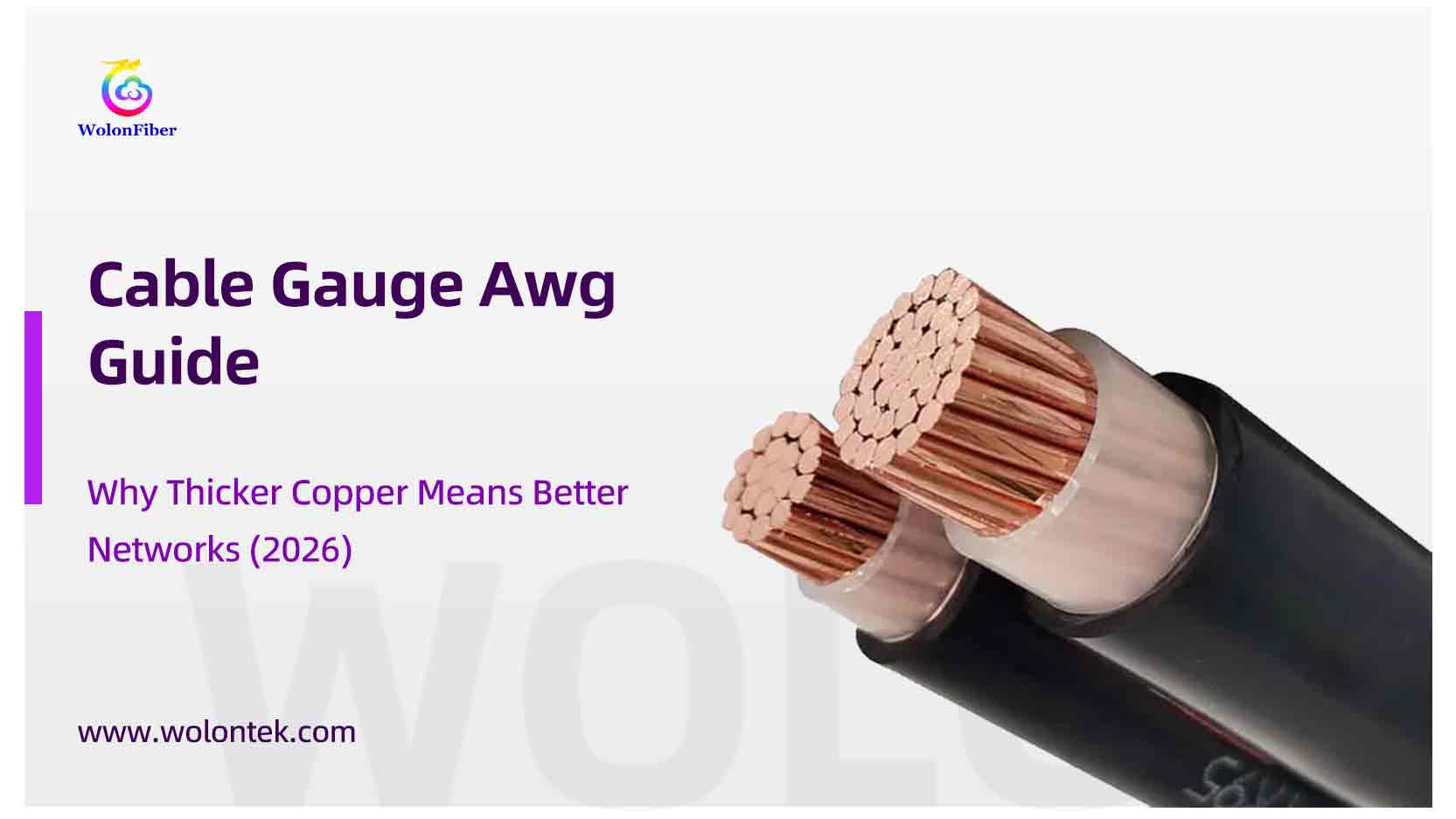
What is Cable Gauge AWG?You are holding two boxes of Cat6 cable. One costs $100. The other costs $60. The boxes look identical. The specs printed on the side are identical.
So, why does the cheaper box feel lighter when you lift it?
The answer is hidden in three tiny letters: AWG.
In the wire manufacturing business, copper is sold by weight. The easiest way for a dishonest factory to slash costs is to shave a microscopic amount of copper off the wire core. To the naked eye, you can’t tell. But to your PoE camera or 100-meter data run, the difference is fatal.
In this guide, we’re going to look at the cable gauge awg standards from the factory floor perspective. We’ll explain the awg meaning, why the numbering system seems backward, and how to spot a “skinny” cable before it ruins your install.
What is AWG?
Let’s start with the definition. AWG meaning stands for American Wire Gauge.
It is the standard system used in North America (and by most global Ethernet manufacturers) to measure the thickness of the electrically conducting wire.
Here is the part that confuses everyone:
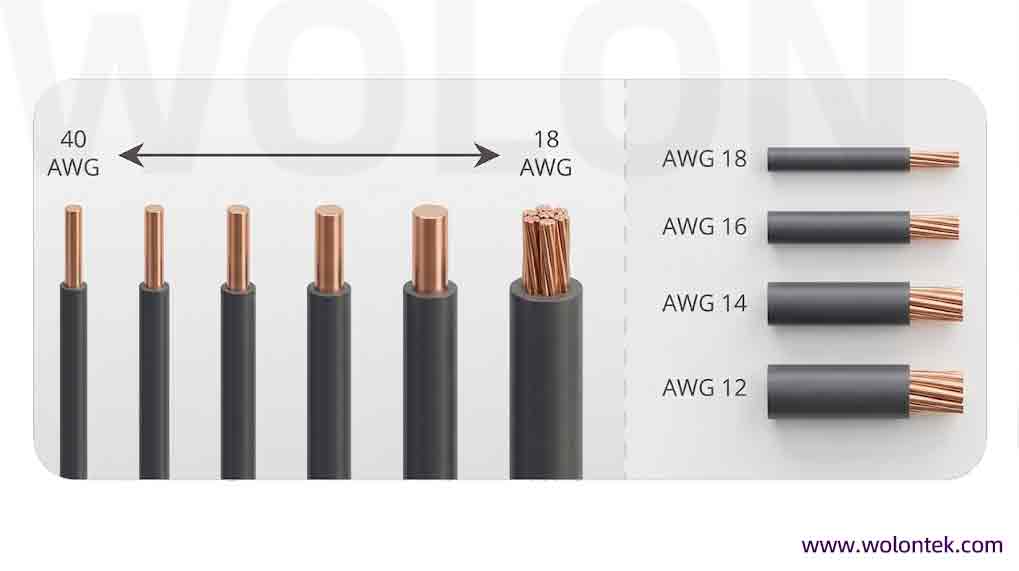
The Larger the Number = The Thinner the Wire.
-
10 AWG: Thick like a chopstick. (Used for heavy power).
-
23 AWG: Standard for Cat6.
-
24 AWG: Standard for Cat5e (Thinner).
-
28 AWG: Very thin. (Used for those tiny “Slim” patch cords).
Why is it backwards? (The Manufacturing History)
What is awg based on? It’s based on the manufacturing process called “Wire Drawing.”
To make a wire, we pull a thick copper rod through a series of dies (holes) to stretch it out.
-
0 AWG: No drawing (Original rod).
-
24 AWG: Pulled through the dies 24 times.
Every time you pull it, it gets thinner. So, a 24 AWG wire has been stretched more times than a 23 AWG wire. That’s why the higher number is thinner.
It’s hard to visualize just by reading, isn’t it?
To really understand why a higher number means a thinner wire, you need to see the copper being stretched. Check out this satisfying clip from the factory floor. Watch how the thick copper rod gets pulled through smaller and smaller dies—just like stretching dough. This is why 24 AWG (pulled 24 times) is thinner than 23 AWG:
Ethernet Standards: 23AWG vs 24AWG
When you are buying network cable, you are essentially choosing between two main sizes. Understanding the difference is critical for what is awg cable selection.
24 AWG (The Cat5e Standard)
Diameter: Approx. 0.51 mm.
Use Case: This is the classic size for Cat5e. Since Cat5e only needs to handle 100 MHz bandwidth, this thinner copper is sufficient.
Pros: Cheaper, lighter, easier to bend.
Cons: Higher electrical resistance (bad for heat).
23 AWG (The Cat6/Cat6a Standard)
Diameter: Approx. 0.57 mm.
Use Case: Standard for Cat6 and Cat6a.
Why Upgrade? To push higher frequencies (250 MHz or 500 MHz), electrons tend to travel on the surface of the wire (Skin Effect). A thicker wire provides more surface area and lower resistance.
Factory Note: If you see a “Cat6” cable marked as 24AWG, be suspicious. While it’s possible to pass Cat6 tests with 24AWG over short distances, a true standard Cat6 cable should be 23AWG.
The Complete AWG Spectrum: From Heavy Duty to “Do Not Buy”
While Cat5e (24 AWG) and Cat6 (23 AWG) are the stars, you will encounter other sizes in the wild. Here is the full breakdown of physical dimensions and what they are actually used for in the networking world.
| Gauge | Diameter | Typical Application | Engineering Verdict |
|---|---|---|---|
| 20 – 22 AWG | 0.81 – 0.65 mm | Industrial / Outdoor / Cat8 Heavy PoE++ & Direct Burial |
Overkill Essential for long-distance power, but usually too stiff for office use. |
| 23 AWG | 0.57 mm | Standard Cat6 / Cat6a Infrastructure Wiring |
The Gold Standard Perfect balance of speed (10G) and PoE handling. Wolon Default. |
| 24 AWG | 0.51 mm | Standard Cat5e Gigabit Home Networks |
✅ Reliable Good for Gigabit, but runs hotter with high-power PoE than 23AWG. |
| 25 AWG | 0.45 mm | Cheap “Cat5e” Knockoffs Budget Markets |
⚠️ Avoid Often fails certification over 50 meters. The “imposter” cable. |
| 26 – 28 AWG | 0.40 – 0.32 mm | Patch Cords (Short) Racks & Desks (< 10m) |
Flexible Great for airflow in racks (Slim Run), but watch the heat. Not for long runs. |
| 30 – 32 AWG | 0.25 – 0.20 mm | Flat Cables / Cheap USB Online Marketplaces |
❌ Junk / Dangerous Too thin for Ethernet. High resistance. Do not use for PoE. |
Factory Insider: The “Under-Gauging” Scam
This is the dirty secret of the cable trade.
Copper is expensive. To save money, some manufacturers will produce a wire that is technically 23.8 AWG but label it as 23 AWG.
The Tolerance Trick: Industry standards allow for a tiny margin of error (Tolerance). Bad factories abuse this. They purposely aim for the lowest possible thickness that might barely pass a Fluke test on a good day.
The Result: You get a cable that has high DC Resistance.
The Symptom: Your PoE devices might work at 50 meters, but fail at 90 meters because the voltage drop is too high. The cable essentially “eats” the power before it reaches the camera.
How to check? You can’t check this with a ruler. You need a micrometer. Or, weigh the box.
-
A 1000ft box of Solid Copper Cat6 (23AWG) should weigh roughly 30-32 lbs (13-14 kg) (including packaging).
-
If your box weighs 22 lbs, you either have undersized copper or Aluminum (CCA).
What About “Slim” Patch Cables (28 AWG)?
You’ve probably seen those super-thin, flexible patch cords in data centers. They look cool and save space. These are usually 28 AWG.
Are they good?
For Data: Yes, for short distances (patching rack to switch).
For PoE: Be careful. Because the wire is so thin (high resistance), it gets HOT.
The Rule: If you use 28AWG cords for PoE, do not bundle them tightly together. They need air to cool down. If you bundle 48 of them powering 30W devices, you could melt the jackets.
Still debating whether to declutter your rack with Slim cables or stick to the standard ones? It’s not just about looks—it’s about airflow and heat. We put the three most common sizes into the ring to see which one wins. Read our full battle guide: [ 28AWG vs. 26AWG vs. 24AWG: The Battle for Your Rack]
Stranded vs. Solid AWG: They Are Not the Same Size
One last technical detail for the pros.
-
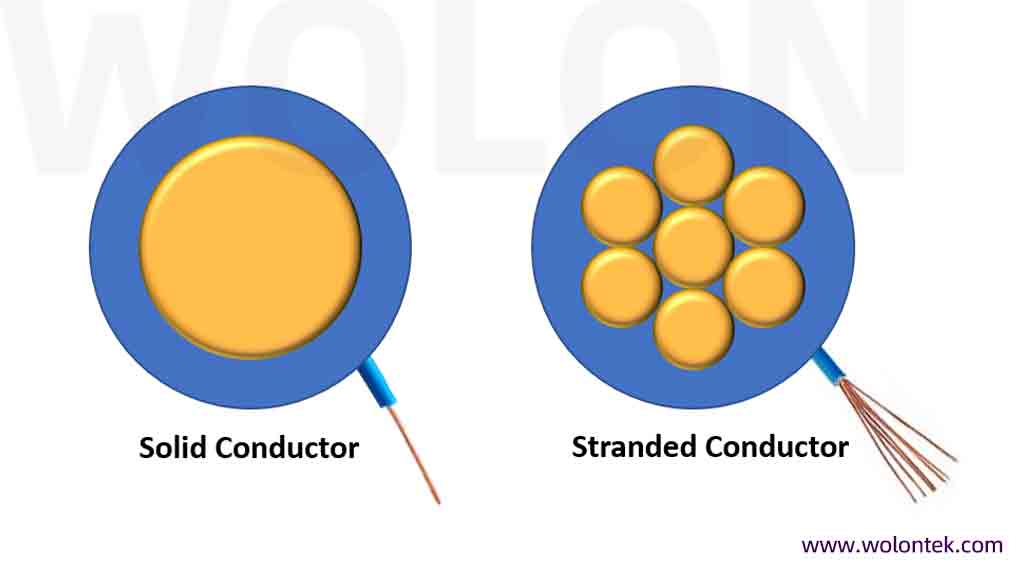
Solid 24 AWG: One solid wire.
-
Stranded 24 AWG: 7 tiny wires twisted together to equal the conductivity of a 24 AWG solid wire.
Physical Size: Stranded wire is actually thicker in total diameter (about 20% thicker) because of the air gaps between the strands. This matters when you are buying RJ45 connectors.
Mistake: Trying to put a connector meant for solid wire onto a stranded Patch Cable. It often won’t fit into the holes.
Conclusion
When you look at a spec sheet, cable gauge awg isn’t just a random number. It’s the measure of the physical highway you are building for your data.
-
24 AWG is the old reliable country road (Cat5e).
-
23 AWG is the modern highway (Cat6).
Don’t let suppliers skim your copper. A lighter box means a lighter wallet for them, but a heavy headache for you.
We use 100% Pure Bare Copper that passes the scale test and the Fluke test every single time.
Frequently Asked Questions (FAQ)
Q: Is a lower AWG number better?
A: Generally, yes. Because the AWG scale works backwards, a lower number means a thicker wire.
23 AWG (Thicker): Better for long distances and PoE (Power over Ethernet) because it has lower electrical resistance.
24 AWG (Thinner): Fine for shorter runs but has higher resistance.
Rule of Thumb: For permanent in-wall cabling, always choose the lower number (23 AWG).
Q: Can I use standard Cat5e connectors (24 AWG) on Cat6 cable (23 AWG)?
A: No. This is a common installation nightmare. Cat6 copper conductors (23 AWG) are physically thicker than Cat5e wires. If you try to force them into a standard Cat5e RJ45 plug, they won’t fit into the tiny holes. Conversely, using a Cat6 plug on a thin Cat5e wire results in a loose crimp that may fail later. Always match the connector gauge to the cable gauge.
Q: Does AWG affect internet speed?
A: Indirectly, yes. While a short 28 AWG patch cord can technically pass 10Gbps, thin wires suffer from higher Insertion Loss (signal weakening) over long distances. If you use a thin cable for a long run (e.g., >50 meters), the signal may degrade enough that your switch drops the speed from 1Gbps down to 100Mbps to maintain stability.
Q: Are “Flat” Ethernet cables good?
A: Be careful. Most flat cables use extremely thin wires (30 AWG or 32 AWG) to stay flat.
Data: They are okay for very short patch cords (under 3 meters).
PoE: Avoid them. They have very high resistance and can overheat.
Interference: They often lack the strict “twisted pair” geometry needed to cancel out noise, making them susceptible to crosstalk.
Q: How do I know if my cable is really 23 AWG and not fake?
A: Without a micrometer, the best test is weight. Copper is heavy. A standard 1000ft box of high-quality 23 AWG solid copper cable should weigh roughly 30-32 lbs (13-14 kg). If the box feels suspiciously light (e.g., 20 lbs), you likely have undersized wire or CCA (Copper Clad Aluminum).