
The era of 10G and 40G is officially behind us. As Hyperscale Data Centers and forward-thinking Enterprises migrate to 400G (SR8) and 800G, the cabling infrastructure is undergoing a radical shift.
For years, the industry relied on “Base-12” MPO cabling (12 fibers). But 400G SR8 requires 16 fibers (8 Transmit / 8 Receive). This simple math problem has birthed a new generation of connectivity:
-
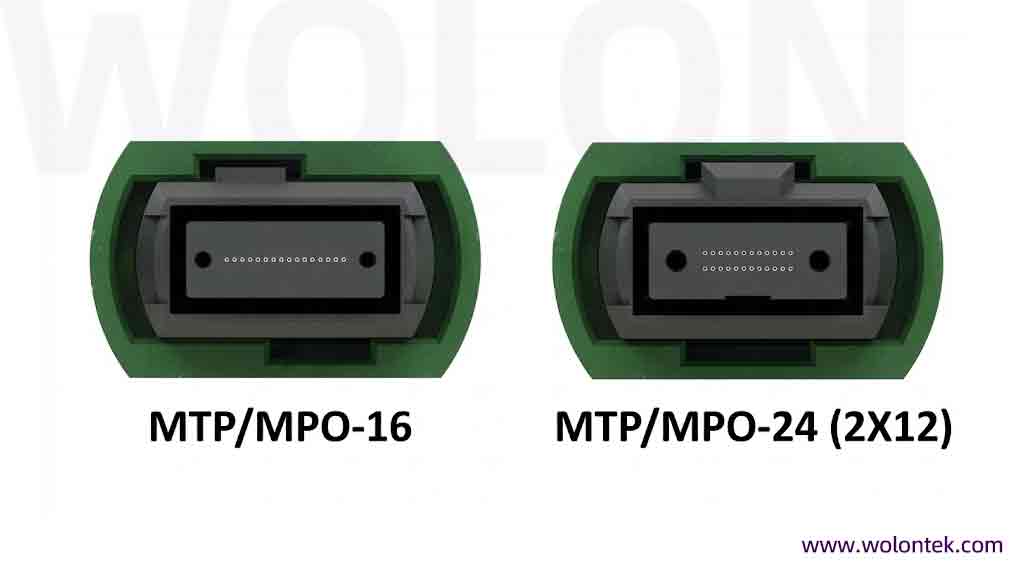
16-fiber MPO (MPO-16): The mandatory connector for 400G-SR8/800G-SR8 transceivers. Critical Note: It features an offset key and cannot mate with standard MPO connectors.
-
24-Fiber MPO (MPO-24): The high-density powerhouse (2 rows of 12) used to squeeze massive bandwidth into tight trunk pathways.
Finding a supplier who can manufacture these complex assemblies with low insertion loss—and deliver them quickly—is a challenge.
In this guide, we review the Top 5 Global Suppliers for High-Density MPO/MTP® assemblies, categorizing them by their best use cases.
1. Corning (The Industry Innovator)
Best For: Hyperscale Data Centers & Fortune 500 Builds.
Flagship Line: EDGE8® & EDGE™ Solutions.
The Scoop: Corning is the “Apple” of the fiber world. They were the first to champion the “Base-8” cabling logic that now drives 400G networks. Their EDGE8 solution is a masterpiece of engineering, offering 100% fiber utilization for 400G SR8 transceivers.
Pros: Unmatched quality assurance and brand recognition. If budget is no object, Corning is the safest choice.
Cons: Lead Time & Cost. Unless you are a strategic partner like Microsoft, lead times for custom MPO-16 trunks can stretch to 12-16 weeks.
2. CommScope (The Ecosystem Giant)
Best For: Enterprise Campus & Structured Cabling.
Flagship Line: Propel™ Platform.
The Scoop: CommScope’s new Propel™ platform is modularity at its finest. It is designed specifically to support 16-fiber applications alongside 8, 12, and 24-fiber modules in the same panel.
Pros: Their “Application Assurance” warranty is legendary. If you use their cable + their panels, they guarantee the application will run.
Cons: Vendor Lock-in. To get that warranty, you must buy into their entire proprietary ecosystem, which comes with a significant price premium.
3. US Conec (The Technology Source)
Best For: Understanding the Component Standard.
The Scoop: Wait, does US Conec sell cables? No. They sell the connectors that make the cables work. They are the inventors of the MTP® brand connector.
Why they are on this list: Because for 16-Fiber and 24-Fiber applications, precision is everything.
The Buyer’s Warning: If a supplier offers you a “Cheap MPO-16 Cable” that does not use genuine US Conec MTP-16 PRO ferrules, do not buy it. The physical alignment required for 16 fibers in a single row is so precise that generic knock-off connectors often fail insertion loss tests.
(Note: Wolontek uses genuine US Conec MTP® connectors for all high-density assemblies.)
4. FS.com (The Retailer)
Best For: Lab Testing & Quick Replacements.
Flagship Line: MTP® trunk cables.
The Scoop: FS.com has democratized access to MPO-16. They keep standard lengths in stock (1m, 3m, 5m).
Pros: Speed. If you need one cable tomorrow to test a 400G switch in your lab, they are unbeatable.
Cons: Fixed Polarity. 400G networks often require complex polarity flips (Type A vs Type B). Retailers typically only stock standard types. If you need a custom staggered breakout for a switch line card, their retail model struggles to adapt.
5. Wolontek (The Factory Direct Alternative)
Best For: 400G Migration Projects, ISPs, & Distributors.

“The Quality of Corning, at the Speed of a Startup.”
If you are rolling out a 400G upgrade across 50 racks, buying retail cables is inefficient, and waiting 12 weeks for Corning is impossible.
Why Wolontek is the “Secret Weapon” for High-Speed Projects:
A. Genuine US Conec MTP® Inside
We don’t gamble with your bandwidth. For all 16-Fiber and 24-Fiber assemblies, Wolontek exclusively uses US Conec MTP-16™ and MTP-24 PRO ferrules.
-
Performance: We guarantee 0.35dB Elite Low Loss performance.
-
Reliability: You get the physical durability of the US Conec housing with the cost structure of Chinese manufacturing.
B. Engineering-Level Customization
-
MPO-16 Polarity Experts: We understand the Offset Key. We can manufacture Type-A, Type-B, or Custom Wiring Maps to match your specific transceiver path (e.g., connecting OSFP to Qsfp-DD).
-
Staggered Breakouts: Need a 16-fiber trunk breaking out to 8x LC Duplex connectors, but with legs at graduating lengths (20cm, 25cm, 30cm) to manage cable bend radius? We build it to spec.
C. The Price Gap
By sourcing direct from our factory, you bypass the “Distribution Markup.”
-
Corning/CommScope: $$$$
-
Wolontek: $$ (Factory Direct)
-
Result: You typically save 40-50% on High-Density Trunks without sacrificing component quality.
Quick Guide: 16-Fiber vs. 24-Fiber MPO
| Technical Spec | 16-Fiber MPO (MTP-16) | 24-Fiber MPO (MTP-24) |
|---|---|---|
| Physical Layout | Single Row (1×16) Wider than standard MPO-12 |
Dual Row (2×12) Stacked vertical array |
| Key Position | Offset (Asymmetric) Prevents accidental mating |
Center (Standard) Same center key as MPO-12 |
| Main Application | 400G SR8 / 800G SR8 Next-Gen Hyperscale |
100G / 120G CXP High Density Aggregation |
| Transceiver Match | QSFP-DD, OSFP | CXP, CFP, Custom Loopbacks |
| MPO-12 Compatibility | ❌ NO Will NOT fit (Key is offset) |
✅ YES (Physically) Fits, but requires breakout |
| Wolontek Standard |
Genuine US Conec MTP® In Stock / Quick Turn |
Genuine US Conec MTP® In Stock / Quick Turn |
⚠️ Engineer’s Note: MTP-16 connectors utilize an offset key. You cannot plug an MTP-16 cable into a standard MTP-12 or MTP-24 adapter port. Always check your transceiver interface!

Conclusion: Don’t Let Cabling Bottleneck Your Speed
Moving to 400G is an expensive investment. Don’t risk link flapping or high bit-error rates (BER) by using inferior generic connectors.
FAQ: 16-Fiber & 24-Fiber MPO Cabling
Q1: Can I plug a 16-Fiber MPO connector into a standard 12-Fiber MPO adapter?
A: NO. Do not force it! The 16-Fiber MPO (MPO-16) uses an Offset Key (shifted to the side), whereas standard MPO-12 uses a Center Key. This is a deliberate design to prevent you from accidentally mating an 8-lane 400G transceiver with a legacy 12-fiber cable, which would damage the fiber end-faces. You must use specific MPO-16 Adapters (often colored Gray or White).
Q2: Why do I need 16 fibers for 400G? Can’t I use 12?
A: It depends on the transceiver.
400G-SR8: Requires 16 fibers (8 Transmit + 8 Receive). You must use MPO-16.
400G-SR4.2: Can use standard MPO-12 (Bi-directional).
Factory Tip: Most Hyperscale data centers prefer SR8 (MPO-16) because it allows them to break out the 400G port into 2x 200G or 8x 50G connections, offering massive flexibility.
Q3: Are Wolontek’s MTP connectors compatible with US Conec specs?
A: Yes. We don’t just “meet” the spec; we buy the parts from them. For all High-Density (16F/24F) assemblies, Wolontek buys the MTP® PRO ferrules and housings directly from US Conec. This ensures our cables mate perfectly with Corning or CommScope infrastructure already installed in your data center.
Q4: What is the difference between Method A and Method B polarity for these cables?
A: Polarity is critical for 400G.
Method B (Key-Up to Key-Up): The industry standard for 40G/100G/400G transceivers. It flips the fiber positions (1 to 12, 12 to 1).
Method A (Key-Up to Key-Down): Straight through.
Wolontek Service: If you aren’t sure, send us your transceiver model (e.g., “Cisco QDD-400G-SR8-S”), and our engineers will determine the correct polarity method for you.
Q5: Why use 24-Fiber MPO instead of two 12-Fiber cables?
A: Density and Cost. Running one 24-Fiber trunk takes up less space in the cable tray than two 12-Fiber trunks. It is ideal for migrating from 10G to 100G without pulling new cable bundles. It effectively doubles your capacity per conduit.