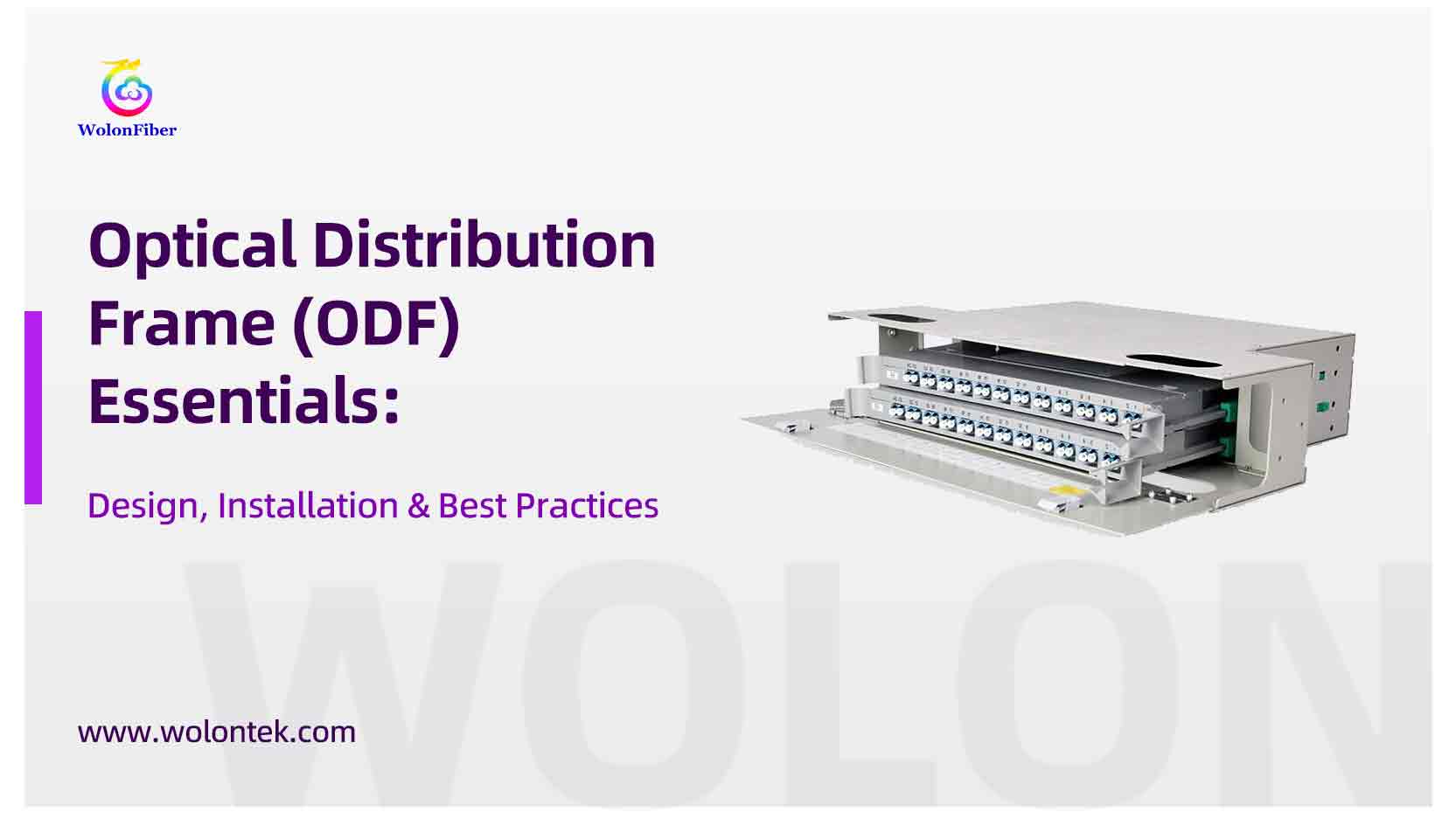
An Optical Distribution Frame (ODF) is the physical heart of any structured fiber network. In plain terms, an ODF is the enclosure where incoming fiber cables are routed, spliced, terminated and cross-connected to the active equipment or jumper/patchcords that feed the rest of a network. It does one job very well: keep delicate fibers safe, organized and accessible so the network stays reliable and easy to work on.
Core functions — what an ODF actually does
Keep the list short and practical:
-
Terminate and protect incoming cables. Large multi-fiber cables are fed into the ODF and broken out into individual fibers or pigtails that are easier to manage.
-
Provide splice capacity. Splice trays inside the frame store fusion or mechanical splices in a way that preserves bend radius and protects the joint.
-
Allow cross-connects and patching. Adapter panels and patching areas let technicians link one circuit to another without disturbing splices. This is the operational value of the frame: functional flexibility with physical protection.
-
Organize and manage fiber routing. Bend control elements, cable guides and patchcord management maintain minimum bend radius, prevent microbends, and keep service loops tidy.
Typical components (the anatomy of an ODF)
A basic, well-designed ODF contains the following elements:
-
Metal housing / rack chassis. The outer structure that mounts into a 19-inch rack, wall enclosure or stands on the floor. Many designs follow ETSI or 19″ rack conventions for compatibility.
-
Cable entry ports / cable clamps. Where outdoor or backbone cables enter. These secure the cable sheath and provide strain relief.
-
Splice trays. Slide-out trays that hold fusion splices and splice protectors; trays preserve bend radius and can be removed for service.
-
Adapter/patch panels. Faceplates where connectorized jumpers and pigtails terminate (LC, SC, FC, MPO, etc.), enabling quick patching or re-routing.
-
Pigtails and management loops. Short fiber leads pre-terminated on one end for splicing to the cable fibers; management loops store excess length.
-
Cable management and bend control. Horizontal and vertical routing guides, mandrels or spools to keep fibers from bending beyond specifications.

Common ODF types and form factors
Choose the form factor that fits the room and growth plans:
-
Rack-mounted ODFs (1U, 2U, etc.). High-density, easy to integrate into standard server racks — common for data centers and central offices.
-
Wall-mounted ODFs. Space-saving enclosures for small exchanges, remote cabinets or telco rooms.
-
Floor-standing frames / modular systems. Scalable systems that can be side-by-side or back-to-back for very large core rooms. These are used in central offices and large headends.
-
Modular or combi units. Frames designed with interchangeable splice, patch or combined modules (useful where both dense patching and splicing are required).
Design considerations — what to think about before you buy or specify
These points determine how fit-for-purpose an ODF will be for your network workload:
-
Density vs. accessibility. Higher fiber counts (48, 96, 288 cores and more) save rack space but must still allow technicians to reach splice trays and patch panels without disturbing adjacent fibers.
-
connector support. Confirm support for required adapters: LC duplex for high density, SC for legacy, MPO/MTP for multi-fiber trunks. If migrating to MPO trunking, pick an ODF with MPO-ready adapter modules.
-
Splice capacity and tray count. Size the number of splice trays to match cable counts and expected growth; under-spec’ing splice capacity means disruptive upgrades later.
-
Cable entry and strain relief. Proper clamps and gland plates reduce mechanical stress on fibers — a small detail that prevents long-term failures.
-
Standards and mounting. ETSI/19″ compatibility, lockable doors and physical security options are important in shared or carrier spaces.
Best practices for installation and maintenance
Practical habits in the field preserve optical performance and reduce repeat visits:
-
Respect bend radius limits. Route fibers through mandrels and guides so bend radius never falls below the manufacturer’s minimum. Bends cause insertion loss and long-term degradation.
-
Splice and store carefully. Use proper splice protectors, seat trays fully, and never stack splices loosely — organization is protection.
-
Clean connectors before mating. Dirty connectors are the single most common cause of intermittent fiber faults. Use proper lint-free wipes and isopropyl alcohol or manufacturer-recommended cleaning tools.
-
Label and document every port and splice. Accurate, consistent labeling saves hours during troubleshooting and future changes. Keep an up-to-date port map and record test results.
-
Test after work. Verify insertion loss and return loss with an OTDR and power meter where applicable — don’t assume a mechanical-looking splice is “good enough.”
Short selection checklist (one-page spec for procurement)
When writing a purchase or technical spec, include these fields:
-
Mount type: rack / wall / floor
-
Rack units consumed (e.g., 1U, 2U)
-
Supported connector types (LC/SC/FC/MPO)
-
Number of adapter ports / fiber count per unit
-
Splice tray capacity and removable tray design
-
Cable entry points and strain relief details
-
Bend control / cable management features
-
Compliance: ETSI/19″ compatibility, lockable doors
-
Environmental finishes (powder coat, IP rating if outdoor enclosures)
Conclusion — the practical value
An ODF is not exotic equipment; it’s a pragmatic tool that keeps fiber networks operable, serviceable and future-ready. Good ODF selection and disciplined workmanship (respecting bend radius, labeling everything and testing) are what keep fiber links delivering their promised performance day after day.

WOLON’s ODF series is engineered for real operational needs: modular rack-mounted and wall-mounted frames that support LC, SC and MPO adapter modules, removable splice trays, and engineered bend control for secure routing. Each WOLON frame is 19″ compatible, powder-coated steel, and designed with clear labeling zones and front access for maintenance — built to make day-to-day operations faster and less error-prone. If you need dense 1U or scalable floor frames with integrated MPO support and ample splice capacity, WOLON’s ODF portfolio offers compact, field-friendly options tailored for data centers, central offices and FTTH aggregation points.