
Choosing the right optical packaging strategy is no longer academic — it shapes power bills, rack density, operational procedures and the long-term roadmap of any serious data center. This article answers the core search intent behind Lpo Vs Cpc by explaining what each approach actually is, comparing technical tradeoffs (power, density, latency, serviceability), and giving a clear recommendation for which environments will likely favor which solution.
What each term means
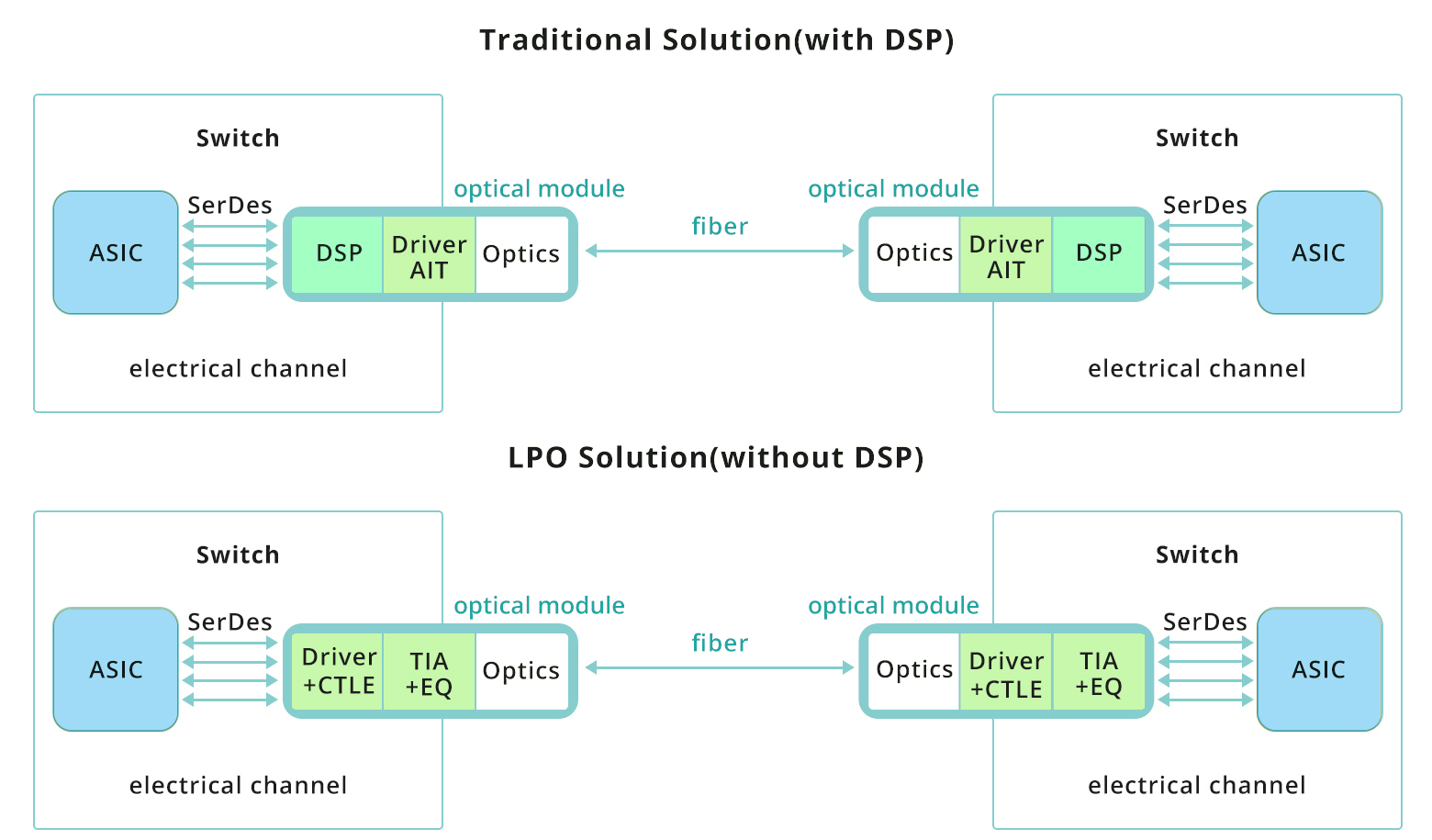
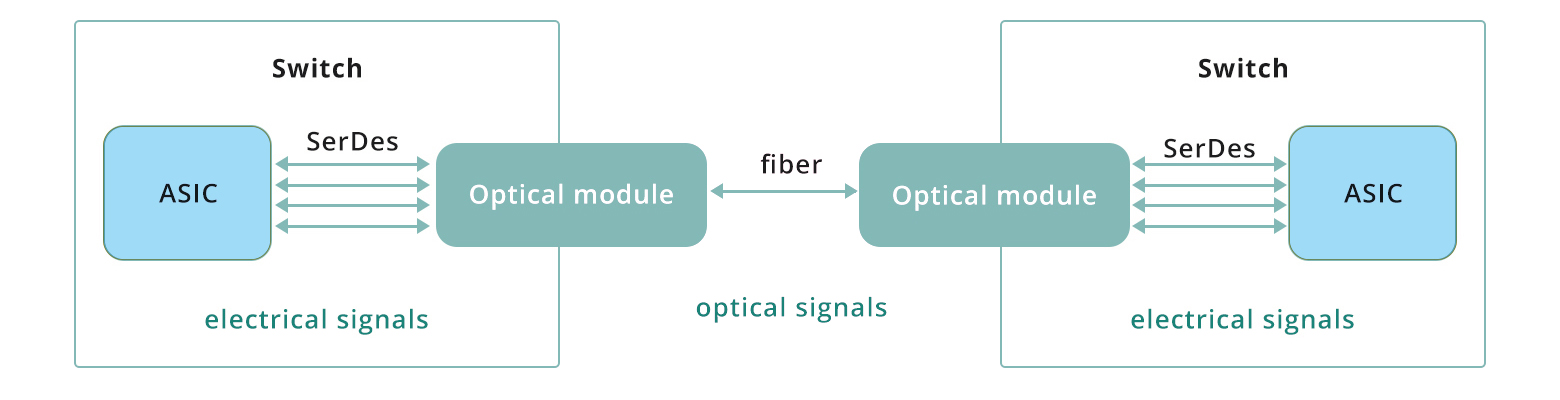
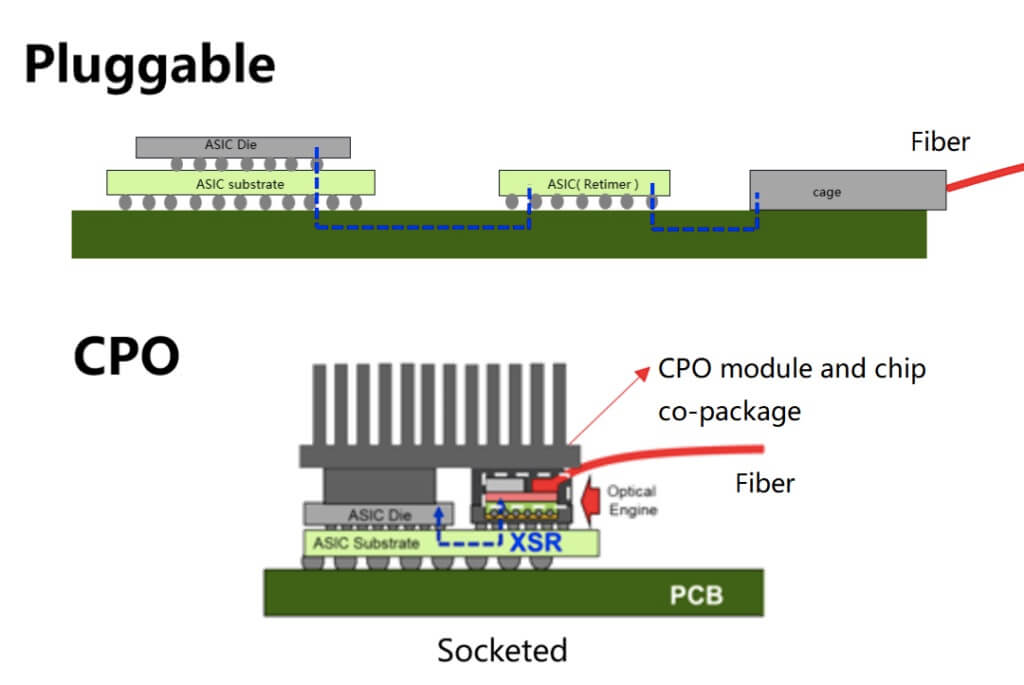
When you read Lpo Vs Cpc you’re comparing two different architectural philosophies. LPO (Linear Pluggable Optics) preserves the pluggable transceiver form factor but removes the in-module DSP/CDR and uses a “linear” electrical interface — delivering lower power while keeping hot-swap modularity. CPO (Co-Packaged Optics) instead places optical engines (or silicon photonics) adjacent to or inside the switch ASIC/package, collapsing long electrical traces and moving the optical conversion much closer to the silicon. For a plain-spoken distinction: LPO is an evolutionary improvement to pluggables; CPO is a transformational platform redesign.
The decisive metric: power per bit
Power per bit is the single most consequential metric for modern designs. CPO’s promise is dramatic: by eliminating long electrical hops and many I/O conversions, co-packaged approaches can reduce power per port substantially compared with legacy DSP pluggables. LPO narrows the gap by removing the module DSP and specializing the link, delivering material pJ/bit reductions while preserving pluggability. Real numbers from vendors and recent analyses show single-digit watts per 800Gb/s for some CPO architectures versus mid-teens watts for DSP-based pluggables — with LPO typically between those ranges. If your operation is driven by strict PUE or rack-level power limits, the power story is the first reason to evaluate Lpo Vs Cpc seriously.
Density, latency and signal integrity
CPO’s architectural advantage is simple geometry: shorter electrical paths yield better signal integrity, lower latency, and much higher die-edge bandwidth density. This is why hyperscalers and AI clusters prioritize co-packaged approaches for GPU fabrics where terabits per rack matter. LPO improves the pluggable roadmap—higher line rates, lower module power and preserved breakout flexibility—making it ideal for mixed-speed leaf/spine fabrics and environments that still require many 100G/200G endpoints. When comparing Lpo Vs Cpc, think of CPO as the winner for absolute density and LPO as the winner for flexible, gradual evolution.
Serviceability and operational risk
A key operational tradeoff in the Lpo Vs Cpc debate is serviceability. Pluggable modules (including LPO) are hot-swappable and vendor-agnostic in practice; a failed module is normally replaced in minutes, minimizing operational disruption. CPO reduces modularity: until vendors standardize service demarcations or hot-replaceable co-packaged units, a failure could require deeper line-card or switch servicing and change existing maintenance workflows. For many enterprises and colo operators, this maintenance risk weighs heavily in favor of LPO as the near-term choice.
Ecosystem maturity and time to deploy
LPO is intentionally evolutionary — designed so operators can adopt lower-power pluggables without ripping out switched infrastructure or retraining entire ops teams. Industry MSAs and forums have already defined LPO profiles and prototypes exist today. CPO, by contrast, requires concerted work across packaging, silicon-photonics supply chains, mechanical design, and cooling — and therefore will appear first in specialized deployments (hyperscale AI, cloud provider cores) before broad enterprise rollouts. When weighing Lpo Vs Cpc, use your timescale: if you need a low-risk upgrade in the next 12–36 months, LPO is the realistic path; if you run hyperscale AI at massive scale, CPO pilot programs should begin now.
Cost and TCO: short term vs long term
Procurement reality matters. LPO typically has lower near-term CapEx risk because it fits familiar supply chains and keeps multi-vendor sourcing possible. CPO can reduce long-term TCO through lower power, fewer discrete electrical components, and much higher bandwidth per slot — but only if you can amortize the upfront costs for cooling upgrades, new line-cards, and deeper vendor collaboration. For many operators the Lpo Vs Cpc decision reduces to a simple finance model: smaller sites choose LPO to avoid disruption; large scale players model TCO with aggressive CPO assumptions.
Practical deployment guidance
• Enterprises & colocation operators: prioritize LPO-capable line cards and optics today; require vendor interoperability and hot-swap serviceability.
• Hyperscalers & AI clusters: plan CPO pilots for high-density GPU racks; invest in rack cooling, mechanical redesign and close co-engineering with silicon partners.
• Mixed fleets: run a hybrid strategy — deploy LPO in general leaf/spine fabrics, reserve CPO for the densest, latency-sensitive pods.
LPO will be the pragmatic near-term dominant upgrade for most enterprises and colo providers; CPO will dominate in hyperscale and AI-intensive fabrics where absolute density and power efficiency justify the ecosystem investment. Put differently, the market will segment rather than produce a single winner — and framing procurements around a deliberate Lpo Vs Cpc evaluation will get you the best vendor proposals and pilots.