Can SFP+ Modules Work in SFP Ports? usually not — a native SFP port typically cannot run a 10Gb/s SFP+ module at full speed. But the reverse is often true: many SFP+ ports will accept 1Gb/s SFP modules and fall back to 1G operation. Real-world behavior depends on the device vendor, the port’s electrical design and firmware, and the exact transceiver type. Always check your switch/NIC vendor compatibility list before buying.
This article explains why that is, what “form-factor” vs “electrical” compatibility means, practical use cases, and safe rules for buying transceivers.
What is an SFP+ module?
SFP+ (Enhanced Small Form-factor Pluggable) is a 10G-class pluggable transceiver standard that shares the same physical outline as SFP but defines a higher-speed electrical interface and tighter timing/electrical requirements. SFP+ modules commonly implement 10 Gigabit Ethernet (10GBASE-SR/LR), Fibre Channel at 8G and 16G or other high-speed serial links. The SFP+ MSA defines the high-speed electrical characteristics that allow stable 10G operation.
Pros
- Small, hot-pluggable 10G transceivers with low power and small footprint compared with legacy 10G form factors.
- Wide ecosystem: optical SR/LR optics, DAC (direct attach copper) twinax cables, and 10GBase-T SFP+ RJ45 transceivers exist.
Limits
They need a host port that provides the correct high-speed electrical lanes and sometimes extra power; physical fit alone doesn’t guarantee functionality.
Why “fits” ≠ “works”: form-factor vs electrical compatibility
SFP and SFP+ look the same mechanically (same cage size), so an SFP+ module often physically plugs into an SFP slot. But compatibility is two-layered:
Mechanical/form-factor — dimensions and latch: identical or highly similar between SFP and SFP+.
Electrical & protocol — the host port’s PHY/PHY-interface must support the transceiver’s signaling rate (1G vs 10G), encoding, and sometimes voltage/power requirements. If the host lacks the necessary high-speed SerDes lanes or firmware hooks, a 10G SFP+ transceiver won’t initialize.
So: SFP+ modules in SFP ports = usually not supported. Conversely, SFP modules in SFP+ ports = usually supported (port falls back to 1G) — but “usually” is important because vendors differ.
Typical compatibility scenarios (practical cases)
1. SFP (1G) module into an SFP+ (10G) port
Most modern 10G switches design SFP+ cages so they can accept 1G SFP optics and operate at 1G—this is a common and recommended configuration for mixed-speed setups. You will usually see the port negotiate to 1G. However, check the platform release notes—some platforms restrict SFP+ slots to 10G-only modules.
2. SFP+ (10G) module into an SFP (1G) port
In most cases this will not work. A 1G SFP port lacks the required electrical SerDes and may not provide the clocking or power a 10G transceiver needs. Some vendors explicitly block 10G optics on 1G SFP ports. For example, many switch/NIC vendors state that 10G SFP+ optics cannot be used in SFP slots.
3. 10GBase-T SFP+ (RJ45) transceivers and special cases
There are SFP+ modules that implement 10GBase-T (RJ-45). They generally require more power than optical SFP+ and often include PHYs to handle copper auto-negotiation; such modules may support fallback to 1G, but they consume more power (Cisco’s SFP-10G-T-X lists ~2.5W at 10G and lower at 1G). If a 1G SFP slot expects a low-power module it may not be able to run a power-hungry 10GBase-T transceiver.
4. Vendor-check / “locked” ports
Many vendors add a firmware check that verifies an optical module’s vendor code; a third-party module can be blocked or downgraded unless it’s vendor-approved or the switch allows unrestricted optics. That’s an operational reality you must plan for.
Speed tiers & multi-rate SFPs — exceptions and flexibility
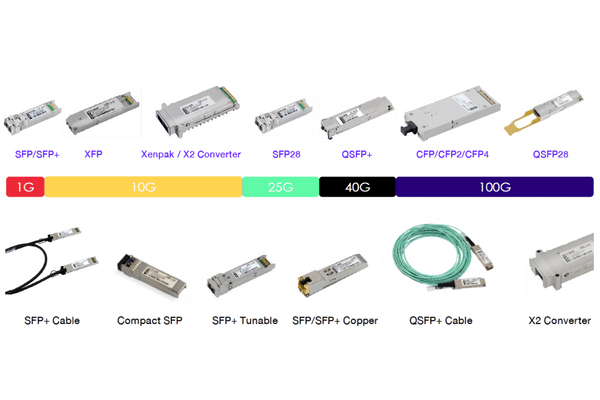
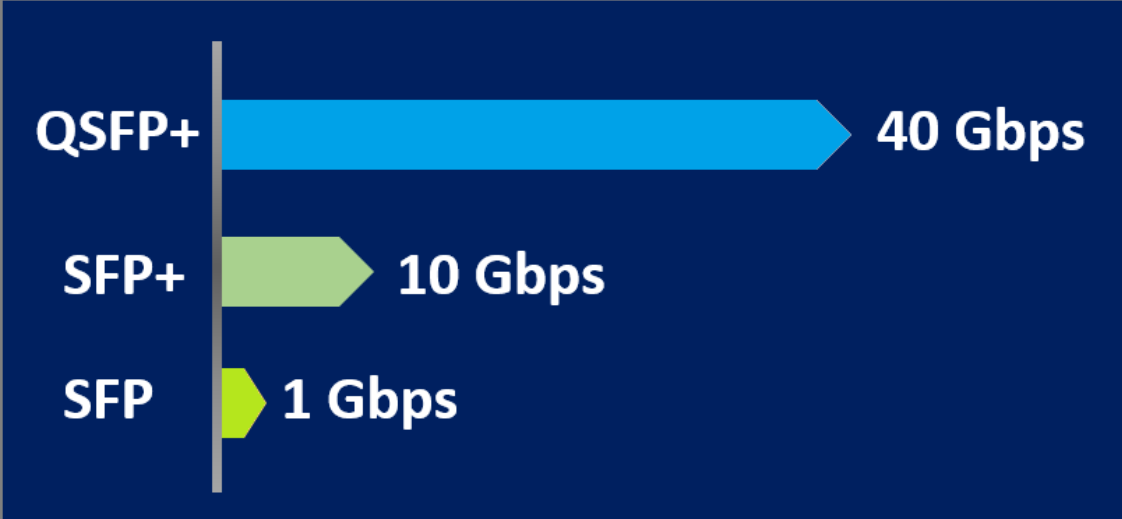
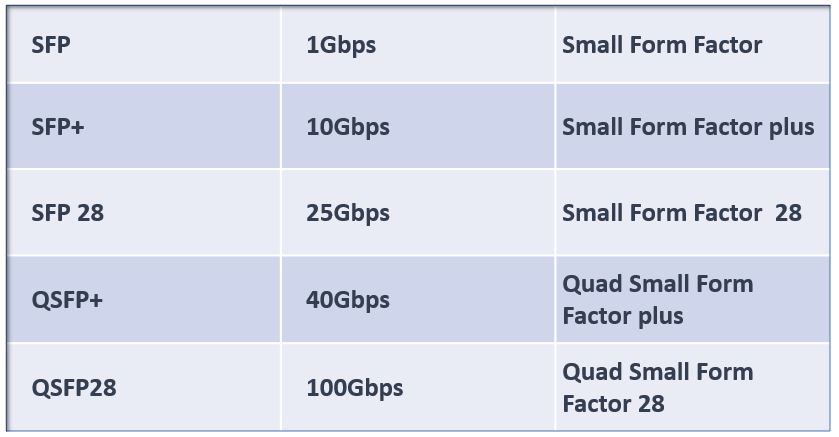
SFP modules aren’t strictly limited to 1G. There are multi-rate SFPs and Fibre-Channel SFPs that support 2.125G, 4.25G and other speeds (legacy SDH/Fibre Channel use cases). But SFP+ is the accepted 10G class (and SFP28 for 25G). Because multi-rate devices exist, you’ll sometimes see non-10G SFPs in SFP+ cages negotiating to an intermediate speed — again, check platform support.
Practical recommendations
- Check vendor compatibility lists (SFP/SFP+/supported transceiver models) first. The device datasheet and firmware notes are the final word. If you plan to use third-party modules, confirm explicit support or MSA/universally coded MSA-AT parts.
- If you need mixed 1G and 10G in the same chassis, prefer SFP+ ports (they commonly accept SFP at 1G). This is the common design pattern for edge/aggregation switches.
- Avoid plugging 10G SFP+ optics into native 1G SFP ports. The port usually won’t support the required SerDes and signaling.
- Watch power and heat for copper 10G modules. 10GBase-T SFP+ modules and some copper solutions draw significantly more power than optical SFP+ SR/LR modules — plan PSU & cooling accordingly (typical 10GBase-T power: ~2–5W; SFP+ optical commonly <1W).
- When in doubt, test on a spare port or ask the vendor. A short lab test prevents costly mistakes in production.
Conclusion
Form factor alone can be deceptive. While SFP and SFP+ look the same, the true gatekeeper is the port’s electrical design and vendor firmware. Most SFP+ ports are intentionally backward compatible with SFP (so 1G modules work in 10G cages), but SFP (1G) ports generally cannot host SFP+ (10G) modules. Power, heat, vendor locks and rare multi-rate exceptions matter — so always verify with vendor documentation or test before you buy bulk optics.
If you’re planning an upgrade or mixed-speed rollout, Wuhan Wolon Communication (WOLONfiber) supplies MSA-compliant SFP & SFP+ transceivers, multi-vendor-coded options, and 10G DAC/10GBase-T SFP+ modules. Tell us your switch models and expected topologies and we’ll propose a cost-optimized BOM and compatibility-checked sample kit so you can test before full deployment. Contact us for a quick quote and compatibility checklist.