
You have the budget for a 10G network upgrade. Now you are staring at two options for your Top of Rack (ToR) switches: stick with the familiar RJ45 copper ports (10GBASE-T) or move over to SFP+ fiber slots.
A lot of marketing material makes this sound like a simple distance issue. They say copper is for short runs, and fiber is for long hauls.
That is garbage advice.
If you actually manage these racks, the decision really comes down to power draw, port latency, and whether you want to rip out existing cables. Let’s break down the hardware before looking at the actual performance penalties.

What is a 10G Copper (10GBASE-T) Switch?
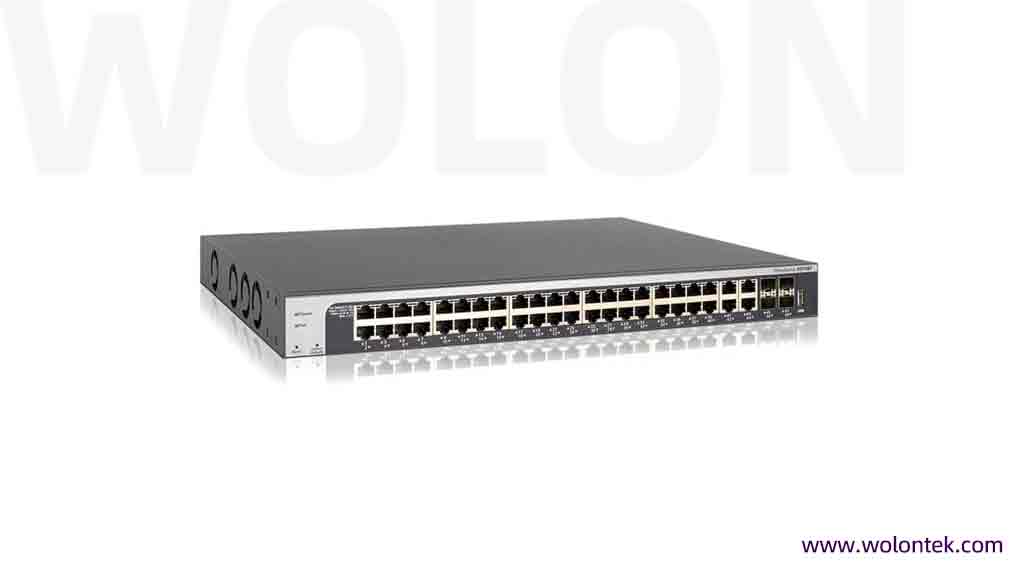
Think of 10GBASE-T as the ultimate legacy bridge. It uses the exact same RJ45 physical ports you have been plugging into for decades.
The main hook here is auto-negotiation. Say you have a messy IT closet. You rack a brand new 10G storage array right next to an ancient server with a 1 Gigabit NIC. You can plug both into a 10GBASE-T switch using standard Patch Cables. The switch automatically talks to the old server at 1G and the new NAS at 10G. No transceivers to buy. No optics to clean. It just works.
If you absolutely cannot change the twisted-pair cables currently buried in your walls, 10GBASE-T is your band-aid.
What is a 10G Fiber Switch?
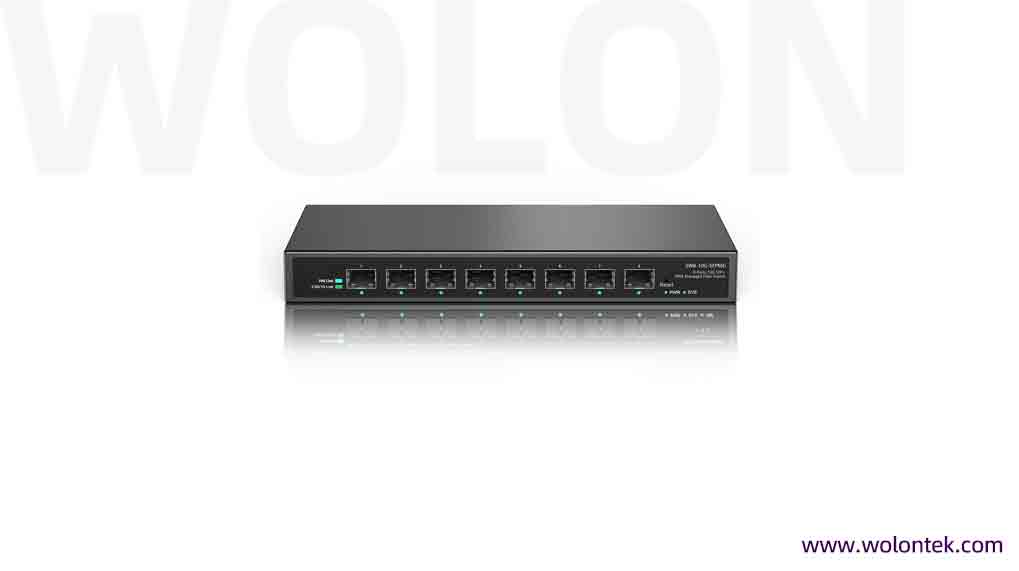
A fiber switch completely ditches the copper RJ45 ports. Instead, the chassis is full of empty SFP+ slots.
You cannot just shove a standard Ethernet cable in there. You have to populate those slots. Usually, that means sliding in a 10G Optical Transceiver and running glass (single-mode or multimode). Or, if you are just connecting servers bolted into the exact same rack, you plug in cheap, passive Direct Attach Copper (DAC) cables.
It sounds slightly more complicated upfront. But this is the architecture hyperscale data centers actually use. Here is why.
The Engineering Showdown: Copper vs Fiber
When you stop looking at vendor brochures and start looking at physics, copper has massive drawbacks at 10 Gigabits.
1. The Heat Problem (Power Consumption)
Pushing a 10G signal over unshielded copper wire takes serious effort. The PHY chips have to constantly fight alien crosstalk to keep the signal clean. Because of that heavy digital signal processing (DSP), a single 10GBASE-T port burns roughly 2 to 5 Watts. Populate a 48-port switch, and that chassis is roasting. Your AC bill goes up instantly. Meanwhile, an SFP+ fiber transceiver draws less than 1 Watt. Using passive DACs? The power draw is practically zero.
2. The Latency Penalty
All that heavy signal processing on the copper side eats up time. 10GBASE-T hardware typically introduces 2.5 to 3 microseconds of port latency per link. Light traveling through glass doesn’t need that massive processing overhead. SFP+ latency sits comfortably under 0.3 microseconds. It is nearly ten times faster. If you run database clusters, high-frequency trading, or heavy virtualization, copper will bottleneck your math.
3. The Cabling Reality
People assume copper is cheaper. But to actually get a 10G signal to reach the promised 100 meters, you need thick, rigid Category 6a (Cat6a) cabling. Try shoving bundles of stiff Cat6a into a tight, existing conduit. It is miserable. Older Cat6 will tap out at roughly 40 to 55 meters.
Quick Reference: 10GBASE-T vs 10G SFP+ Fiber

Quick Reference: 10GBASE-T vs. 10G SFP+ Fiber
Architect’s Takeaway: While 10GBASE-T offers easy backward compatibility with old Cat5e/Cat6 wiring, 10G SFP+ is the undisputed choice for modern deployments. It consumes up to 80% less power and delivers 10x lower latency, significantly reducing your data center cooling costs.
Stop Overpaying for Fiber
The only reason IT teams still default to 10GBASE-T is fear of OEM pricing. Buying a fiber switch and then paying $300 a pop for Cisco-branded optics will absolutely wreck your project budget.
But that is an outdated way to buy hardware.
You bypass the distributor markups completely. At Wolontek, we manufacture strict-tolerance SFP+ transceivers and DACs directly in our Wuhan Optical Valley facilities. Backed by a 400-man engineering workforce, we flash every optical module to perfectly match your Arista, Cisco, or Juniper EEPROM requirements. You get guaranteed plug-and-play compatibility without the 500% vendor tax.

Grab the SFP+ switch. Wire up the local rack with our dirt-cheap DACs, and drop our factory-direct optics into the rest of the ports. You secure ultra-low latency, drop your power consumption, and completely future-proof your floor.
FAQ: 10GBASE-T Switch vs 10G Fiber Switch
Q1: Can I use my existing Cat6 cables with a 10GBASE-T switch?
A: Yes, but you are strictly limited by distance. Standard Cat6 cable can only carry a 10G signal for about 40 to 55 meters before alien crosstalk degrades the link. To guarantee the full 100-meter reach, you must rip out the old lines and pull thicker, shielded Cat6a cabling.
Q2: Why does a 10GBASE-T switch generate so much more heat than an SFP+ switch?
A: Pushing 10 Gigabits over unshielded copper requires massive Digital Signal Processing (DSP) at the PHY chip level to cancel out line noise. This DSP overhead causes each RJ45 port to burn 2 to 5 Watts. In contrast, light traveling through an SFP+ fiber module requires almost no DSP, drawing less than 1 Watt per port.
Q3: Can I connect a legacy 1G server to an empty 10G SFP+ slot?
A: Standard 10G optical transceivers do not auto-negotiate down to 1G like copper RJ45 ports do. However, you can easily solve this by plugging a dedicated 1000BASE-T (1G) copper SFP module into the 10G SFP+ slot. This converts the fiber slot into a standard 1G RJ45 port for your older server.
Q4: Do passive DAC cables consume power?
A: Practically zero. Direct Attach Copper (DAC) cables do not have active lasers or heavy DSP chips inside the connector heads. They draw about 0.1 Watts, making them the most energy-efficient and lowest-latency method for connecting servers within the same rack to your ToR switch.