
In today’s era of data explosion and high-speed interconnection, fiber optic networks have become the backbone technology supporting key applications such as cloud computing, large-scale data centers, and 5G communications. Choosing the right fiber optic connector can not only optimize the network architecture, but also significantly improve bandwidth utilization and maintenance efficiency.
This article will deeply analyze the two most common connectors on the market – LC (Lucent Connector) and SC (Subscriber Connector), compare their core differences in design, performance, and applicable scenarios, and help network engineers and operation and maintenance personnel quickly make the best decision that meets space, cost, and reliability requirements.
Discover the essential differences between LC and SC fiber connectors, learn where to use each type, and optimize your network’s performance with our expert comparison guide.
Introduction to Fiber Connectors
Fiber optic connectors are the bridge between your equipment and cabling infrastructure. Among the many types, LC (Lucent Connector) and SC (Subscriber Connector) dominate the market. Understanding their design, performance, and ideal use cases helps you build a reliable, high‑density network that meets today’s speed and space demands.
What Are LC and SC Connectors?
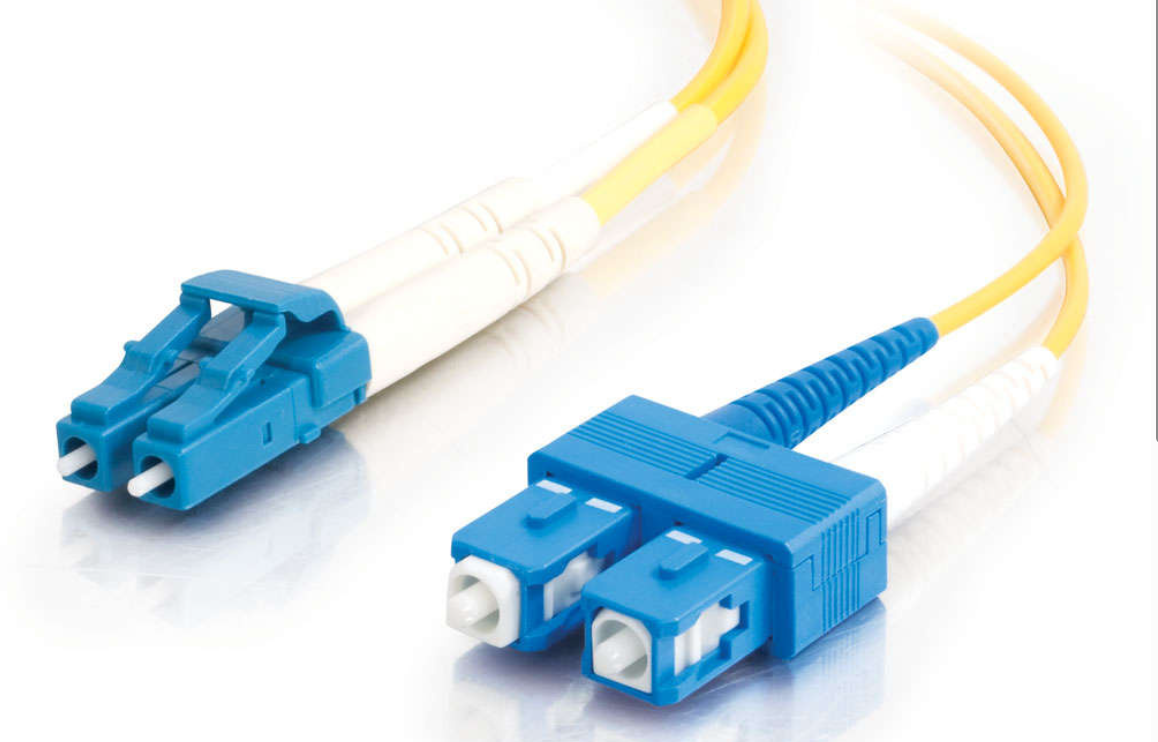
The Lucent Connector (LC) is an SFF (Small Form-factor) connector featuring a 1.25 mm ferrule that ensures precise fiber alignment for low signal loss and high performance. Its space-saving design and superior performance have made it the mainstream choice in data communication networks, especially for high-density applications. Today, many users prefer LC connectors for modern optical equipment and high-density patch panels.LC Connector is widely regarded as the most commonly used connector today.

SC Connector:
“SC” stands for “Subscriber Connector” or “Square Connector,” named for its square housing. It was the first connector chosen under the TIA‑568 standard. SC is a push‑pull, snap‑in connector with a simple locking mechanism that requires only a push or pull action to engage or disengage. It uses a 2.5 mm ferrule—twice the diameter of the LC ferrule—and is well suited for both point‑to‑point and passive optical networks in data communications and telecommunications. Due to its reliable performance, SC remains the second most common connector in polarization‑maintaining applications.

*For more detailed information:What Are The 5 commonly used Types Of Fiber Optic Connectors?
Construction & Design Differences Between LC and SC Fiber Connectors
The defining distinction between LC and SC connectors lies in ferrule diameter:
LC connectors employ a 1.25 mm zirconia ceramic ferrule, whereas SC connectors utilize a 2.5 mm ferrule. This reduction in ferrule size enables LC connectors to occupy approximately half the plug‑in space of SCs, effectively doubling port density within identical rack, panel, or enclosure footprints. Consequently, LC connectors are ideally suited for high‑density environments—such as data centers and compact telecom rooms—where conserving physical space is critical.
Connector Architecture and Materials
LC connectors feature a two‑piece thermoplastic housing with a rear‑pivot or cantilever latch mechanism that provides a positive “click” engagement and enhanced resistance to vibration. Available in both simplex and duplex formats, they support field termination and incorporate molded retaining pins and dust covers for protection. By contrast, SC connectors are constructed from a single‑piece plastic body with a robust push‑pull snap‑in coupling, offering rapid mating and demating without tools; they too come in simplex and duplex versions but demand greater panel real estate.
Standards Compliance and Application Flexibility
LC assemblies conform to TIA/EIA‑604‑10 (FOCIS‑10) and IEC 61754‑20, ensuring interchangeability across modern transceiver modules and high‑density patching systems. SC connectors adhere to TIA/EIA‑604‑3 (FOCIS‑3) and IEC 61754‑4, reflecting their long‑established role in general networking and legacy installations.
Cable and Ferrule Compatibility
– LC: Optimized for 900 µm tight‑buffered fiber and compatible with 250 µm coated fiber through build‑up kits, supporting 0.9 mm or 1.6 mm cable jackets.
– SC: Designed for standard 2.5 mm or 3.0 mm cable jackets, accommodating both single‑mode and multimode fibers in environments where space constraints are less stringent.
Overall, the compact form factor, secure latching, and stringent standards compliance of LC connectors make them the preferred choice for next‑generation, high‑density network deployments, while SC connectors continue to excel in larger‑scale or legacy systems where durability and simplicity take precedence.
Core Differences at a Glance
| Feature | LC Connector | SC Connector |
|---|---|---|
| Ferrule Diameter | 1.25 mm | 2.5 mm |
| Port Density | Up to 48 ports per 1U panel | Up to 24 ports per 1U panel |
| Locking Mechanism | Clip‑latch | Push‑pull |
| Cable Diameter | 0.9 mm / 1.6 mm | 2.5 mm / 3.0 mm |
| Typical Uses | Data centers, SFP modules | Telecom, FTTH, legacy systems |
| Insertion Loss | ≤ 0.2 – 0.5 dB | ≤ 0.3 – 0.5 dB |
| Standards | IEC 61754‑20, TIA‑604‑10‑B | IEC 61754‑4, TIA‑604‑F (FOCIS‑3) |
conclusion
In conclusion, when designing or upgrading your network, prioritize LC connectors for high‑density, space‑constrained environments and next‑generation SFP/SFP+ applications, while reserving SC connectors for legacy systems, FTTH deployments, or budget‑sensitive projects where durability and ease of use are paramount. By matching connector choice to your specific space, performance, and cost requirements—and ensuring proper installation and standards compliance—you’ll achieve optimal signal integrity, scalability, and long‑term reliability across your fiber‑optic infrastructure.