
Modern data centers spend a lot on power — not just for servers and cooling but for every single network port. Optical modules (SFP, SFP+, QSFP) are small, but when multiplied by thousands of ports they become a meaningful line item in both energy and heat budgets. Choosing low-power optical modules today is one of the simplest, lowest-risk ways to reduce OPEX and improve sustainability without changing architecture or vendor lock-ins.
What “low-power” optical modules actually mean
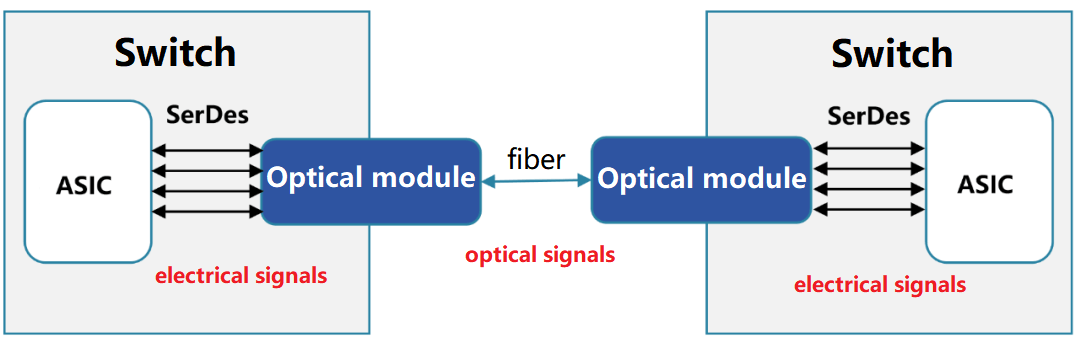
Typical small form-factor transceivers (SFP / SFP+) are designed to be energy efficient: many optical SFPs consume roughly 0.8–1.5 W depending on protocol and distance. RJ45/10GBASE-T copper solutions and some early 10G transceivers can draw several watts, making optics much more attractive when power/heat are priorities. Low-power modules are engineered versions that reduce that per-port draw — often by smart component selection, power gating on idle lanes, and optimized DSP/laser drivers.
What vendors call “low-power”: in practice you’ll see modules marketed as “low-power SFP” or “energy-optimized SFP+” and manufacturers report typical reductions in the 20–35% range versus their standard modules thanks to circuit and firmware optimizations.
Real savings: a worked example (how small numbers scale big)
Let’s make this concrete. Use these assumptions (conservative, real-world):
-
Baseline typical SFP power draw: 1.2 W (typical range 0.8–1.5 W).
-
Low-power variant: 30% lower (1.2 W → 0.84 W) — conservative middle of vendor claims.
-
Hours per year: 8,760
-
Electricity price examples: $0.12/kWh (typical commercial/wholesale low rate) and $0.1747/kWh (U.S. average recently reported — useful as an upper bound).
Calculation (per port):
Power saved per port = 1.2 W − 0.84 W = 0.36 W = 0.00036 kW.
Annual energy saved per port = 0.00036 kW × 8,760 h = 3.15 kWh/year.
Annual cost saved per port = 3.15 kWh × price:
-
At $0.12/kWh → $0.38 / port / year.
-
At $0.1747/kWh → $0.55 / port / year.
Scale that up: for 10,000 ports, annual savings = $3,800–$5,500. For 100,000 ports, savings = $38,000–$55,000/year. These are recurring OPEX savings with near-zero operational risk and no change in core equipment strategy.
Other operational benefits beyond electricity
Less heat → lower cooling load. Every watt you remove from networking reduces the chilling load and increases rack density headroom. This compounds across thousands of ports.
Longer equipment life. Lower operating temperatures reduce stress on optics and switch electronics.
Simpler sustainability reporting. Energy reductions are straightforward, measurable KPIs for ESG programs.
Market context — optics are an expanding, strategic market
The global optical transceiver market is large and growing rapidly; recent market research estimated the transceiver market in the low-tens of billions USD with strong CAGR as cloud, telecom and AI infrastructure expand. Choosing cost-efficient optics is therefore not just tactical — it’s a long-term procurement lever in a growing market.
How to pick a low-power optical module supplier (checklist for buyers)
-
Ask for real measured power tables (idle, normal link, max). Don’t accept marketing buzz. Vendors should give per-mode watt numbers.
-
Compatibility matrix — make sure modules are proven with your switch vendors (Cisco, Juniper, Arista etc.). Look for vendor-tested or “third-party verified” compatibility notes.
-
Thermal & mechanical specs — check operating range and thermal dissipation numbers if you run high-density racks.
-
Warranty & RMA policy — low power is great, but support matters if failures occur.
-
Firmware & feature roadmap — low-power features often come from silicon/firmware optimization; ask about upgrades and ECO programs.
-
Mass order economics — many vendors give better pricing and customization at scale; test a pilot run first.
Why choose Wolon (WolonFiber)
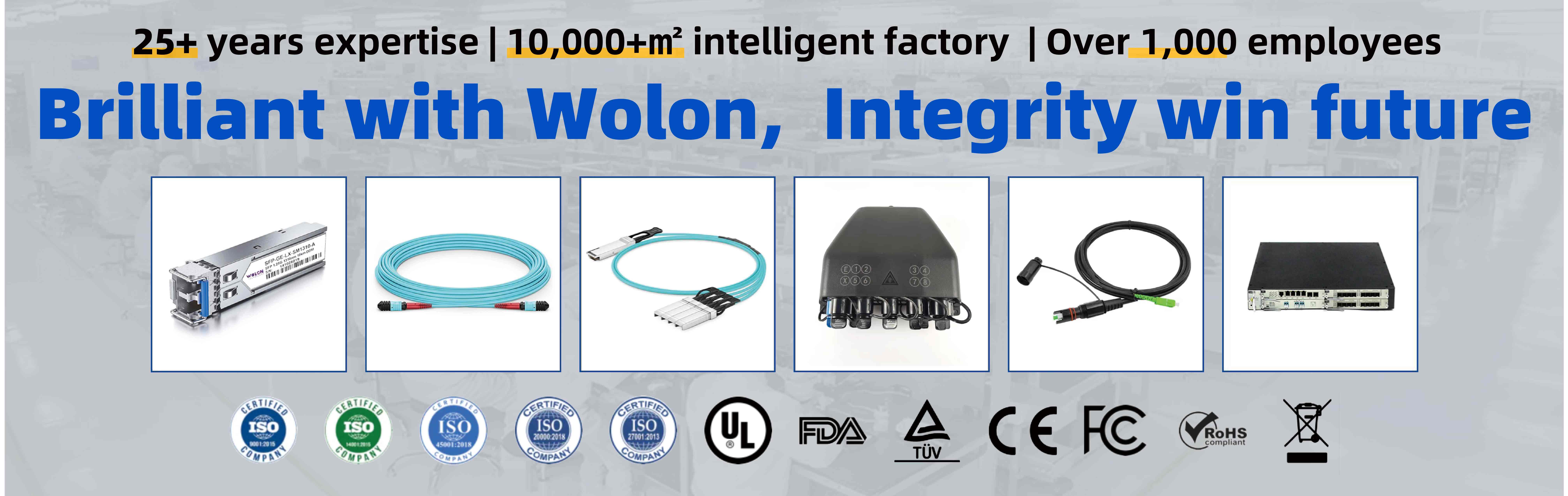
Wuhan Wolon Communications (WolonFiber) has built a focused portfolio of energy-aware optical modules and high-density cabling over decades of manufacturing expertise. For buyers who want measurable OPEX reductions and worry-free compatibility:
-
Proven low-power options: Wolon’s Low-Power optical modules line is engineered to cut per-port power by a significant margin while keeping full protocol compatibility. (We optimize transceiver drivers and power management without sacrificing reach or reliability.)
-
Interoperability first: Designed and tested for broad compatibility with Cisco/Juniper/Arista ecosystems (customers routinely deploy Wolon modules in heterogeneous environments).
-
Manufacturing scale & quality: 25+ years’ experience in fiber and module manufacturing — consistent supply and flexible MOQ for pilots and rollouts.
-
Customization & local service: value-added services like tailored labeling, burn-in testing, and firmware tuning for enterprise and colo customers.
-
Sustainability ROI focus: Wolon provides per-port energy numbers you can use directly in your TCO models to quantify payback.

Quick buyer FAQ
-
Are low-power modules slower? No — low-power modules maintain the same line rates and protocols; the reductions come from component efficiency and power management.
-
Do they support long reaches? Many do; check SFP vs SFP+ model specs for single-mode/multimode reach.
-
Is compatibility an issue? Reputable suppliers publish compatibility lists and run third-party tests — always request those lists.