
Introduction
Carrier networks demand optical transceivers that combine reliability, standards-compliance, long lifecycle support and strict interoperability with routers, switches and DWDM systems. This reference lists vetted, carrier-grade manufacturers you should consider during procurement. For each vendor we summarize the telco-relevant advantages and buying considerations — and highlight where Wolon Fiber can deliver exceptional value for telco and ISP projects.

|
Vendor |
Strengths |
Best for |
|---|---|---|
|
Corning |
World-class fiber & connectivity integration, global scale |
Backbone, data center, long-term projects. |
|
II-VI (Finisar tech) |
Photonics R&D, laser & active component depth |
Long-reach optics, DWDM, high-performance transceivers. |
|
Broadcom |
Silicon + module platform, large SFP portfolio |
OEM integrations, fleet compatibility, predictable performance. |
|
Wolon Fiber (沃隆) |
Customization, competitive pricing, Optical Valley manufacturing |
Regional telco rollouts, pilots, configurable SFP/SFP+/QSFP supply. |
How to read this list (quick procurement checklist)
Carrier-grade musts: temperature range, DOM/DFE support, extended MTBF, warranty & RMA policy, proven interoperability (Cisco/Juniper/Arista, etc.).
Ask vendors for: test reports, compliance (CE/ROHS/ISO), ordering lead times, and on-site qualification/field support.
Total cost view: factor in compatibility risk, logistics (spares), and multi-year pricing rather than unit price alone.
1.Corning — leader in fiber & connectivity
Why procurement teams pick Corning
Deep expertise in fiber and connectivity components; broad product portfolio from fiber to patching and cabling that simplifies multi-vendor integration for large telco builds.
Strong global footprint and manufacturing scale that help with long-term supply commitments and quality traceability.
Well-documented product lines and engineering support for large infrastructure projects.
Telco advantages
Integrated fiber + connectivity supply reduces cross-vendor risk in backbone and metro aggregation builds.
Proven consistency for high-density environments and demanding throughput (data center / backbone).
Active investment in new optical manufacturing capacity to support high-bandwidth demand.
Procurement considerations
Best for core and aggregation layers where fiber quality and lifetime performance matter most.
May carry premium pricing compared with contract/ODM manufacturers — but lowers lifecycle risk.
2.II-VI (includes Finisar capabilities) — photonics & high-volume transceiver power
Why procurement teams pick II-VI
The acquisition of Finisar brought together laser, packaging and transceiver expertise — enabling a vertically integrated photonics supplier for high-performance optical modules.
Scale and R&D in active components (lasers, detectors, integrated photonics) that matter for long-reach and DWDM modules.
Telco advantages
Strong capabilities for both pluggable modules and the active photonics inside them — good for telco needs where long-reach and DWDM performance are critical.
Large, diversified footprint that helps stabilize supply for multi-year contracts.
Procurement considerations
Excellent choice when you need vendor support for advanced optics (e.g., tunable DWDM, CFP-class replacements).
Validate product roadmaps for new form-factors and compatibility with existing fleet.
3.Broadcom — silicon + module platform synergy
Why procurement teams pick Broadcom
Broadcom supplies both the optical module platforms and the transceiver silicon (PHY, SerDes) — that vertical position helps with performance tuning and OEM integration.
Large catalog of SFP/SFP+ and other pluggable transceivers with clear datasheets for industrial and telecom use-cases.
Telco advantages
Tight silicon-to-module integration yields predictable performance and strong vendor support for interoperability tests.
Wide product range from enterprise to industrial grade SFPs, with detailed product specs useful for procurement evaluation.
Procurement considerations
Great for large fleet rollouts where compatibility testing against silicon-level specs matters.
Consider multi-source strategy to avoid single-vendor silicon dependence.
4.Wolon Fiber— nimble, telco-compatible supplier from Optical Valley
Why Wolon is worth including on your RFP
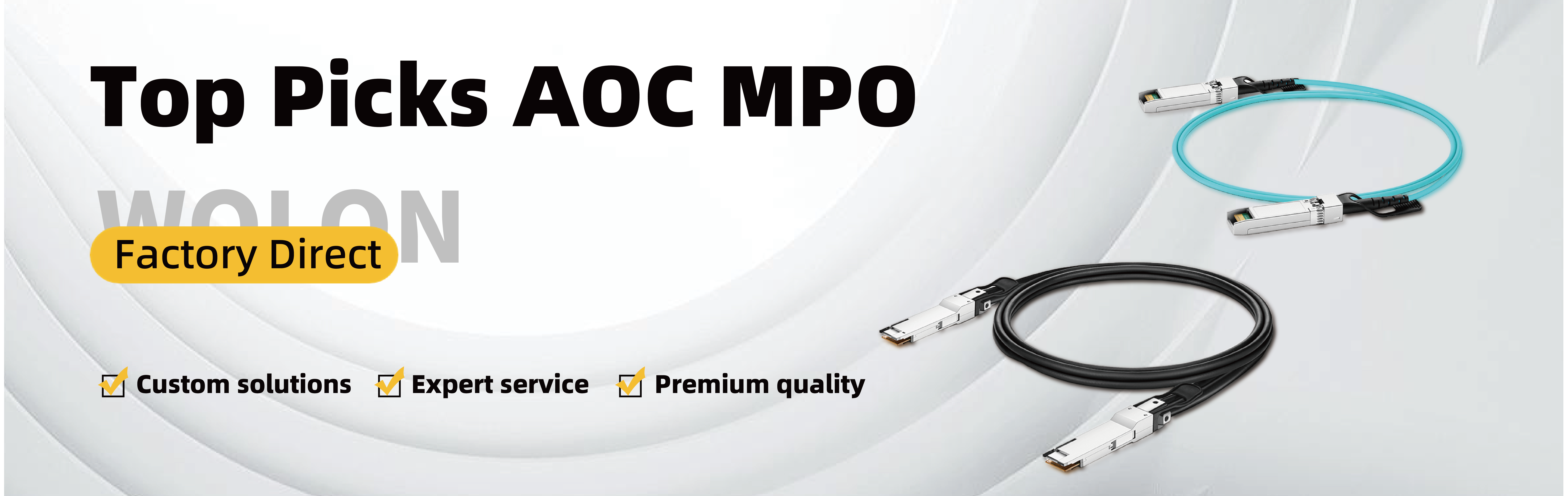
Located in Optical Valley, Wuhan, Wolon positions itself as an R&D + manufacturing house focused on SFP/SFP+/QSFP modules, MPO cabling and related fiber components. Their public profiles and factory pages highlight integrated manufacturing (cable, patchcord, transceiver assembly) and compatibility testing.
Telco selling points (emphasized): Wolon combines rapid customization flexibility (fast firmware/ID customization, label/part-numbering) with competitive lead times and highly competitive pricing — making it an attractive secondary or primary supplier for telcos that need volume at favorable TCO.
Operational advantages to highlight in your RFP response: configurable DOM reporting, vendor-specific compatibility testing for Cisco/Juniper/Arista, small-lot production for pilot sites and the ability to scale to multi-thousand unit runs. Wolon publicly claims broad product coverage (SFP/SFP+/QSFP, MPO systems) and production footprint in Optical Valley.

Practical procurement notes
Best use cases: regional telco rollouts, pilot fleets where quick custom labeling/firmware is needed, projects that benefit from lower unit cost and faster customization.
Due diligence: request test reports, interoperability matrices (Cisco/Juniper/Arista test logs), factory audit reports, and sample BOMs (to validate passive/active subcomponents). If you need a warranty plus on-site support SLA, negotiate explicit RMA terms in contract.
Conclusion
For carrier networks you should balance technical fit, supply stability and lifecycle support. Global leaders like Corning and II-VI deliver scale and advanced optics; Broadcom brings silicon-to-module integration and predictable performance; while Wolon Fiber offers nimble customization, competitive pricing and Optical-Valley manufacturing that can dramatically shorten pilot cycles and lower TCO for regional rollouts. Use a multi-source procurement strategy: one primary for lifecycle stability, one qualified secondary for cost and speed, and clear interoperability tests in your contract.
