

Custom 100G QSFP28 SWDM4 / LX4 Transceiver
-
Brownfield MMF Reuse: Short Wavelength Division Multiplexing (SWDM) forces 100Gbps traffic across existing OM3/OM4 duplex cables, avoiding MPO parallel fiber upgrades.
-
Universal LX4 Adaptability: The LX4 SKU functions interchangeably on both legacy multimode (100m) and single-mode (2km) plants without hardware swaps.
-
Broadband Optical Decoding: Houses wideband receivers capable of capturing four distinct frequencies (850-940nm for SWDM4; 1271-1331nm for LX4).
-
Seamless Duplex Continuity: Provides a direct plug-and-play upgrade path for facilities utilizing standard LC patch panels originally built for 10G infrastructure.
Product Description
Facility managers facing restrictive cabling conduits deploy SWDM4 and LX4 modules to circumvent parallel fiber requirements. Standard 100G multimode optics (SR4) mandate 8-core MPO trunks. The SWDM4 overrides this by multiplexing four short wavelengths into a standard Duplex LC connector. Conversely, the LX4 transceiver leverages the 1300nm CWDM band, permitting the hardware to autonomously negotiate transmission over either multimode or single-mode glass. Both variants eliminate the downtime associated with pulling new cable infrastructure.
Key Features
-
OM5 Optimization: When the SWDM4 is paired with Wideband Multimode Fiber (OM5), the operational reach expands up to 150 meters.
-
SKU Consolidation: The LX4 acts as a universal bridge mechanism for environments with undocumented or thoroughly mixed fiber topologies.
-
MSA Form Factor: Adheres strictly to QSFP28 geometric dimensions, ensuring undisrupted airflow and physical seating within 100G switch chassis.
Application Scenarios
-
Enterprise campus networks upgrading core capacities where replacing in-wall LC duplex cabling is unfeasible.
-
Inter-rack connectivity spanning both MMF and SMF domains requiring a unified optical transceiver model.
Technical Specifications
| Specification | Details | Specification | Details |
| Form Factor | QSFP28 | Vendor Name | WolonFiber |
| Data Rate | 103.1Gbps | Interface | Duplex LC |
| Grid (SWDM4) | 850, 880, 910, 940nm | Grid (LX4) | 1271, 1291, 1311, 1331nm |
| Media (SWDM4) | MMF Only | Media (LX4) | MMF & SMF Hybrid |
| Reach (SWDM4) | 75m(OM3), 100m(OM4), 150m(OM5) | Reach (LX4) | 100m (MMF) / 2km (SMF) |
| Transmitter | 4x VCSEL (SWDM) / 4x CWDM (LX4) | Receiver | Wideband PIN |
| Power Draw | ≤ 3.5W | Operating Temp | 0 to 70°C (32 to 158°F) |
| Host FEC | Required | Protocols | SWDM MSA / IEEE 802.3ba |
Engineering FAQs
-
Q: Is single-mode fiber compatible with the SWDM4 model?
A: No. The SWDM4 relies on 850nm-band VCSELs designed exclusively for multimode core diameters. Single-mode applications strictly require the LX4 variant.
-
Q: Does the LX4 require manual toggling between fiber types?
A: No. Once the Duplex LC is seated, the 1300nm light natively propagates through either core geometry up to their respective optical loss limits.
-
Q: Will SWDM4 perform adequately on legacy OM1 or OM2 glass?
A: It is highly discouraged. The severe modal dispersion characteristic of OM1/OM2 restricts the bandwidth-distance product, triggering link failures. OM3 is the minimum threshold.
-
Q: Does the
100g qsfp28 swdm4share the same architecture as BiDi?A: No. BiDi transmits bi-directionally on a single fiber. SWDM4 uses two separate fibers (one TX, one RX), multiplexing four wavelengths per individual strand.
Related products
-
Sale!
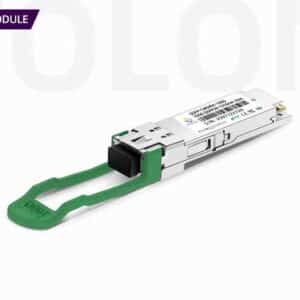
Custom 100G QSFP28 CWDM4 Optical Transceiver
Original price was: $161.00.$93.75Current price is: $93.75. -
Sale!
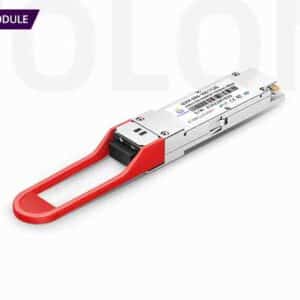
Custom 100GBASE-ER4 QSFP28 Transceiver (ER4 & ER4L)
Original price was: $1,749.00.$593.75Current price is: $593.75. -
Sale!
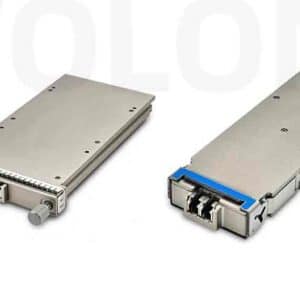
Custom 100G CFP & CFP2 Optical Transceivers (Carrier-Grade)
Original price was: $3,869.00.$1,187.50Current price is: $1,187.50. -
Sale!
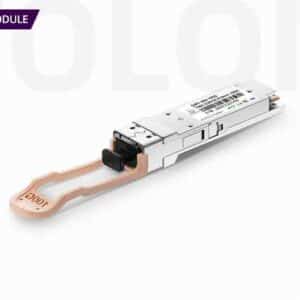
Custom 100GBASE-SR4 QSFP28 Optical Transceiver
Original price was: $99.00.$23.44Current price is: $23.44.


Reviews
There are no reviews yet.