

Custom 100G CFP & CFP2 Optical Transceivers (Carrier-Grade)
-
Carrier-Grade Thermal Capacity: The massive metallic die-cast footprint of the CFP/CFP2 chassis provides overwhelming heat dissipation for high-power, extreme-reach (ER4/ZR4) laser engines compared to compact QSFP equivalents.
-
Dual-Rate Architecture: Bottom-layer EEPROM programming seamlessly toggles between 103.1Gbps (100GBASE-LR4) and 111.8Gbps (OTU4), integrating flawlessly with Optical Transport Networks (OTN).
-
Complete Span Coverage: Delivers precisely calibrated optical budgets for 10km (LR4), 40km (ER4), and unamplified 80km (ZR4) backbone topologies.
-
MDIO Management Interface: Natively incorporates the IEEE 802.3ba specified MDIO bus, offering significantly deeper hardware register diagnostics than standard I2C logic.
Product Description
Core transmission platforms utilized by legacy telecom operators often feature interface slots built to the ruggedized CFP or CFP2 standard. WolonFiber’s custom 100G CFP/CFP2 transceivers are explicitly manufactured for these heavy-duty routing chassis. The voluminous housing easily accommodates complex Semiconductor Optical Amplifiers (SOA) and high-draw Thermo-Electric Coolers (TEC). Whether bridging 10-kilometer municipal aggregation nodes or completing 80-kilometer inter-provincial runs, these modules sustain near-zero bit error rates under extreme continuous thermal loads.
Key Features
-
LAN-WDM Core: Houses 4x 25G LAN-WDM transmitter arrays (1295-1309nm) to drastically restrict chromatic dispersion across long single-mode runs.
-
Optimized Receiver Matrix: Scientifically pairs PIN detectors for short/medium spans and Avalanche Photodiodes (APD) for extended reaches, guaranteeing flawless signal reconstruction.
-
CapEx Protection: Delivers immediate bandwidth multiplication for operators unable to financially justify entirely replacing their legacy core chassis infrastructure.
Application Scenarios
-
Interconnecting legacy telecom core routers with modern OTN Wavelength Division Multiplexing platforms.
-
Long-haul, direct optical links for enterprise disaster recovery centers requiring extreme thermal redundancy.
Technical Specifications (Based on CFP2 LR4 Dual-Rate Parameters)
| Specification | Details | Specification | Details |
| Form Factor | CFP / CFP2 | Vendor Name | WolonFiber |
| Data Rate | 103.1Gbps (Ethernet) / 111.8Gbps (OTU4) | Wavelength | LAN-WDM (1295.56 to 1309.14nm) |
| Reach Options | 10km (LR4), 40km (ER4), 80km (ZR4) | Connector | Duplex LC |
| Media Type | SMF (Single-Mode Fiber) | Transmitter | Cooled EML |
| Receiver Type | PIN (LR4) / APD (ER4/ZR4) | TX Power | -4.3 to 4.5dBm (LR4) |
| Power Draw | ≤ 12W (CFP2) / ≤ 24W (CFP) | RX Sensitivity | < -10.6dBm |
| Diagnostic Bus | MDIO Interface | Operating Temp | 0 to 70°C (32 to 158°F) |
| Hot-Pluggable | Fully Supported | Protocols | CFP MSA, IEEE 802.3ba, ITU-T G.959.1 |
Engineering FAQs
-
Q: Why procure large CFP/CFP2 modules instead of the more compact QSFP28?
A: Transceiver selection is dictated by your host chassis hardware. Many core telecom line cards (such as heavy OTN platforms) natively require CFP/CFP2 slots to support the massive cooling requirements of 80km/100km transport lasers.
-
Q: Are CFP and CFP2 transceivers physically interchangeable?
A: No. CFP is the first-generation 100G form factor, drawing up to 24W. CFP2 is the next iteration, offering half the physical size and capping power draw around 12W. The interface pins are not compatible.
-
Q: What is the primary function of the OTU4 protocol in the Dual-Rate module?
A: OTU4 (111.8Gbps) is a telecom-grade transport protocol featuring complex overhead framing and heavy Forward Error Correction (FEC). Dual-Rate modules allow the optic to bridge standard Ethernet environments with specialized carrier Optical Transport Networks.
-
Q: Do ER4/ZR4 variants of CFP/CFP2 require optical attenuation testing?
A: Yes. Because they utilize highly sensitive APD receivers, performing a loopback test or short-cable connection without at least a 10dB inline attenuator will permanently burn out the photodiode.
Related products
-
Sale!
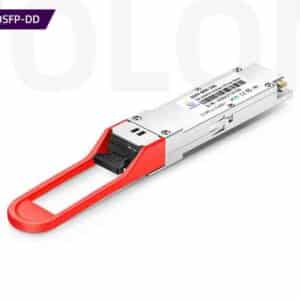
Custom 50G QSFP28 BiDi Transceiver Module
Original price was: $1,374.00.$406.25Current price is: $406.25. -
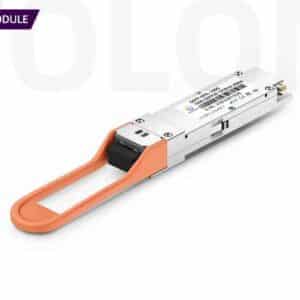
Custom 100G QSFP28 SWDM4 / LX4 Transceiver
-
Sale!
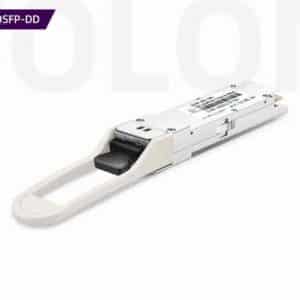
Custom 50G QSFP28 Optical Transceiver
Original price was: $1,374.00.$406.25Current price is: $406.25. -
Sale!
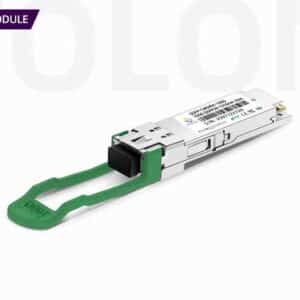
Custom 100G QSFP28 CWDM4 Optical Transceiver
Original price was: $161.00.$93.75Current price is: $93.75.


Reviews
There are no reviews yet.